In Contra Celsum, Origen deepens this association between incorporeal intermediaries and what we typically classify as constituting the political.
Read MoreContra Celsum as Socratic Philosophy
Origen too imitated Socrates’s example, not least in his approach to rational inquiry. Origen frequently speaks of Socrates as a model philosopher, though he is not above criticism.
Read MorePlato, Politics, and Faith
Joseph Trigg and Robin Darling Young posit the unabashedly philosophical character of Celsus’s challenge and Origen’s response as the basis of their project.
Read MoreIn Defense of Celsus
In this short tribute to Origen and his translators, I suggest that, among much else, Origen shows paradoxically how strong a mainstream polytheist’s case could be against Christianity in the second century, and how even a brilliant apologist could struggle to meet it.
Read MoreA New Translation of Contra Celsum
A forum in celebration of Robin Darling Young and Joseph Wilson Trigg’s The Contra Celsum of Origen: English Translation and Facing Greek text (Washington and Cambridge: Harvard University Press/Dumbarton Oaks, 2026).
Read MoreContra Celsum from Caesarea to Constantinople: The Travels of a Byzantine Book
Celsus’ views about empire and cult, whether they were pagan or Christian, were far from dead in the fourth century; they appear in Christian sermons and treatises – not just in their pagan echoes in Porphyry and Julian.
Read MoreOrigen and the Polis: A New Translation of Contra Celsum
Byzantium preserved Contra Celsum because it demonstrated that Christianity was compatible with Hellenism. Renaissance humanism welcomed it because, in doing so, Origen demonstrated that Hellenism was compatible with Christianity.
Read MoreThe Hypothesis of the Gospels
This book draws attention to one important but neglected concept from Hellenistic literary criticism that readers—including Christians—used to organize, describe, and evaluate narrative traditions.
Read MoreListening to the Static: An Author Response
Image of Exodus 15, from the Leningrad Codex
The white spaces on the page can be spaces both of death and breath. Both are texts of drowning, the Egyptian enemies, their horses and chariots, and the African slaves, who were thrown overboard the slave ship in an insurance scam. Somehow, I believe, through this unconscious visual echo, these enemies and victims meet in God’s lament to the angels, (though perhaps this lament is addressed to all of us who sing victory songs): “my creations are drowning in the sea, and you are singing song?”
Read MoreWeak Prophecy As A Critique of Just-So Secularization Stories
William Blake, Abraham and Isaac, 1799-1800
In the book’s conclusion, Raz offers weak prophecy as an alternative, reparative model, offering us doubt and circumspection instead of confident certainty, whether theological or nationalist. I would also suggest a second, complementary payoff. To me, the positing of an ancient source that is dogmatic, masculine, and assertively authoritative is one of modernity’s favorite alibis for its own violence.
Read MoreModern Mirrors
Mirror Detail from the Arnolfini Portrait, Jan van Eyck, 1434. Image Courtesy of Wikimedia Commons.
We gather from here that more than she wants to say something about prophecy, Raz wants to convey something about the history of its reception, about the way modern poets, and perhaps moderns, in general, think about prophets and prophecy and incorporate that thought into their poetry, utilizing poetic language or the characters of prophets.
Read More"Language of the Limp and the Wound"
William Blake Richmond, Song of Miriam, 1880. Image courtesy of Wikimedia Commons.
With Yosefa’s book, we now have nuanced poetic language with which we may read this homily. The Rabbis were not prophets, nor singers or poets. They were strong readers. They saw reading as an opportunity to stretch out biblical scenes into their present.
Read MorePublication Preview | Exploring the Violent Imaginary of the Dead Sea Scrolls
Alex P. Jassen previews his new book exploring the diverse ways social contestation and violence was perceived and imagined by the Dead Sea Scrolls Sectarians.
Read MoreApocalyptic Masculinity
To expand thinking around performance and apocalypse, my project incorporates a consideration of gender to these categories. So, in this project, I am concerned with answering the question “is there such a thing as apocalyptic masculinity?”
Read MoreThe Hellenistic Context of the Aramaic Dead Sea Scrolls
The Aramaic Dead Sea Scrolls display an overwhelming interest in the Israelite priesthood, sacrificial cult, and Jerusalem temple. A look at the Aramaic Levi Document reveals that this interest may have to do with the shifting fortunes of the priesthood in the third century BCE.
Read MoreHidden No More: Women in the Parables of Luke
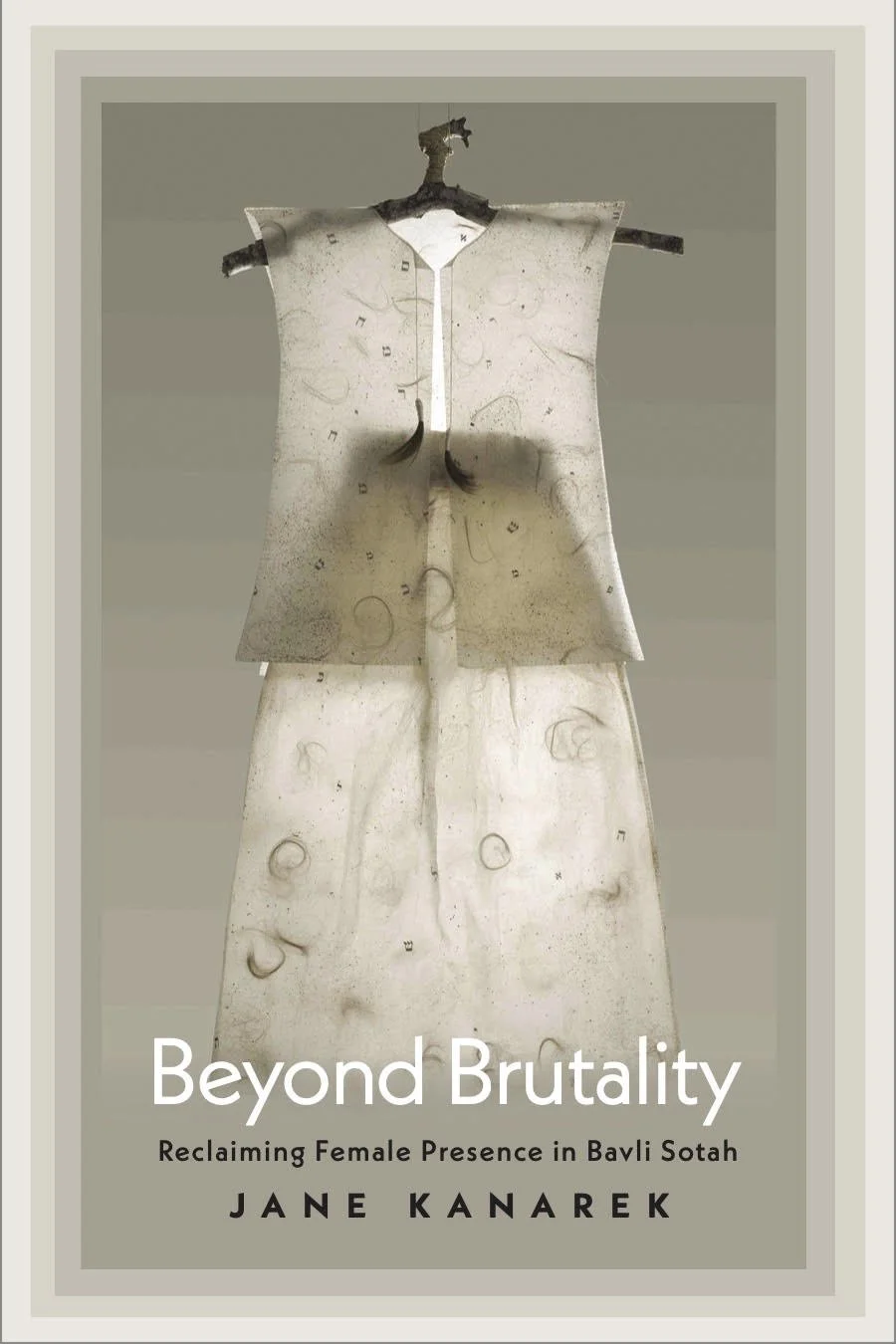
In this study a sustained, interdisciplinary argument is offered for the presence of women in parables where they are not named or explicitly described.
Read MorePublication Preview | The Rabbinic Past in the Medieval Islamic World
The understanding that Jews engaged with a full sweep of Islamic sciences was arguably one of the earliest insights of modern Jewish historiography; indeed, medieval Jews were sometimes explicit about turning to non-Jewish sources. But scholarship has traditionally highlighted Jewish engagement with the larger world in fields other than law, such as poetry, theology, and linguistics. Building on the work of others, After Revelation recognizes that medieval Jews and Muslims structured their traditions in similar ways.
Read MoreAwakening Awareness of the Body
May conversations such as these prompt experiences of embodied connection, even across digital spaces, and help us to recover a bodily awareness so often buried beneath reams of paper. May we be mindful of the care and feeding not only of the prophet (and sometimes the deity), but also of the scholar, the student, the writer, and the reader.
Read MoreArt as Text: When Mary Was Lazarus’s Sole Sister
The question of how many sisters were portrayed with Jesus at the Raising of Lazarus in early Christian art has not previously been explored, and interestingly, the hypothesis that Martha was added later aligns with the number of sisters portrayed in early art of the Raising of Lazarus.
Read MoreProphetic Mediation and Ritual Practice
Scenting a space with anointing oil and incense, creates a sensory experience of fragrant divine presence, burning a sacrifice on an alter creates the perception of a divine receiver, veiling and obscuring a sanctuary’s adyton creates a perception of an inhabitant etc.
Read More