I have a sensitive antenna for apologetics. It’s not that I think apologetic readings make ancient works seem unrealistically benevolent, though that’s true, too. It’s that they make them seem boring. What work of literature worth its salt is brimming with compassion, empathy, and love? Where is the drama, the conflict, the hypocrisy, the rivalry, all the things that make human life the grand odyssey that it is? When apologetics sand down the sharp edges of transmitted traditions, they rob them of their vitality.
My first book, Execution and Invention: Death Penalty Discourse in Early Rabbinic and Christian Cultures (Oxford University Press, 2006), about the early rabbinic laws of criminal execution, grew out of my impatience with apologetics. The modern Jewish scholars who wrote about those laws saw in them a lofty respect for life. That reading, to me, strains credulity. A set of procedures for killing a man reflects the authors’ deep appreciation for the infinite value of human life?
Over time I grew to understand the motivation behind this reading. Christians have hounded, harassed, and hated Jews for centuries because of Jews’ alleged responsibility for the death of Christ. The gospels’ depiction of a corrupt Jewish court is at the heart of Christian accusations. Redeeming Jewish law from such calumnies was not an unreasonable response even if it didn’t make for a good reading of that law.
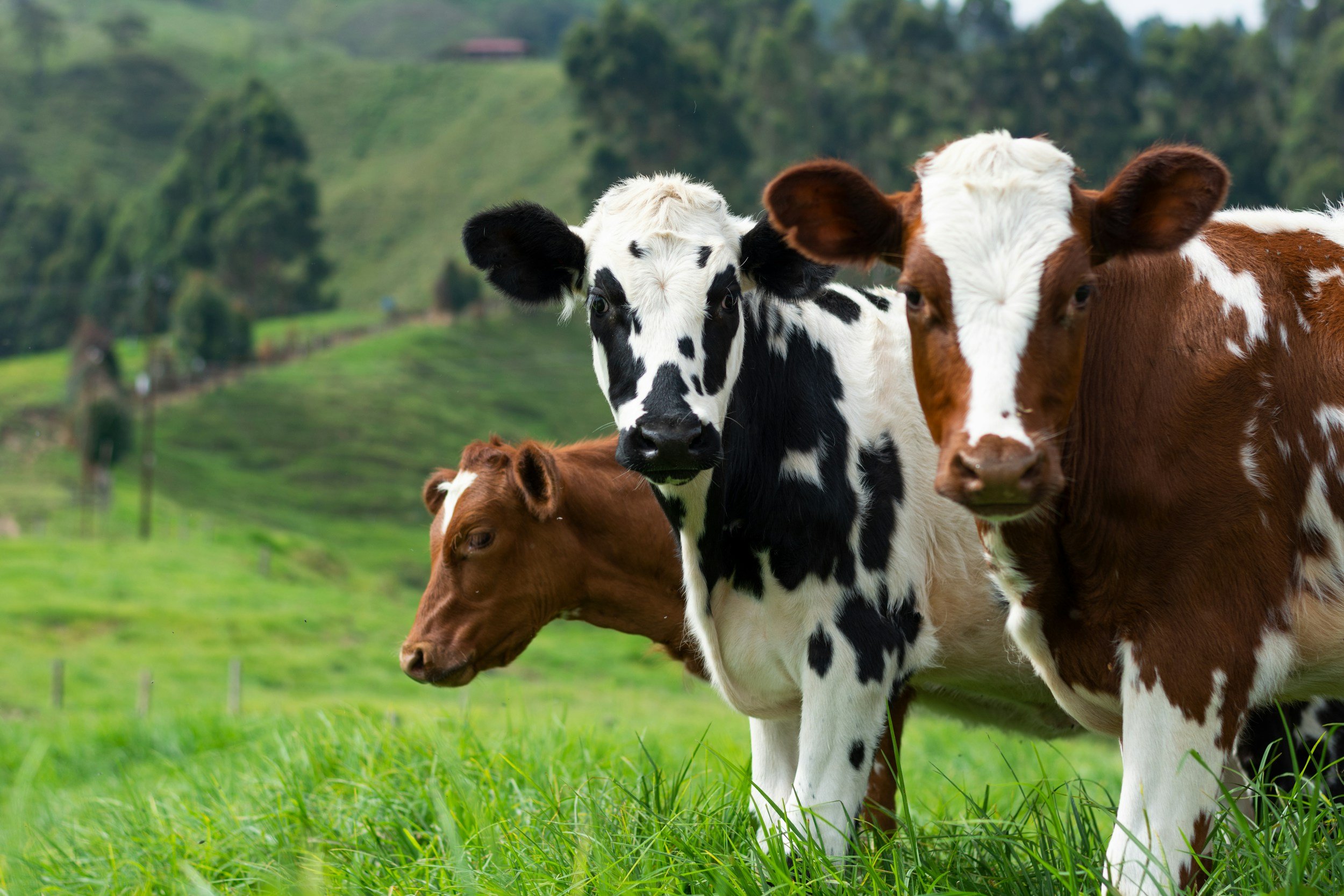
It took me a while to realize that my most recent book, What Animals Teach Us about Families: Kinship and Species in the Bible and Rabbinic Literature (University of California Press, 2026), published exactly twenty years later, also grew out of my resistance to apologetics, though it’s about an entirely different subject. In the book, I take up four laws in the Torah that treat the parent-child relationship in animals: do not cook a kid in his mother’s milk (Exodus 23:19, 34:26; Deuteronomy 14:21); leave a baby with the mother for the first week of life (Exodus 22:29, Leviticus 22:27); do not slaughter a parent and child on the same day (Leviticus 22:28); and shoo the mother bird away before taking her eggs or chicks (Deuteronomy 22:6-7). I call them the “animal family” laws.
The standard line is that these laws are about compassion for animals. Out of respect for the parent-child bond among animals, one refrains from behaviors that violate that bond. As Philo says, it is a “cruel soul” who would separate mother and child immediately after birth. Similarly, he says, “It is the height of savagery to slay on the same day the generating cause [the animal parent] and the living creature generated [the child].”[1] You’d have to be a real sadist to do either of these things, or to grab a baby bird straight out from under its mother or to blithely cook a baby animal in the milk meant to nourish him.
To me, though, this humanitarian rationale makes no more sense than the “life-affirming death penalty” oxymoron. What’s the difference between slaughtering an animal parent and child on the same day and slaughtering them on different days? What’s the difference between removing an infant from his mother eight days after birth rather than seven? Buried somewhere in these laws is a sensitivity to the deepest bonds that animals form with each other, but to claim that these laws are compassionate makes a mockery of compassion and verges on the grotesque. If a person were to show me compassion by killing me on a Sunday and killing my mother on a Monday, I’d hate to find out what their version of cruelty looked like.
What Animals Teach Us about Families is my effort to find a more compelling, or at least less grotesque, way of reading these laws. I was curious to know whether readers before me had the same problems I do. (That may be what I love most about studying the history of interpretation – to find that someone two thousand years ago was confused by the same things that I am). My aim was not to find the “right,” or even the best, explanation for these laws but to look at how people before me grappled with these same paradoxes, to assess what they came up with, and to consider what relevance these texts might have today. Along the way, while reading passages of Mishnah and Talmud, I wandered from Bambi to veterinary endocrinology to 23andME to Australian convicts to ancient sheep-breeding to Claes Oldenburg’s colossal sculpture of a maraschino cherry.
The rabbis, it turns out, do not talk much about compassion, but they do take animal families seriously. Mishnah Hullin 5:3 directs the seller of an animal, four times a year, to make a public announcement of the sale: “I sold her mother for slaughter,” “I sold her daughter for slaughter.” The idea is that at certain festive times of the year, when everyone is slaughtering their animals – think July 4th barbecues – it might come to pass that a person who bought an animal would decide to slaughter it and, on that same day, the person who bought that animal’s mother or daughter would also decide to slaughter it. Were that to happen, together they would be violating Leviticus 22:28’s prohibition on same-day parent-child slaughter.
In imagining myself into the ancient rabbis’ busy marketplace, I was hit by something. People had to know who their animal’s parent was. They had to know who their animal’s child was. To observe this law, people had to keep track of animal families. Today, we don’t even know that our animals have families, much less who those families are. Thinking of your hamburger as someone’s mother – it changes things.
One difference between my first book and my most recent one is that this time I let my freak flag fly. My freak vegan flag. What Animals Teach Us about Families is, covertly, a memoir about my becoming a vegan. I realized when I was twelve and eating shabbat dinner at Camp Ramah that the hairs on the chicken skin were actual hairs. I stopped eating meat. It wasn’t until working on this book that I realized that dairy and eggs entail a whole other world of hurt. I’m not a confrontational vegan. I don’t make comments at restaurants, and I don’t answer at great length when people ask why I’m vegan. Now, I can just refer them to What Animals Teach Us about Families.
If it weren’t for Rabbi Melissa Hoffman, with whom I wrote the epilogue, the book’s closing suggestions for how to support animal families today would be irritatingly utopian. Melissa and I had vigorous exchanges about whether we should discourage people from visiting zoos, or whether we should use the word “plant-based” because apparently the word “vegan” scares people off. I won’t give any spoilers as to where we landed on these questions.
Finally, a thought on cuteness and a thought on fascism. There’s nothing cuter than a mom of nearly any species cuddling her baby. But is thinking that animal families on Instagram are unbearably cute a case of sentimental objectification? Or is it a valuable source of affective connection? My inclination is to leverage the cuteness of animal families to help their cause even while maintaining a critical stance on cuteness.
As for fascism, it gets harder and harder to worry about animals as the world order collapses. Animal ethics seem almost quaint, the kind of thing we held debates about before ICE and the “Donroe Doctrine” came on the scene. I maintain that animals can help us understand and weather the disorienting, disheartening, and truly terrifying events of today. At the top of RFK’s new nutrition pyramid is – animals. The immigrants whom ICE pursues – many work with animals. The people who resist dictatorship – they are portrayed as animals. My book is about what animals teach us about families, but surely there are lessons from animals about fascism too. Spotting a bad case of apologetics is a good skill to be honing these days.
Beth A. Berkowitz is Ingeborg Rennert Chair of Jewish Studies and Professor in the Department of Religion at Barnard College.
[1] On the Virtues, trans. F. H. Colson, vol. VIII, Loeb Classical Library 341 (Cambridge: Harvard University Press, 2014), 126, pp. 240-241; 134, pp. 244-245.