I am honored by the invitation to write this retrospective, despite initially being taken aback by the realization that I am old enough to be asked to write one. I am also in awe of Adele Reinhartz’s piece, which was recommended to me as a model. My retrospective is less thematic and more personal than hers, as I cannot think of a better way to document my academic trajectory and research interests.
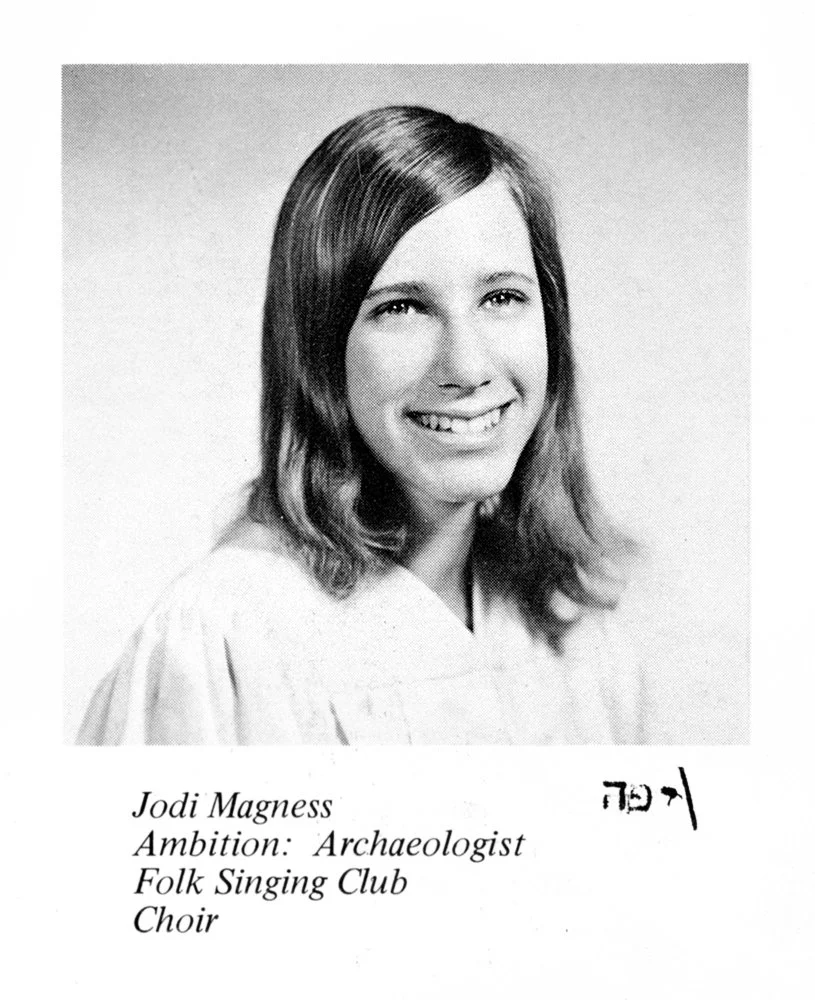
I wanted to be an archaeologist since I was 12 years old, thanks to a seventh-grade history teacher who introduced the class to the ancient world. As a result, I developed an interest in ancient Greece and especially Athens, and at the same time became fascinated by the fossils of shells that I found at Girl Scout camp in the Pocono Mountains. In summer 1972, at the age of 15, I participated on the pilot program of what later became the Alexander Muss High School in Israel. While there I fell in love with Israel, and, after returning home, convinced my parents to allow me to attend 12th grade at the Nativ Angli – an English-language, Israeli high school program at Midreshet Sde Boqer in the Negev Desert. At the age of 16, I arrived in Israel on my own, just five weeks before the outbreak of the Yom Kippur War. After graduating from Sde Boqer with the bagrut (matriculation), I enrolled in the regular (three year) B.A. program at the Hebrew University, where I majored in Archaeology and General (non-Jewish) History. I had the privilege of taking classes with Yigael Yadin and other giants of that generation. Upon graduation from Hebrew University, I was fortunate to obtain a position as a field guide and naturalist (morah derekh) at the Ein Gedi Field School, where I spent three magical years leading groups around the Judean Desert, including Masada, Qumran, and other archaeological sites.
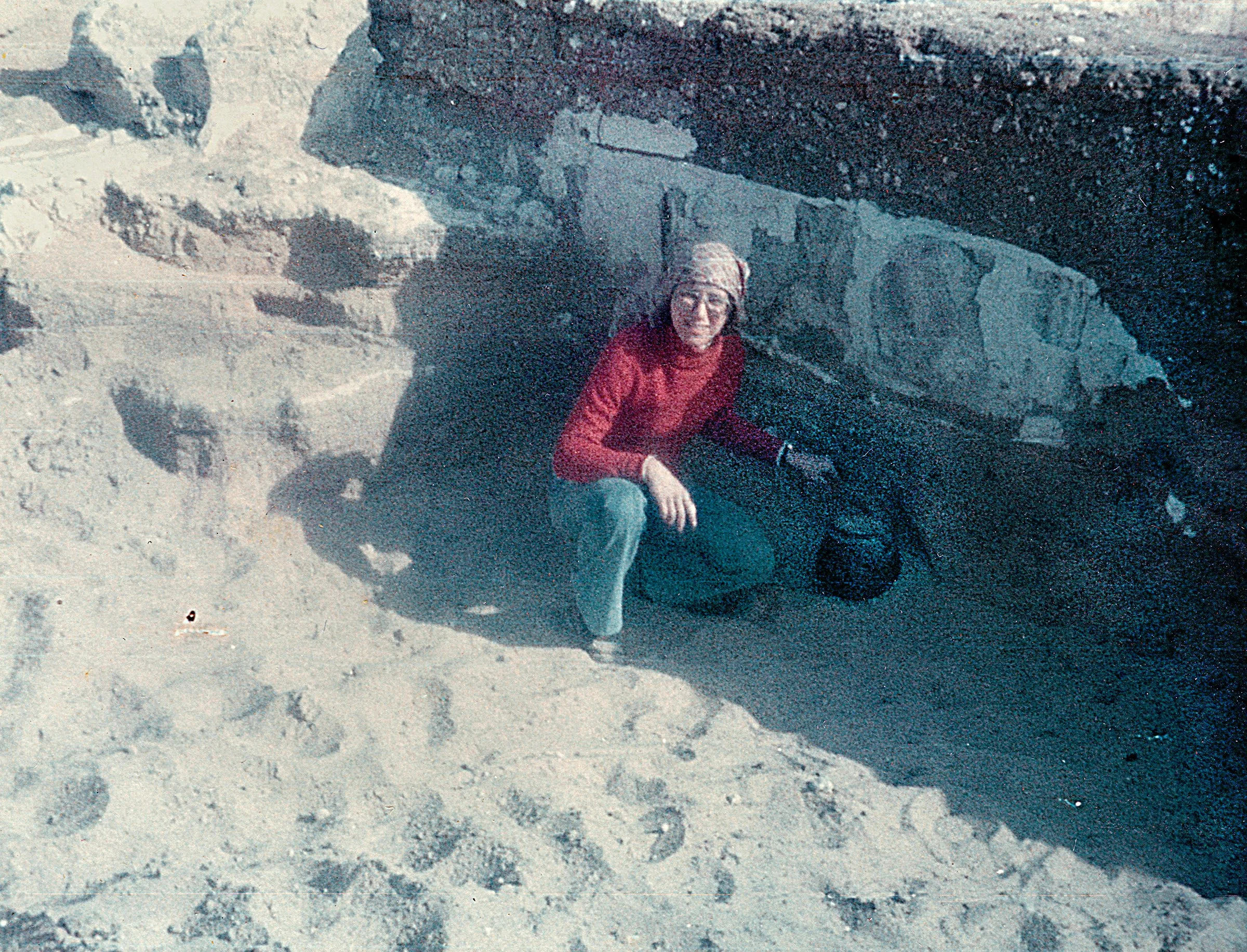
Excavating at Qasarwit in the Sinai in 1976 while an undergraduate at Hebrew University
In 1980 I returned to the U.S. and, a year later, enrolled in the Ph.D. program in Classical Archaeology at the University of Pennsylvania. I spent the third year of my Ph.D. studies at the American School of Classical Studies at Athens, and then went back to Israel to work on my dissertation, under the direction of James A. Sauer at Penn (then President of ASOR [the American Schools of Oriental Research]). A number of people warned me that my dissertation topic - “A Typology of the Late Roman and Byzantine Pottery of Jerusalem” – would never get me a job (!) The study of late Roman and Byzantine pottery had been neglected by archaeologists (nearly all of them men), who focused instead on monumental architecture, inscriptions, and mosaics. Because pottery and other small finds were considered less important, they were generally farmed out to women (mostly young, often B.A. or M.A. students) for publication. The local pottery of the late Roman and Byzantine pottery of Jerusalem was an undifferentiated mass of types assigned wide ranges of dates spanning the first to sixth centuries.
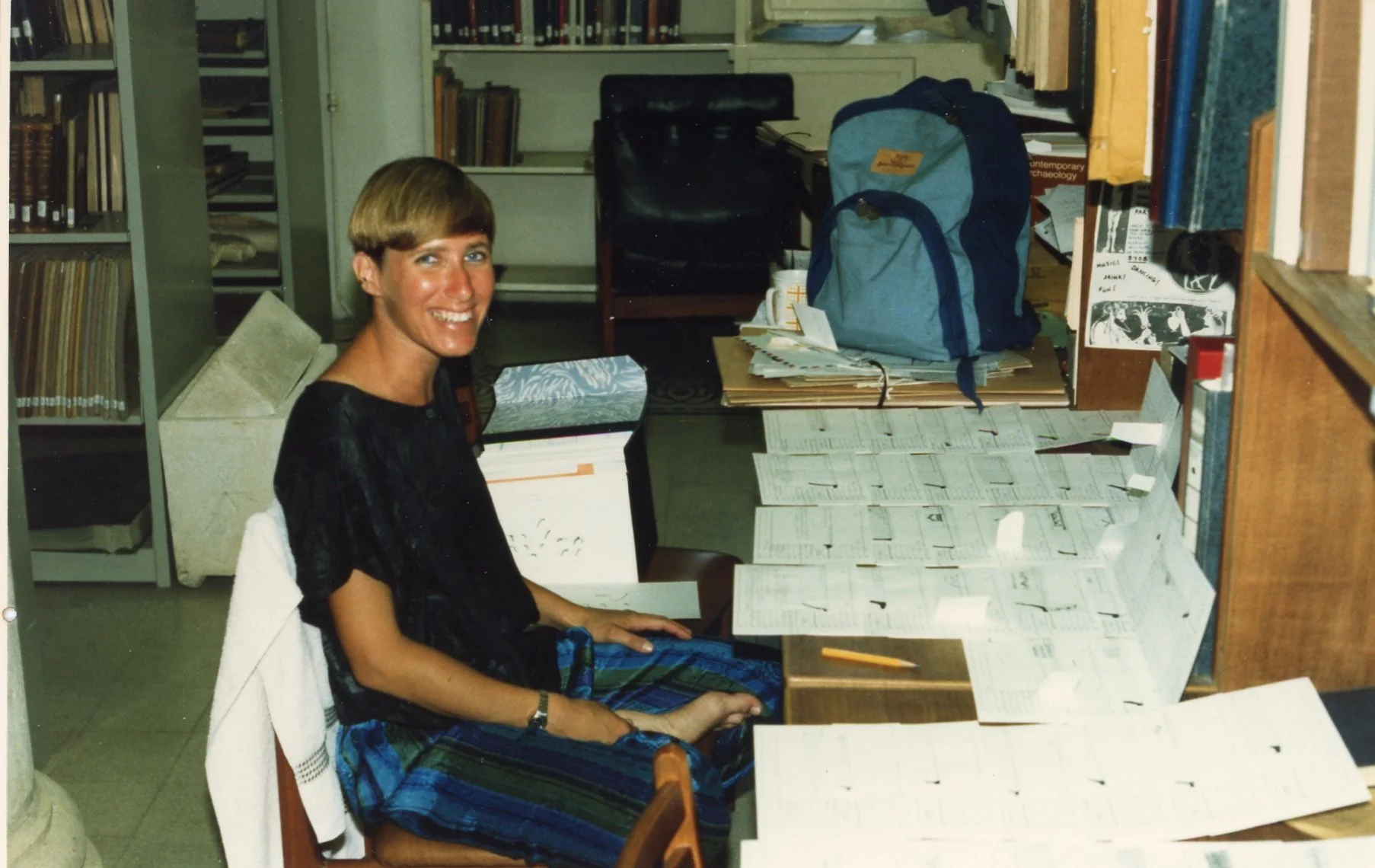
Dissertating in the Albright Institute library in Jerusalem in 1986.
I graduated from Penn in December 1989, having been supported during part of the time researching and writing my dissertation by a series of residential fellowships at the W. F. Albright Institute of Archaeological Research in Jerusalem. When I began my Ph.D. studies, I planned to return to Israel after graduation and work full-time as a tour guide. That never happened. Instead, with the encouragement of Ernest (Ernie) Frerichs, I applied for and was awarded a Mellon Post-Doctoral Fellowship in Syro-Palestinian Archaeology at the Center for Old World Archaeology and Art at Brown University. I spent two wonderful years in Providence, revising my dissertation for publication and teaching one course per semester. I then was offered a one-year, three-quarters of a full-time position in Classical Archaeology at Tufts University, which was a joint appointment in the Departments of Classics and Art History. In my second year the position was renewed full-time for two years, and the third year it became tenure track. I was promoted to Associate Professor with tenure in 1997.
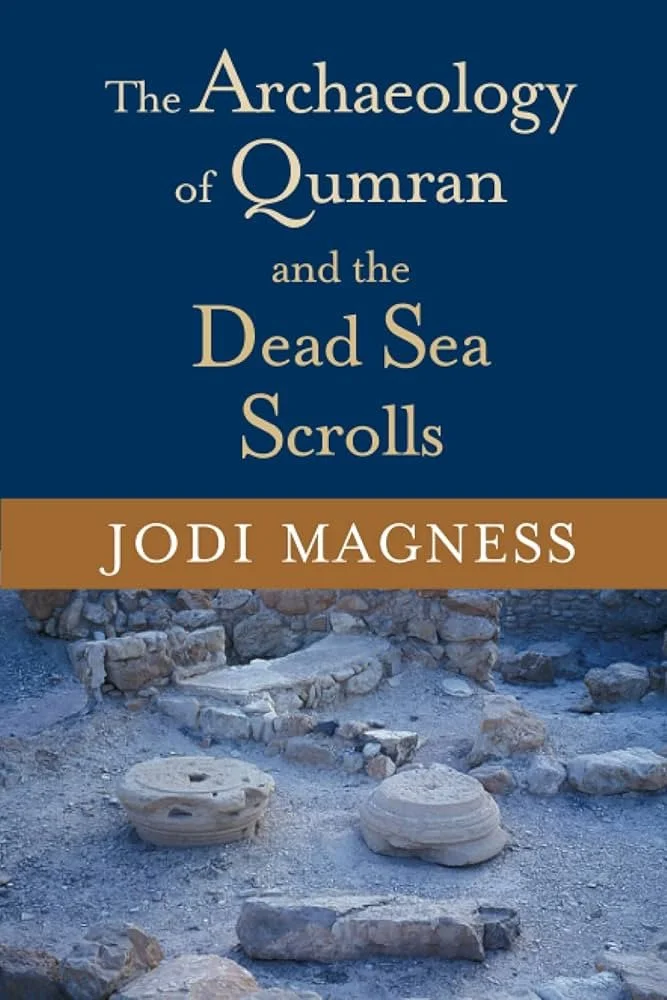
Most of the classes that I taught at Tufts were in Greek and Roman archaeology, supplemented by courses focusing on Syria-Palestine. In the meantime, my research trajectory began to diversify. In 1992, I was invited to present a paper on the pottery of Qumran at an international conference on the Dead Sea Scrolls at the New York Academy of Sciences. At that time, the Dead Sea Scrolls were garnering a lot of attention because the slow rate of publication led to allegations of conspiracies. But hardly anyone was paying attention to the archaeology of Qumran. And so it happened, practically overnight, that after presenting my paper I became “Miss Archaeology of Qumran.” I was inundated with invitations to lecture and deliver more papers and write articles, and, eventually, I was offered a book contract (The Archeology of Qumran and the Dead Sea Scrolls published in 2002, and a revised edition appeared in 2021). I was already familiar with Qumran, having visited it hundreds of times while guiding at Ein Gedi. But I never anticipated that the archaeology of Qumran and the Dead Sea Scrolls would become one of my fields of specialization – that just happened in a serendipitous way, as has been the case with much of my research.
While writing my dissertation, I noticed that pottery types that had been dated by archaeologists to the Byzantine period were actually early Islamic in date, which meant that the associated levels were early Islamic, revealing substantial – but previously unidentified – Islamic period remains at sites around the country. The monograph (The Archaeology of the Early Islamic Settlement in Palestine, 2003) I published in pursuing this line of research was a fine-grained analysis of the archaeological data, demonstrating that the transition to the early Islamic period was not accompanied by widespread destructions or decline, contrary to the prevailing scholarly view at that time.
In 2002, I was offered a senior endowed chair in the Department of Religious Studies at the University of North Carolina at Chapel Hill: the Kenan Distinguished Professor for Teaching Excellence in Early Judaism – a position I have held since then. I was invited to apply for this position because I had become known for my work on Qumran and the Dead Sea Scrolls. Nevertheless, the move was a big adjustment – not only transitioning from a relatively small, elite private university in Boston to the flagship campus of a state university in the South – but moving from a position in Classical Archaeology in Departments of Classics and Art History to a position in early Judaism in a Department of Religious Studies. I had to educate myself about early Judaism, a field in which I have no formal education at the college or post-graduate level.
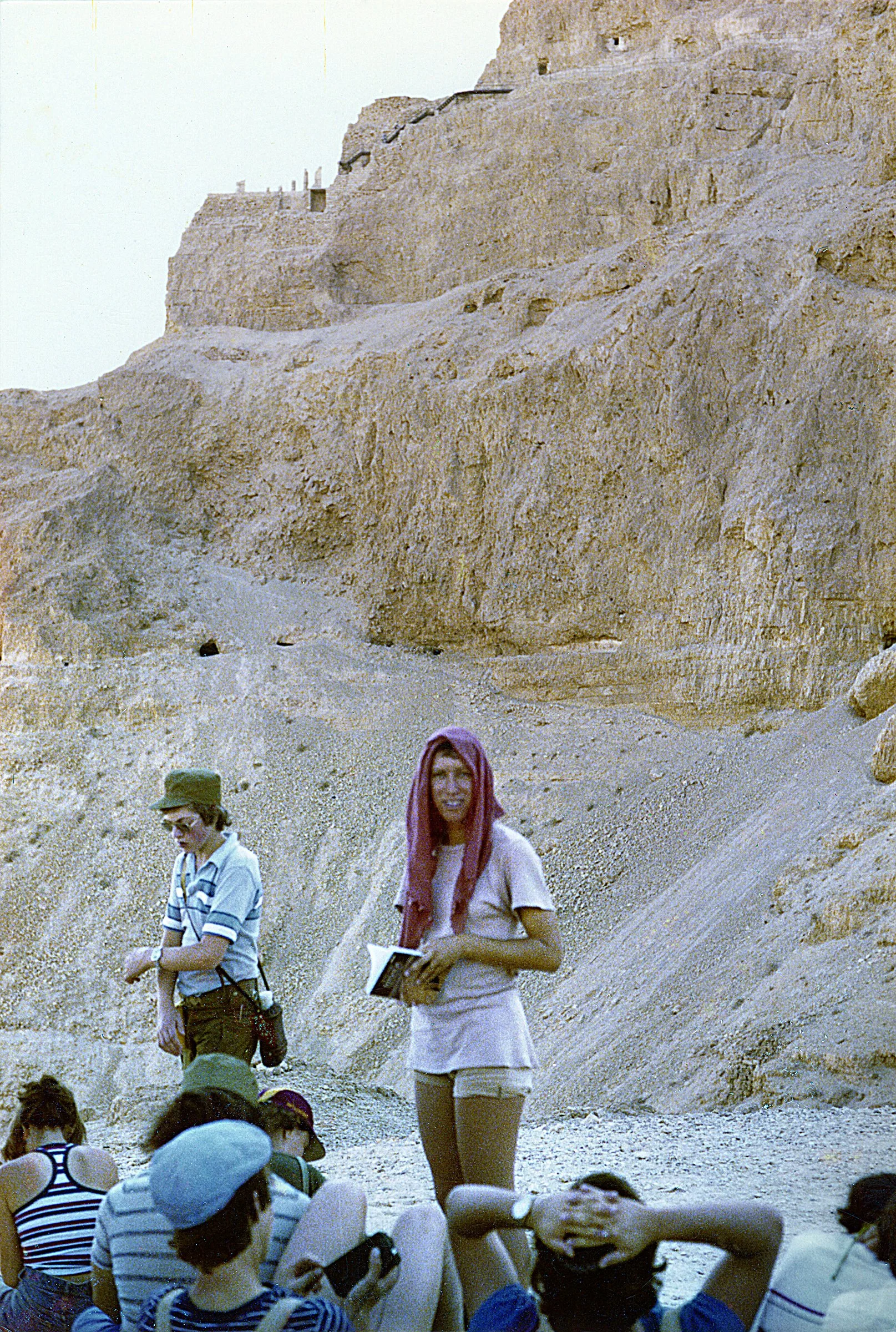
Guiding a group at Masada in 1977 while at the Ein Gedi Field School.
The move to a new academic setting profoundly influenced my research trajectory. As I became familiar with fields and disciplines about which I knew little to nothing, I made connections to my own field of specialization and asked new questions. As a result, my research trajectory splintered in a number of different directions. One of my interests, in the Roman army in the East, developed while I was still at Tufts. In 1995 I was invited by Gideon Foerster, who had been my undergraduate professor at the Hebrew University, to co-direct the first (and, until now, only) excavations in the Roman siege works at Masada. That summer I brought students from Tufts and other universities to participate on the excavations. A few years later, I published the pottery from our excavations. I had already been involved with Masada because after Yadin’s death in 1984, I co-published the military equipment from his excavations. Eventually, a persistent editor at Princeton University Press convinced me to write a trade book about Masada, which appeared in 2018. I also published the military pottery from excavations in the kiln works of the Tenth Legion in Jerusalem, which provided an interesting comparison and contrast to the pottery from our excavations in the Roman siege works at Masada. From 2003-2007, I co-directed excavations at another military site - the late Roman fort at Yotvata in Israel’s southern Arava, in which students from UNC-Chapel Hill participated (the final report was published in 2015).
While at Tufts I also began to develop an interest in ancient synagogues. After analyzing publications on synagogues around Galilee, I became convinced that many of them were dated too early by the excavators. An early date places the construction of these buildings in a pagan Roman context (second to third centuries), whereas in my opinion the archaeological evidence indicates that they were constructed in the fourth to sixth centuries, that is, after the legalization of Christianity. Dating synagogues such as the monumental building at Capernaum contradicts a widespread view that due to oppressive Christian rule, Jewish settlements declined and Jews congregated in modest buildings. Since 1997, I have published numerous articles about ancient synagogues, eventually extending to diaspora synagogues such at the one at Sardis. In 2022, I was invited to deliver the Schweich Lectures in Biblical Archaeology at the British Academy on the topic of ancient synagogues, which were published two years later. It was my interest in ancient synagogues that led me to undertake excavations at Huqoq in Israel’s Galilee beginning in 2011, in which students from UNC-Chapel Hill and other universities participated. Our excavations brought to light a monumental synagogue dating to ca. 400, which is paved with stunning mosaics depicting an array of biblical stories, as well as the first non-biblical story ever discovered decorating an ancient synagogue. Since our last season of field work in 2023, my team and I have been working on the final publication – a process that will take at least as long as the excavation itself. The site is now being developed for tourism by the Israel Antiquities Authority and the Keren Kayemet L’Israel (Jewish National Fund).
Another persistent editor, this time at Oxford University Press, convinced me to write my most recent monograph, which was also one of the most challenging: Jerusalem Through the Ages: From Its Beginnings to the Crusades (2024). This turned out to be a semi-popular book rather than a trade book, as I found it impossible to convey the complexities of Jerusalem’s history and archaeology without getting into the weeds. Nevertheless, I am very pleased with the product, which incorporates much of my own research on Jerusalem.
My current project is a monograph titled Herod the Messiah (under contract with Oxford University Press). This grew out of a 2019 journal article in which I argue that Herod intended his mausoleum at Herodium, which was discovered in 2007, to serve as a royal, dynastic monument and victory memorial situating him within the Hellenistic tradition of heroic and deified kings, while the site’s location overlooking Bethlehem visually asserted Herod’s claims to have fulfilled the expectations associated with a Davidic messiah. I had already published a couple of articles about Herod’s tomb at Herodium before it was discovered. In my opinion, the mausoleum at Herodium is the most important archaeological discovery in the region since the Dead Sea Scrolls, as it is the closest we come to hearing from Herod about how he represented himself and wished to be remembered for posterity. My book will expand on this topic by considering, inter alia, other sites that Herod built – especially the Jerusalem temple - and reactions to his messianic claims as expressed in literary sources such as the Dead Sea Scrolls, the New Testament, and early Christian writers. The case for Herodian messianism has been advanced by a few scholars (and rejected by others), but has never been the subject of a book-length study. I am excited to bring the archaeological and literary evidence into conversation in exploring this topic more fully.
Exploring Herodian messianism reflects my interest in studying ancient Jews and Judaism within the larger context of the classical world and the ancient Near East. It is also a good example of my long-term interest in integrating archaeological and literary evidence to better understand the past. In particular, I have sought to highlight the importance of archaeology as an independent source of information for reconstructing history, rather than simply being a supplement or illustration to the study of texts. Much of my work has dealt with issues of archaeological methodology, particularly relating to chronology, as the correct dating of remains is essential for an accurate understanding of their historical context. It is my hope that scholars who specialize in the study of texts will recognize that archaeology is not only relevant but indeed vital to their own research. Hopefully these scholars will feel comfortable drawing on archaeological evidence while recognizing that it must be evaluated critically, as is true of texts. A fun and easy way to become familiar with archeology is to participate on an excavation.
Over the years I have also become known as an expert on topics of broad public interest, particularly relating to the world of Jesus. I am often interviewed by the media (television, radio, newspapers, and, now, podcasts), and have consulted for and been featured in numerous documentaries, including The Story of God with Morgan Freeman, and the 2013 National Geographic giant screen film, Jerusalem. I believe that as scholars, we have an obligation to communicate with the public in a responsible and non-sensational manner. With the decline of the humanities, it is especially urgent that we find ways to ensure the future of archaeology and related disciplines. And although AI presumably will benefit archaeological field work and publication in many ways, its negative impact on higher education is already being felt. It is my hope that our professional organizations will take a leadership role in formulating concrete measures that can be taken to address these challenges.
As John Donne wrote, “no [wo]man is an island.” I am truly fortunate to have been able to fulfil my ambition of being an archaeologist. But my journey would not have been possible without the support and encouragement of numerous family members, teachers and mentors, and friends and colleagues. I am grateful to them all.