I wish I could say my move to secondary education was grounded in thoughtful reflection or a profound sense of calling that I’d known and honored my whole life. Instead, it was a kind of serendipitous accident that required a big leap of faith. Of course, so are most of the fun things that life sends our way.
Read More
The relationship between my writing and teaching is different now…. There is a bit more joy in my writing process than there used to be, and that communicates in my teaching. The time I take on a snow day to cultivate my own creative work is good for morale. Writing has always been a positive process for me, but it is especially so now that my professional future in the academy no longer hinges on my ability to quickly and unrelentingly generate monographs and articles.
Read More
Another apt turn of phrase for Boarding School Life is: “it is not a difficult job, but it is a demanding one.” But the benefits, in my mind, far outweigh the costs. If you really enjoy teaching, coaching, and mentoring excited and curious young people, this might be an avenue you should seriously consider.
Read More
Secondary-turned academics are indispensable not merely for their banausic training and credentials. At their best, scholars of the humanities embody love of learning and wisdom over mere appearance and sophistry. Where institutions of learning tilt toward test-prep and job training, PhD-trained teachers must fight to keep alive a humanistic appreciation of learning for its own sake.
Read More
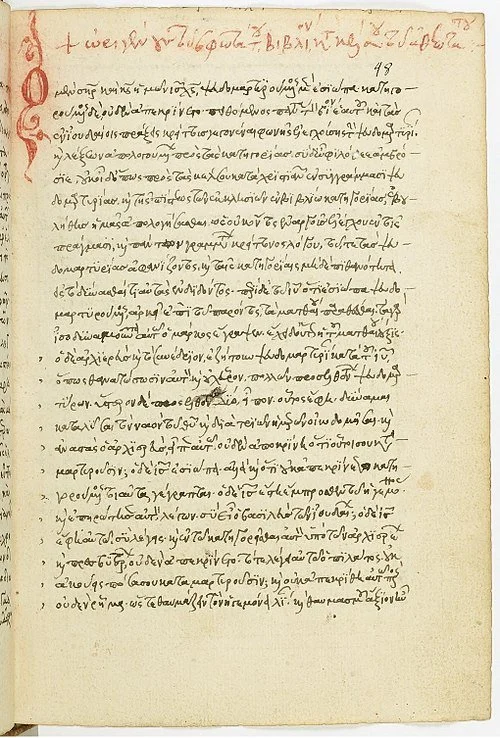
In Contra Celsum, Origen deepens this association between incorporeal intermediaries and what we typically classify as constituting the political.
Read More
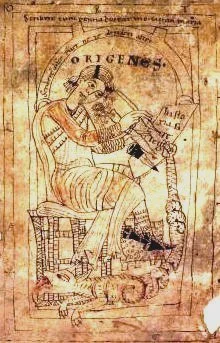
Origen too imitated Socrates’s example, not least in his approach to rational inquiry. Origen frequently speaks of Socrates as a model philosopher, though he is not above criticism.
Read More
Joseph Trigg and Robin Darling Young posit the unabashedly philosophical character of Celsus’s challenge and Origen’s response as the basis of their project.
Read More
In this short tribute to Origen and his translators, I suggest that, among much else, Origen shows paradoxically how strong a mainstream polytheist’s case could be against Christianity in the second century, and how even a brilliant apologist could struggle to meet it.
Read More
A forum in celebration of Robin Darling Young and Joseph Wilson Trigg’s The Contra Celsum of Origen: English Translation and Facing Greek text (Washington and Cambridge: Harvard University Press/Dumbarton Oaks, 2026).
Read More
Celsus’ views about empire and cult, whether they were pagan or Christian, were far from dead in the fourth century; they appear in Christian sermons and treatises – not just in their pagan echoes in Porphyry and Julian.
Read More
Byzantium preserved Contra Celsum because it demonstrated that Christianity was compatible with Hellenism. Renaissance humanism welcomed it because, in doing so, Origen demonstrated that Hellenism was compatible with Christianity.
Read More
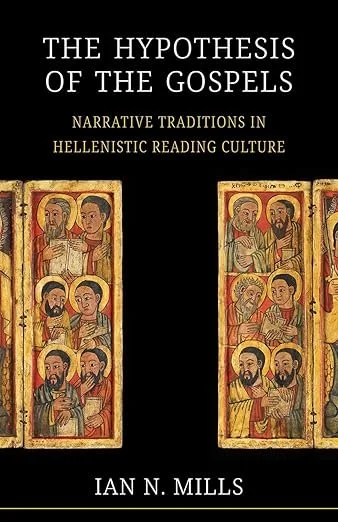
This book draws attention to one important but neglected concept from Hellenistic literary criticism that readers—including Christians—used to organize, describe, and evaluate narrative traditions.
Read More
The white spaces on the page can be spaces both of death and breath. Both are texts of drowning, the Egyptian enemies, their horses and chariots, and the African slaves, who were thrown overboard the slave ship in an insurance scam. Somehow, I believe, through this unconscious visual echo, these enemies and victims meet in God’s lament to the angels, (though perhaps this lament is addressed to all of us who sing victory songs): “my creations are drowning in the sea, and you are singing song?”
Read More
In the book’s conclusion, Raz offers weak prophecy as an alternative, reparative model, offering us doubt and circumspection instead of confident certainty, whether theological or nationalist. I would also suggest a second, complementary payoff. To me, the positing of an ancient source that is dogmatic, masculine, and assertively authoritative is one of modernity’s favorite alibis for its own violence.
Read More
We gather from here that more than she wants to say something about prophecy, Raz wants to convey something about the history of its reception, about the way modern poets, and perhaps moderns, in general, think about prophets and prophecy and incorporate that thought into their poetry, utilizing poetic language or the characters of prophets.
Read More
With Yosefa’s book, we now have nuanced poetic language with which we may read this homily. The Rabbis were not prophets, nor singers or poets. They were strong readers. They saw reading as an opportunity to stretch out biblical scenes into their present.
Read More
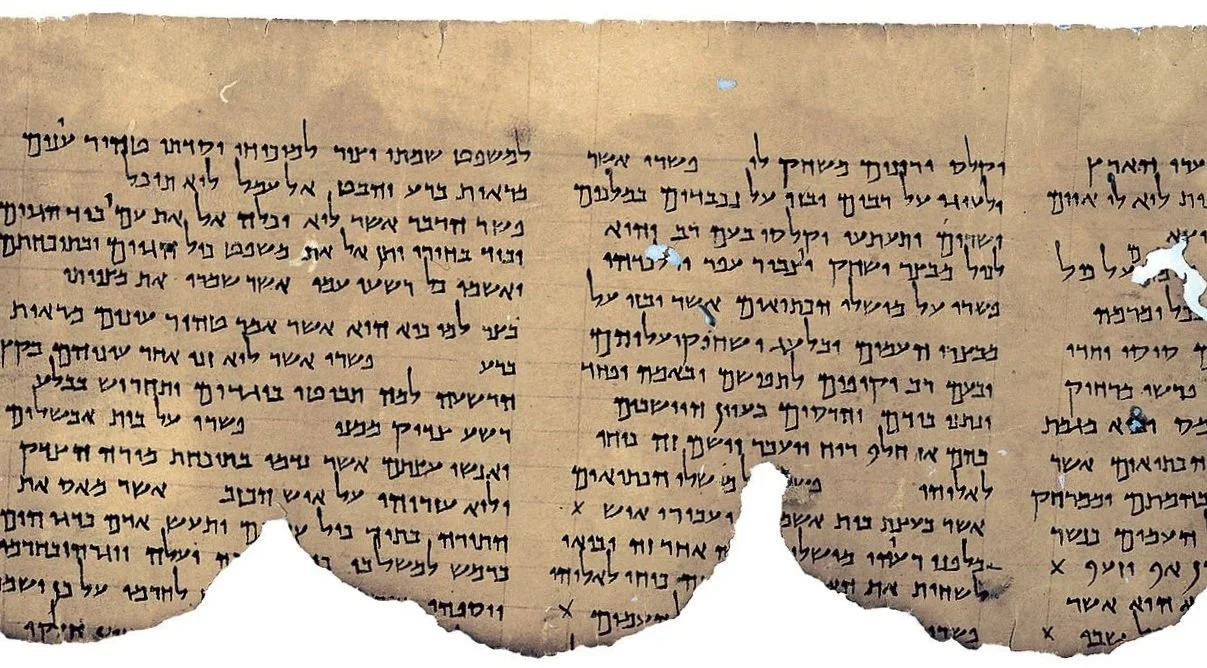
Alex P. Jassen previews his new book exploring the diverse ways social contestation and violence was perceived and imagined by the Dead Sea Scrolls Sectarians.
Read More
To expand thinking around performance and apocalypse, my project incorporates a consideration of gender to these categories. So, in this project, I am concerned with answering the question “is there such a thing as apocalyptic masculinity?”
Read More
The Aramaic Dead Sea Scrolls display an overwhelming interest in the Israelite priesthood, sacrificial cult, and Jerusalem temple. A look at the Aramaic Levi Document reveals that this interest may have to do with the shifting fortunes of the priesthood in the third century BCE.
Read More
In this study a sustained, interdisciplinary argument is offered for the presence of women in parables where they are not named or explicitly described.
Read More









![[Wikimedia]](https://commons.wikimedia.org/wiki/File:American_Elm_at_Phillips_Academy,_Andover,_MA_-_May_2020.jpg)


_Written_in_Hebrew_-_Google_Art_Project.jpg)
.jpg)