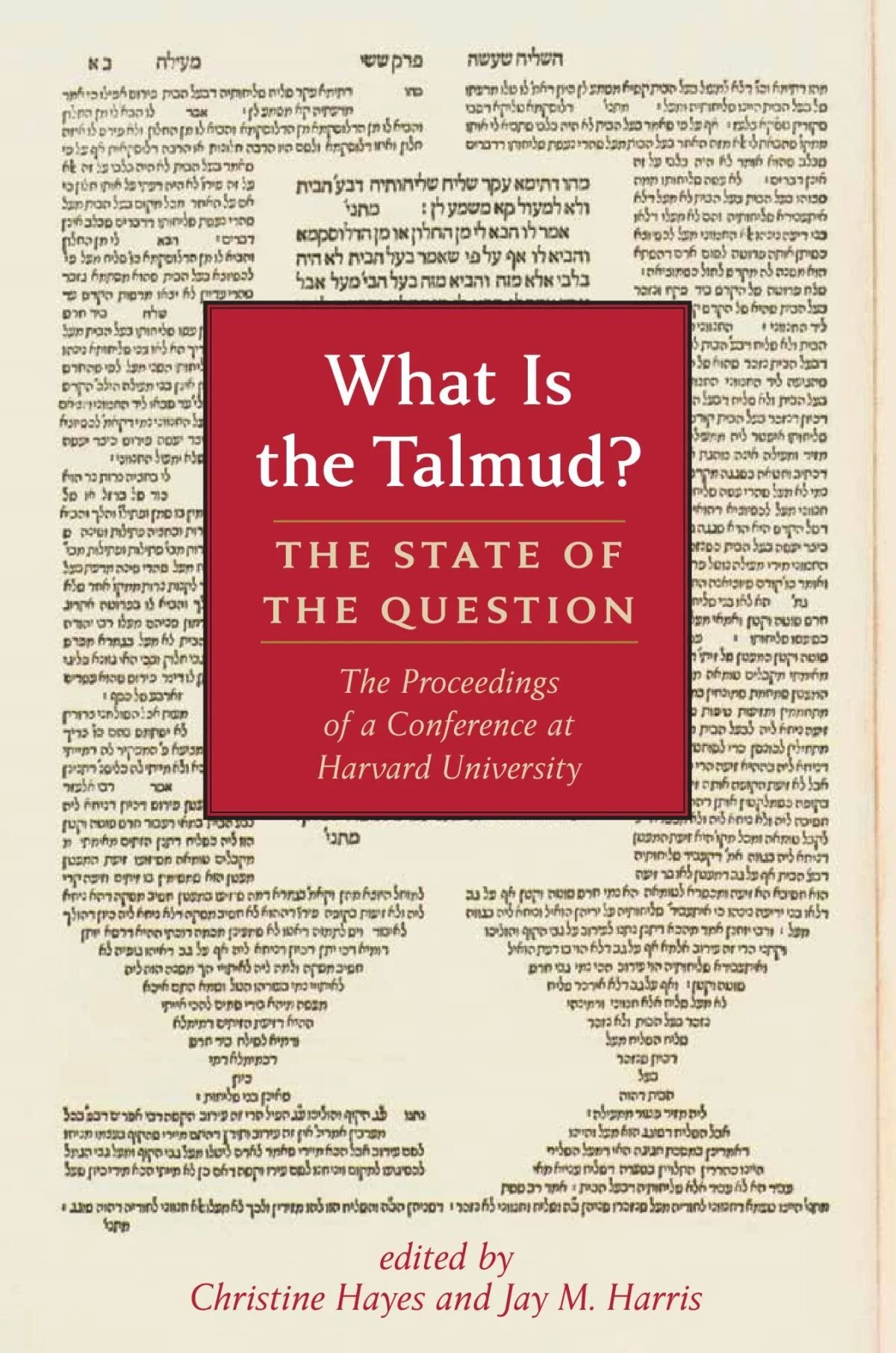
The Babylonian Talmud stands as one of the central pillars of Jewish intellectual, cultural, and religious life. But what, precisely, is this monumental and heterogenous compilation? How was it formed, redacted, and transmitted? Who composed it and for what purpose? How was it shaped by its broader cultural context and historical period? How was it received and re-conceived by subsequent generations, and what has the Talmud become in our day? In the late spring of 2023, a conference entitled What Is the Talmud? and sponsored by the Center for Jewish Studies, the Julis-Rabinowitz Program on Jewish and Israeli Law, and the Littauer Chair in Hebrew Literature and Philosophy at Harvard University, was held to address these questions. The conference volume, What Is the Talmud? The State of the Question, edited by Christine Hayes and Jay M. Harris, will be available this spring from Harvard University Press. The essays collected in the volume provide a comprehensive exploration of the Talmud’s origins, compilation, and redaction; its diverse genres and discursive practices; its historical and cultural setting; its preservation and study across generations; and its enduring influence on Jewish life and culture today.
In anticipation of the publication of the conference proceedings, the volume editors convened a roundtable discussion at the 2025 Association for Jewish Studies annual conference. At the roundtable, several scholars discussed the question "What is the Talmud?" and considered how diverse answers to that question have shaped and will continue to shape the field of Bavli Studies. The responses by Alyssa Gray, Simcha Gross, and Yitz Landes are presented below. Collectively they address a number of first order questions: How do conceptions of the Bavli’s genre, provenance, purpose, function, cultural context, and/or reception history drive current research agendas and methodologies? Are diverse conceptions of the Bavli and the research agendas and methodologies they give rise to mutually exclusive or mutually reinforcing? How might our approaches benefit from and contribute to conversations with cognate fields within Jewish Studies and beyond? How might new conceptions of the Bavli point the field of Bavli Studies in new directions? And finally, they consider lines of future study that seem especially promising in helping us answer the question “What is the Talmud?”
A Dual Agenda for Bavli Studies: Formation and Reception
by Alyssa Gray
Book Historical Bavli Questions
by Yitz Landes
The Historical Talmud
by Simcha Gross