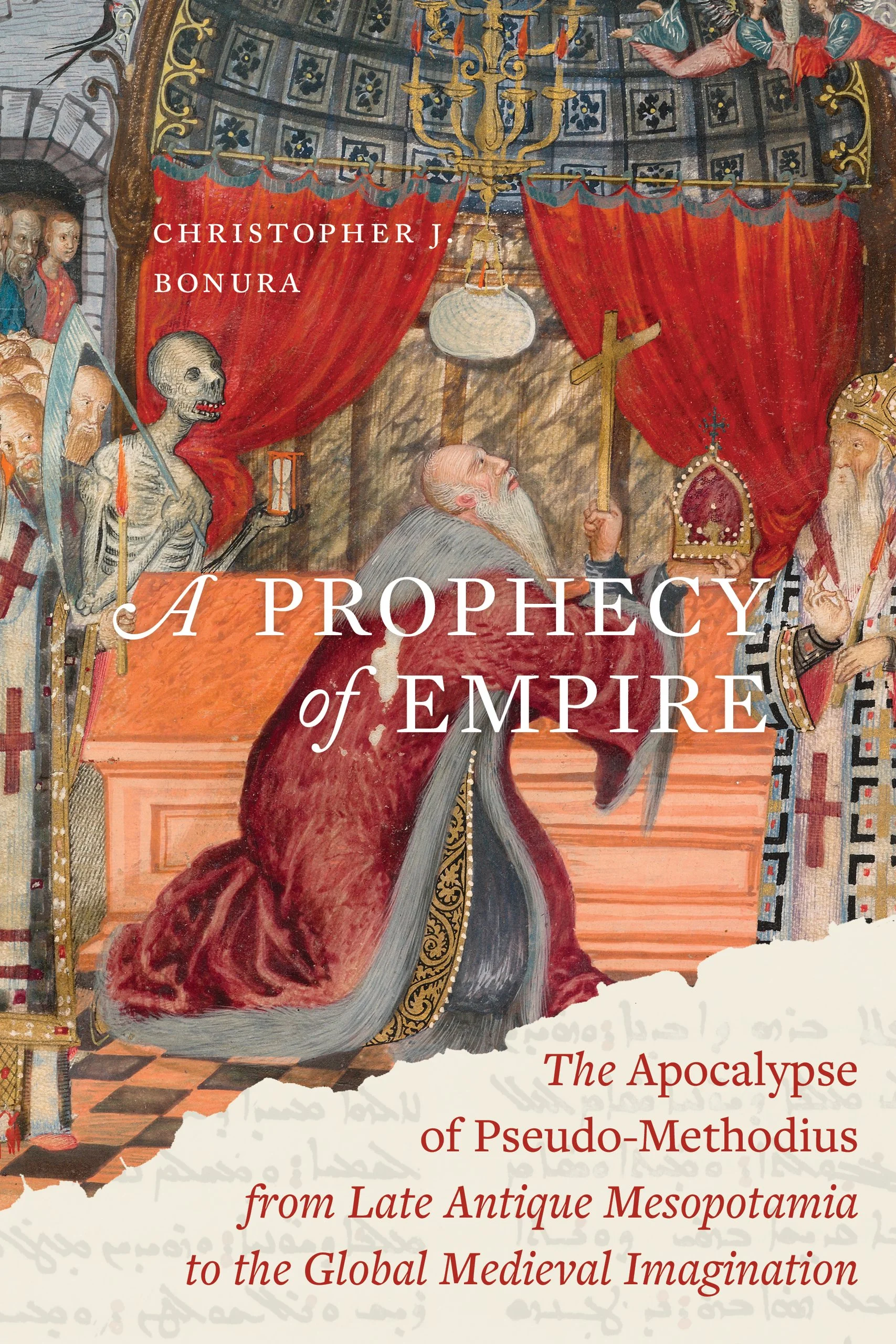
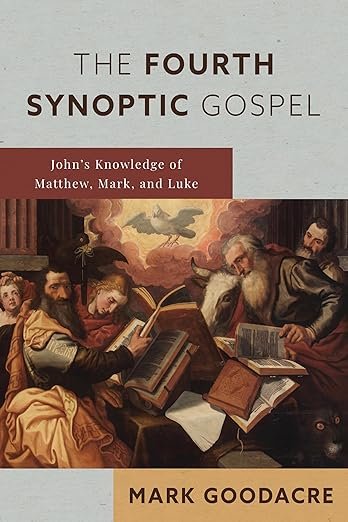
In The Fourth Synoptic Gospel, Mark Goodacre challenges this perspective and attempts to demonstrate that the author of the fourth gospel was not only aware of the Synoptic Gospels but also used them in the writing of their gospel text.
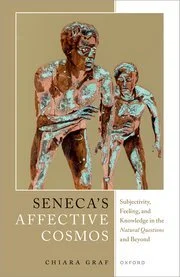
Read MoreSeneca’s Affective Cosmos: Subjectivity, Feeling, and Knowledge in the Natural Questions and Beyond
Graf serves as an able guide for readers through the complex ideas of Stoicism, Seneca’s philosophical vision, and affect theory. Readers less familiar with Senecan ideas will likely find this book a helpful introduction.
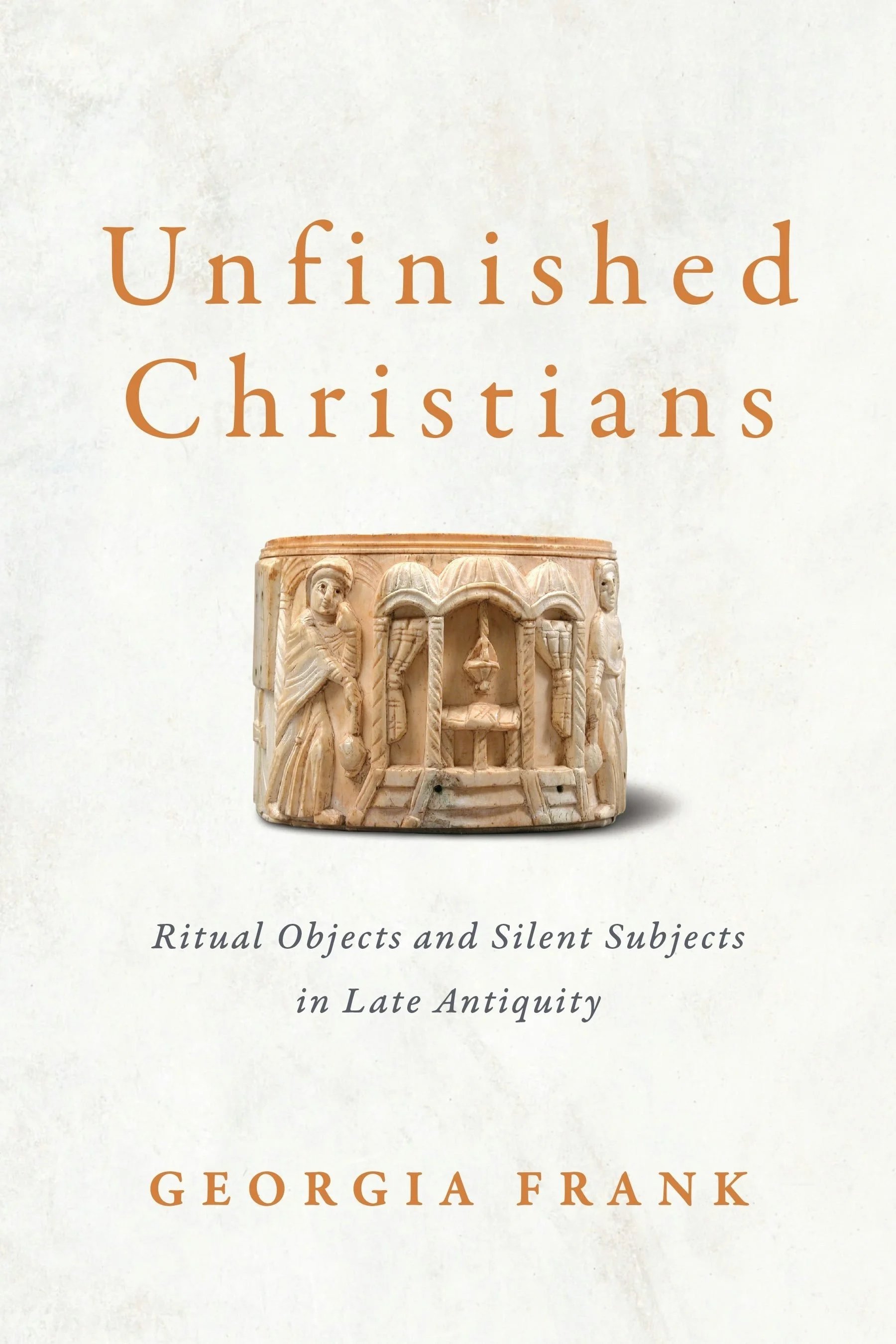
Read MoreUnfinished Christians: Ritual Objects and Silent Subjects in Late Antiquity
In Unfinished Christians, Frank focuses on literary records produced in and for shared spaces, liturgical and otherwise, where ordinary Christians would have gathered for various religious rites.
Read MoreCorpus Inscriptionum Iudaeae/Palaestinae, Volume V: Galilaea and Northern Regions
The intended audience for CIIP 5 consists of scholars specializing in the study of early Judaism, early to late antique Christianity, and the early Islamic period. However, given that every inscription is translated into English, non-specialists interested in any of these time periods in this location will benefit from this epigraphic collection.
Read MoreA Memory of Violence
A Memory of Violence offers a useful overview for anyone interested in understanding Chalcedon and its effects at a more detailed level, as well as those interested in the history of Christianity writ large.
Read MoreHuman Salvation in Early Christianity: Exploring the Theology of Physicalist Soteriology
Scully’s book commendably demonstrates the need for renewed and careful attention to a pattern of thought that has been treated poorly, and it does so with sharp analytical clarity.
Read MoreAncient Christianities: The First Five Hundred Years
Paula Fredriksen begins Ancient Christianities: The First Five Hundred Years with a question: considering the variety of gods and local deities present in both the ancient Mediterranean and the Roman Empire, how did one singular god end up dominating the focus of the late Roman Empire?
Read MorePaul Transformed: Reception of the Person and Letters of Paul in Antiquity
Yarbro Collins’s goal in Paul Transformed is to capture the multiple images of Paul that early Christ-confessors created from reading the apostle’s letters.
Read MoreThe Forgotten Creed: Christianity’s Original Struggle against Bigotry, Slavery, and Sexism
Patterson’s reading seeks to reclaim an unrealized moral and ethical vision of a biblical passage that continues to be invoked today.
Read MoreJewish Law & Early Christian Identity: Betrothal, Marriage, & Infidelity in the Writings of Ephrem the Syrian
Monnickendam’s study wrestles with the complexity of Ephrem’s thought as well as the centrality of marriage imagery within his writings. While each chapter pulls readers into legal minutiae from across the ancient Mediterranean, she bookends her analysis with easy-to-follow summaries of her findings.
Read MoreWomen and the Polis: Public Honorific Inscriptions for Women in the Greek Cities from the Late Classical to the Roman Period
Women and the Polis is a welcomed addition to the scholarly conversation not only about ancient Greek benefactresses in particular but also about ancient Greek benefaction in general.
Read MoreCoptic: A Grammar of Its Six Major Dialects
By methodically reading through its chapters and working through its exercises and chrestomathy, a user of Allen’s grammar can rapidly increase their familiarity with a good amount of the variation found in Coptic texts, then have the book on hand as a quick initial resource for whatever they might happen to read afterwards.
Read MoreThe Secret Gospel of Mark: A Controversial Scholar, a Scandalous Gospel of Jesus, and the Fierce Debate Over Its Authenticity
Readers will learn a great deal from G. Smith and Landau about paleography, apocrypha, monasticism, the history of sexuality, and the strange academic environments in which all of these are explored: filled with curiosity, envy, ambition, and flashes of brilliance.
Read MoreSBL 2021 Review Panel: Bishops in Flight
AJR is pleased to publish remarks delivered as part of a book review panel at the annual meeting of the 2021 Society of Biblical Literature in San Antonio. The panel was organized by members of the Social History of Formative Christianity and Judaism, Exile (Forced Migrations) in Biblical Literature steering committees. The book is Bishops in Flight: Exile and Displacement in Late Antiquity (University of California Press, 2019) by Jennifer Barry and the panelists were: M Adryael Tong (ITC), Mark K. George (Iliff School of Theology), Matthew Larsen (University of Copenhagen), and Tina Shepardson (University of Tennessee Knoxville). The series begins with a book review of Bishops in Flight by Madeline St. Marie.
Bishops in Flight: Exile and Displacement in Late Antiquity
Bishops in Flight reminds us to look to how narratives arise in in the collective memory of a community.
Read MoreMaterials That Make Difference
The case of the Jewish catacombs exemplifies how scholars of the ancient world have long worked with undertheorized ideas about religious identities, religious communities, and the relationship between material culture and lived religion, among other things.
Read MoreThe Early Modern Invention of Late Antique Rome
Denzey Lewis poses the provocative question: how did Rome become holy? The answer, as we see by the end of this book, lies mainly in the logic behind the compilation of the sources rather than in the sources per se.
Read MoreRereading Reading Renunciation
Hell Hath No Fury: Gender, Disability, and the Invention of Damned Bodies in Early Christian Literature
Building upon scholarship that sees juridical contexts at the heart of these conceptions of punishment and just desserts, Henning pushes such conclusions further by asking what other assumptions, namely concerning bodies and gender, are brought into our scholarly interpretations of Hell and the afterlife.
Read MoreDivine Accounting: Theo-Economics in Early Christianity
In Divine Accounting, Quigley contends that the modern categories of “theology” and “economics” were not separate in antiquity but intertwined.
Read More