
“Van Joel” by Katherine Schneider.
Let me begin by thanking the editors of Ancient Jew Review for the opportunity to reflect on my scholarship and career. One way to illuminate my development as a teacher and scholar is to explain how my background and life experiences shaped me as a student, a professor, and a person.
I was raised in a fairly assimilated Conservative Jewish home in Ohio. After I was expelled from afternoon Hebrew school classes at the Conservative synagogue, my mother, beginning in seventh grade, enrolled me in an afternoon program at an Orthodox synagogue. The teachers in this Orthodox setting transmitted their deep love of Jewish texts and religious practice, and in time, I gravitated towards Orthodox Judaism. I attended a Jewish day school for 8th grade and then I enrolled in and lived at a Yeshiva in 9th-10 grades. Although I ultimately decided I could not live my life within the four cubits of halakhah, I have great respect for those who live Jewishly observant lives. My immersion in Orthodox Jewish life provided me with experiences and skills that greatly contributed to my abilities as a biblical scholar and a scholar of religion. Spending about 8 hours a day, six days a week, studying Talmud for a couple years no doubt enhanced my ability to pore over and think through the facets of a complicated or ambiguous text. Furthermore, certain powerful rituals like the birkat cohanim or the kapporet ritual before Yom Kippur, as well as the ecstatic communal singing and dancing on holidays like Simchat Torah allowed me to glimpse the mysterious and awe-filled dimensions of life that Judaism and other religious traditions aim to awaken in us. My skill in noticing subtle associative connections between differing biblical narratives was sharpened by my immersion in yeshiva culture where the Tanakh is read through the lens of the midrashic rabbinic meta-story.
Not long after I left yeshiva, my interest in religion, and in biblical studies in particular, was reignited through several avenues. First, my experimentation with hallucinogenic drugs during my early adulthood, often while listening to music linked with this counterculture, left me with the sense, to quote William James, “that our normal waking consciousness . . . is but one special type of consciousness, whilst all about it, parted from it by the filmiest of screens, there lie potential forms of consciousness entirely different.”[1] On the musical side, I became and remain a Grateful Dead fan. I attribute this in part to the fact that the jams interlinking many of their songs employ an associative technique not dissimilar from certain forms of midrash, as well as to the liturgy-like aspects of their festive concerts. Secondly, to fulfill Miami University’s liberal arts requirement of completing 2 years of modern foreign language coursework, I was placed as a freshman in a two-person 200 level class reading biblical Hebrew texts. Miami U. did not offer Modern Hebrew, which I had begun studying in 11th grade. Yet, in an unusual turn of fate, the administration at Miami U. accepted Prof. Harold Forshey’s argument that the college should grant modern foreign language credit for reading Biblical Hebrew texts, insofar as Biblical Hebrew is closer to modern Hebrew than Shakespeare is to contemporary English, and Shakespeare counted as an English course. I continued Biblical Hebrew coursework throughout my college years. Because these classes met in the religion department, housed in its own manse, I began to meet and take classes with the other religion faculty as well. One of my majors was in Poli Sci, as my parents hoped I might become a lawyer, especially since my father had begun but not completed law school. My second major, the one I was more passionate about, was religion. In my senior year, I applied to a variety of law schools and MA Religion programs, but I opted to pursue an MA in religion at the University of Chicago Divinity School, to my parents’ and particularly my father’s great disappointment.
Another serendipitous event occurred as I began my MA in 1982 as that fall Prof. Jon Levenson began teaching at the UChicago Div School. At this time, in the early 1980’s, there were very few Jewish students at any divinity schools, even at the more secular Chicago. In fact, if one wanted to study Judaism at Chicago then, one would have to do so within the history of Christianity track, or possibly in a comparative way, within History of Religions. After completing my MA, I applied into the Bible PhD program, which required work in both testaments of the Christian Bible even if one specialized in the Hebrew Bible/Old Testament. The Christian orientation of the curriculum at Chicago, and the fact that I was not infrequently the only Jewish student in many courses, inevitably forced me to think through and articulate how Jews read the Bible differently than Christians. The fact that Prof. Levenson was a riveting lecturer who regularly interrogated various secular and Christian biases within a good deal of critical biblical scholarship no doubt played a role in my enrolling in, or auditing, nearly all of the courses he taught while at Chicago. We also bonded over our shared love of humor, as he peppered his lectures with many quips and jokes. Both his own trove of one-liners as well as the many jokes I have collected over the years seem to have their own type of associative character: certain topics or words will bring a joke to mind and that will remind one of yet other jokes and anecdotes.
The fact that the academic field of biblical studies itself was dominated by Christians inevitably influenced my scholarship and my teaching. Sometimes Christian biases were more benign, other times more troubling. In 1992-93 I taught 8 sections of the OT Intro course at Loyola of Chicago because I was informed by the chair, over the objections of other NT professors who came to my defense, that a Jew could not teach New Testament at Loyola. On the more benign side, when the distinguished Lutheran theologian Robert Jenson worked to bring me in as the first full-time Jewish faculty member of the Religion department at St. Olaf, I was surprised to learn that the required introductory Bible, Community, and Culture course, taught by religion faculty in several fields, included an agreed upon set of biblical texts but skipped Leviticus completely, a situation I lobbied successfully to change.
My scholarship was also affected by the fact that I was a Jew working in a field dominated by Christians, even as I am indebted to many Christian scholars, mentors, and colleagues who worked to bring Jewish voices into the field. Thus, my dissertation, in time published as Corporate Responsibility in the Hebrew Bible (JSOT 196; Sheffield, 1995), articulated what I can now see was in some sense a Jewish approach that seeks to avoid explaining away certain tensions in the biblical text by attributing them to different stages in ancient Israel’s religious development. Many previous scholars presumed that corporate ideas of retribution were self-evidently “primitive” and that individualized retribution was a later morally superior viewpoint. However, this paradigm was rooted in several questionable modern secular and pre-modern religious presuppositions. In particular, modern ideas of humans naturally moving to higher moral stages were fused with longstanding Christian supersessionist tendencies that characterize a mercy-oriented Christianity as operating on a higher moral plane than the more violent religion of the “Old Testament.” I concluded this study by suggesting that contemporary Western society has overemphasized individual rights at the expense of our communal responsibilities, and that we might benefit from reappropriating certain facets of the biblical vision in which the individual is an integral part of a larger communal whole. Interestingly enough, the Covid 19 pandemic brought about some level correction by affirming that one’s own careless behaviors might carry deadly consequences for others.
I also came to see that Jews at times ignored or downplayed certain aspects of the biblical text or of rabbinic tradition as they sought to distinguish Judaism from Christianity, often in simplistic terms. Thus, my essay “Paradise Regained” traced out a set of rabbinic traditions that suggest something quite close to the Christian notion of original sin, an idea that many Jews think has no parallel in rabbinic Judaism. This essay appeared in the anthology Jews, Christians, and the Theology of the Hebrew Scriptures (SBL, 2000), which I co-edited with Alice O. Bellis. This volume, which developed from contributions to panels hosted by an SBL section I co-chaired, contains a wide array of contributions by Jewish and Christian biblical scholars and explores the usefulness, as well as some of the limitations, of such scholarly interreligious dialogue.
There is little doubt that my research on and approach to the biblical text have been influenced by my Doktorvater, Jon Levenson. In fact, my second monograph Yet I Loved Jacob: Reclaiming the Biblical Concept of Election (Abingdon, 2007) aimed to bring many of the ideas that Levenson articulated in his seminal book The Death and Resurrection of the Beloved Son (Yale, 1993) to a wider audience. In Yet I Loved Jacob I focused on the theme of God’s mysterious choice (election) of the Israelites, an idea that pervades the Hebrew Bible and is central to how later Jewish and Christian communities understand their respective theological identities. As a result, election theology plays a significant role in contemporary Jewish/Christian dialogue. However, the notion that God would favor one person or group over another is highly problematic in our pluralistic egalitarian culture, and therefore it is frequently ignored or at times even repudiated by contemporary Christians and Jews. I argued, however, that a careful reading of the relevant texts can yield renewed appreciation for the biblical concept of election, even while fully acknowledging deeply troubling elements of this theology, such as God’s command to annihilate the Canaanites in Deuteronomy and Joshua. Whether one wishes to embrace or reject biblical election theology, one must first see that the biblical notion of chosenness is far more complex than many imagine, and that it is ultimately inseparable from Israel’s rather unusual monolatry/monotheism and her understanding that the God who created and controls the universe has a personal dimension that meets us in our individual humanity.
Many of the arguments in the book grew out of my attempts to address a widespread rejection of Jewish particularism, not only by nearly all of my students, whether religious or secular, Jewish or Christian, but also by many liberal Jews in my community. I say nearly all of my students because one of the best undergraduates I have had the pleasure of teaching, Dr. Anne W. Stewart, wrote a fabulous honors thesis on the place of the nations in Isaiah 40-66, that in time, we developed into a co-authored essay published in HTR.[2] In terms of my local Jewish community, my wife Jody was the Director of Education at a Reconstructionist synagogue at that time, a movement that rejects Jewish chosennness and emends the liturgy accordingly.[3] Once she mentioned that some of her synagogue students wanted to know if Judaism actually claimed that Jews were chosen by God. Encounters with Jewish rejections of election motivated me to articulate the complexity and centrality of election theology in the Bible, as well as its continuing importance throughout later Jewish history and still today.
My work on Israel’s election theology also drew me into the orbit of a number of Walter Moberly’s PhD students at Durham University, where over a nearly 20-year timespan I was a Jewish Studies research scholar in residence during 5 sabbatical leaves. Of particular note, Joel N. Lohr, whose dissertation subsequently published as Chosen and Unchosen: Conceptions of Election in the Pentateuch and Jewish-Christian Interpretation (Eisenbrauns, 2009) discussed approaches to election theology by various Jewish and Christian scholars including some reflections on my work in this area. In time, Joel Lohr and I co-authored several articles as well as three Bible related introductory books that aimed to illuminate how Jews and Christians read the Bible in unique ways.[4] In addition my interests in various aspects of this topic led to my involvement in co-editing two thematically focused Festschriften, one in honor of each of my two primary mentors, John J. Collins and Jon D. Levenson.[5] While Professor Collins only arrived at Chicago in 1991, I doubt I would have finished my PhD without his generosity in taking on a dissertation not initiated under his tutelage and I greatly benefited from his detailed and incredibly helpful editorial feedback as well as from his sagely career advice.
Over the years I have also written on a number of other topics including several essays examining humor in the Bible and a number of articles exploring how the Hebrew Bible might illuminate contemporary debates about issues such as wealth and poverty, immigration, illness and death, and the Covid pandemic. These topical essays took wing from seeing analogies between our contemporary world and the biblical text that often are overlooked. To paraphrase Jonathan Z. Smith’s take on the purpose of the academic study of religion, when these analogies succeed, the formerly strange text of the Bible seems less foreign and thus more relevant to my students and readers, while the everyday reality we inhabit in turn may become less familiar.
My essays on humor in the Hebrew Bible grew from my enjoyment of hearing and retelling contemporary jokes, and from my noticing humorous touches in the biblical text that many contemporary readers missed because they presumed that sacred scripture by definition could not contain humor. In my first essay on this topic, I focused on Isaac as a humorous figure and sought to demonstrate that the biblical authors depicted Isaac in a humorous manner and that the humor in these narratives is theologically significant.[6] I subsequently penned an essay exploring humor in the Exodus and Esther stories[7] and another essay exploring humor in a number of narratives in Judges.[8] More recently I wrote an essay that narrates and exegetes ten contemporary Jewish jokes in order to illuminate Jewish/Christian theological and cultural differences.[9] I am proud of this work. It’s perhaps worth noting, however, that some members of my tenure committee discouraged me from pursuing this topic, deeming it not a serious academic endeavor. I disagreed then, and now do even more so. But I did take a break from the subject and returned to it after I was a tenured full professor.
On that note, a good deal of my work has originated in moments when I have felt uneasy or possibly annoyed by something I have heard repeated that strikes me as inaccurate or simplistic. Thus, one of my favorite essays, “Would you impugn my Justice” was catalyzed when my host at a Passover Seder explained that he skipped reading an excerpt from Psalm 37:25 in the Jewish grace after meals “because we all know what this verse says about the children of righteous people never going hungry is not true.” It immediately dawned on me that my host’s statement echoed oversimplified views of the language found in texts like Deuteronomy and Proverbs, and in the speeches of Job’s friends.[10] Likewise, an essay I penned on wealth and poverty in ancient Israel and in the USA today grew out of my being disturbed by the way in which the chants of “We built it” at the Republican convention on Tuesday August 28, 2012 sounded quite close to God’s warning to Israel in Deuteronomy 8:17 to avoid the idolatrous claim that “My power and the might of my own hand have gotten me this wealth.”[11] A more recent essay, which attempted to put the Bible into conversation with realities we experienced during the Covid 19 pandemic, had its origins in my hearing journalists and public figures regularly claim that this situation was unprecedented, a statement that immediately struck me as ignorant of history.[12]
I have also continued to co-author a number of recent essays including two with Mark Reasoner critiquing troubling supersessionist tendencies in N.T. Wright’s Pauline scholarship,[13] and an essay co-authored with Allison Hurst, a recently minted Harvard PhD, reflecting on how the Hebrew Bible might inform contemporary debates surrounding immigration in the US.[14] While co-authoring essays and books is common in STEM fields, in my view, it is too rare in the humanities. I have found the co-authoring process to be deeply satisfying, and that it produces scholarship that is more balanced and more widely informed than if I had attempted to tackle such complex material alone.
I would be remiss if I failed to note how deeply indebted my scholarship, my teaching, and truthfully much of my life is to the rich network of mentors, colleagues, students, as well as to family and friends. In particular, I was nurtured by many scholars who in time have come to view me as a colleague. A number of times, colleagues have invited me to serve in roles that broadened my academic horizons and allowed me to form academic, and at times personal, friendships with many scholars and graduate students. I think of the 5 years I served as a book review editor for AJSR, having the opportunity to teach one-off MA level courses at Harvard, Yale, and Duke Divinity Schools, participating in an NEH Summer Seminar in Jerusalem, my semester at CTI in Princeton, and my participation in a 3-year Lily working group on teaching the Bible in the 21st century. I am also thankful for the many former students and mentees who are now colleagues and from whom I continue to learn much. Smith College has not only provided me with immense support to develop as a teacher and a scholar, but has also provided me with a vibrant intellectual atmosphere filled with quirky and interesting students and colleagues who have been instrumental in helping me test out and nuance various ideas and insights that have animated my scholarship and teaching over more than three decades.
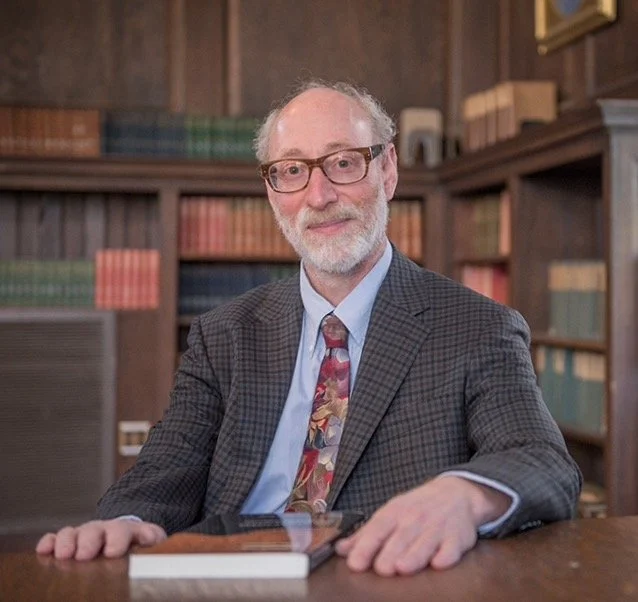
Joel S. Kaminsky is the Morningstar Professor of Jewish Studies and a Professor of Bible in the Religion Department at Smith College in Northampton, Massachusetts.
[1] William James, The Varieties of Religious Experience, (Random House, Modern Library, 1902), 378.
[2] Joel S. Kaminsky and Anne W. Stewart “God of all the World: Universalism and Developing Monotheism in Isaiah 40-66,” Harvard Theological Review 99.2 (April 2006): 139-63.
[3] On this topic, see my essay “Attempting the Impossible: Eliminating Election from the Jewish Liturgy,” Midstream (Jan.-Feb. 2005): 23-27.
[4] These include, The Torah: A Beginner’s Guide, (Oxford: One World Press, 2011); The Abingdon Introduction to the Bible: Understanding Jewish and Christian Scripture, (Nashville: Abingdon, 2014) that was tri-authored with Mark Reasoner; and The Hebrew Bible for Beginners: A Jewish and Christian Introduction, (Abingdon, 2015).
[5] The "Other" in Second Temple Judaism: Essays in Honor of John J. Collins, (Dan Harlow, Matthew Goff, Karina Hogan, and Joel S. Kaminsky eds.; Eerdmans, 2011) and The Call of Abraham: Essays on the Election of Israel in Honor of Jon D. Levenson, (Gary A. Anderson and Joel S. Kaminsky eds.; University of Notre Dame Press, 2013).
[6] “Humor and the Theology of Hope in Genesis: Isaac as a Humorous Figure,” Interpretation 54.4 (October 2000): 363-375.
[7] “Humor and Hope from Passover to Purim,” Marginalia, appearing online on April 12, 2019. Marginalia is an online journal run by the LA Review of Books. The essay can be accessed here: https://themarginaliareview.com/humor-hope-passover-purim/
[8] “Humour, Characterization and the Theology of Judges,” Pages 11-26 in Characters and Characterization in the Book of Judges (T&T Clark/Bloomsbury, 2024).
[9] “So the rabbi says to the priest: The value of jokes in Jewish-Christian dialogue,” Christian Century 139.3 (February 9, 2022): 30-34.
[10] “Would you impugn My Justice?: A nuanced approach to the Hebrew Bible's theology of Divine Recompense," Interpretation 69 (July 2015): 299-310.
[11] “The Might of My Own Hand Has Gotten Me This Wealth”: Reflections on Wealth and Poverty in the Hebrew Bible and Today,” Interpretation 73.1 (Winter 2019): 7-17.
[12] “‘A Plague Broke Out among Them’: Reflections on the Bible and the Pandemic,” Interpretation 77.3 (July 2023): 246-258.
[13] “The Meaning and Telos of Israel’s Election: An Interfaith Response to N.T. Wright’s Reading of Paul,” Harvard Theological Review 112.4 (Fall 2019): 421-446 and “In Quest of a Coherent Portrait of Paul: A Rejoinder to Michael Bird,” Harvard Theological Review 113.4 (Fall 2020): 513-527.
[14] “‘My Father Was a Wandering Aramean’: Biblical Conceptions of Migration and Their Relevance to Contemporary Immigration Debates in the United States.” Co-authored with Allison Hurst. Published online on 1/23/2025 in The Oxford Handbook of Religion and Contemporary Migration. Hardcopy due out in 2026.