
In considering the monastic mind(s) of late antiquity, Paul Dilley rejects models entrenched in a Cartesian dualism—opting instead to explore modes of embodied cognition. He proposes that the cognitive training practiced by early Christian monks led to the “gradual acquisition of a new and particularly monastic theory of mind.”
Read MoreDuke/UNC CLAS Symposium Report | De Malo: Evil and Theodicy in Late Antiquity

This year’s conference took up discourse about evil in late antiquity as a test case. Might the ever-pressing issue of theodicy provide a topic on which authors of various late ancient pieties could both demonstrate their commonalities and distinguish their competing claims?
Read MoreWeek in Review (9/28/18)

Carved marble sarcophagus section | 3rd-4th century, currently held in the Jewish Museum (New York) | Image Source
Carved marble sarcophagus section | 3rd-4th century, currently held in the Jewish Museum (New York) | Image Source
This Week: Roasting Romans, Jerusalem destruction, stunning Jordan tomb discovery, classroom digital humanities, even a sprinkle of Slavonic apocrypha – and more!
Read MoreDissertation Spotlight | Sarah Emanuel, "Roasting Rome"

© Rob Sample
© Rob Sample
As the title of this project suggests, Revelation “roasts” Rome—both humorously and via imagined incendiary flame (see Rev. 17:16; 18:8)—to the extent of creating a new world order in which the implied Jewish Other reigns supreme over and against the Roman imperial order.
Read MoreBook Note | Rabbinic Tales of Destruction
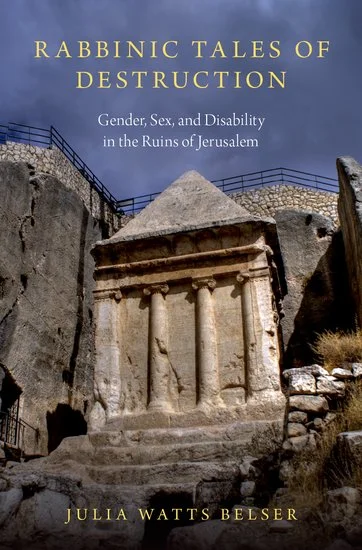
“Beautifully written and clearly organized, the strength of Belser’s method for reading rabbinic tales is in not fitting the Bavli into any one theoretical framework, but rather in allowing her hermeneutic lenses to shift along with the text.”
Read MoreWeek in Review (9/21/18)

Arsosolio fresco of Christ and the Twelve Apostles | Fourth-century, from the Catacombs of Domitilla, Rome | Image Source
Arsosolio fresco of Christ and the Twelve Apostles | Fourth-century, from the Catacombs of Domitilla, Rome | Image Source
This Week: Jill Hicks-Keeton on covenant without circumcision, early Christian women, Yom Kippur, Armenia at the Met, dramatic Iznik basilica discovery – and more!
Read MoreCovenant without Circumcision? What to Do with a Woman
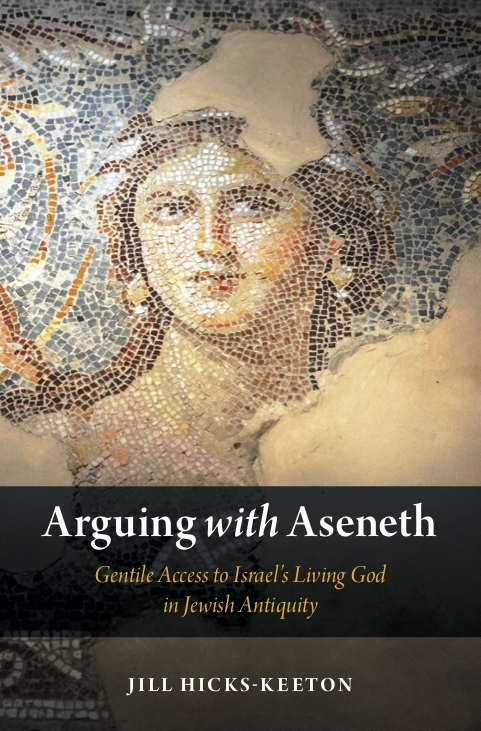
The character of Aseneth becomes transformed from material mother of the sons of Joseph to mythic mother-figure for the tribes of Israel and penitent nations who join in worshiping Israel’s God.She has become, in this ancient tale, a productive site of intervention in Israel’s story—a matriarch who matters in the history of and for the future of God’s covenanted community.
Read More“Not Veiled in Silence”: The Challenge of Writing about Early Christian Women

Helena as depicted in Piero della Francesca's Discovery and Proof of the True Cross (1447-1466). Image located in Basilica San Francesco in Arezzo, Italy. Courtesy of Angela Christman
Helena as depicted in Piero della Francesca's Discovery and Proof of the True Cross (1447-1466). Image located in Basilica San Francesco in Arezzo, Italy. Courtesy of Angela Christman
How did women of various regions, backgrounds, situations, and temperaments assume authority, exercise power, and shape both their legacy and the legacy of Christianity?
Read MoreWeek in Review (9/14/18)

Cuneiform tablet with instructions for dying wool | Neo-Babylonian, found at Sippar, currently in the collection of the British Museum (BM62788) | Image Source
Cuneiform tablet with instructions for dying wool | Neo-Babylonian, found at Sippar, currently in the collection of the British Museum (BM62788) | Image Source
This Week: Disciplinary shifts with Erich Gruen, ancient virginity, law and gender, Hebrew manuscripts, a surprising amount of exile – and more!
Read MoreA Wandering Jew: Some Reflections

A fresco found in Dura Europos depicting scenes from the Book of Esther.
A fresco found in Dura Europos depicting scenes from the Book of Esther.
Erich Gruen with a retrospective of his work: “If a consistent thread runs through my studies of Jewish history in the context of classical antiquity, it can be found in resistance to the common portrayal of Jews as victims.”
Read MoreBook Note | Signs of Virginity
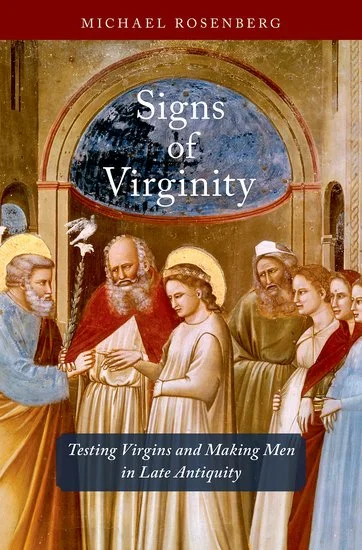
Rosenberg’s book sets out to examine rabbinic paradigms of how virgin women’s bodies work, how the loss of that virginity happens, and therefore, what evidence proves the existence of virginity.
Read MoreWeek in Review (9/7/18)

Cover and first surviving page of the Syriac Life of Barsawma (d. ca.492) | Undated MS from Urfa | Image Source
Cover and first surviving page of the Syriac Life of Barsawma (d. ca.492) | Undated MS from Urfa | Image Source
This Week: Brent Nongbri, Dead Sea Scrolls fakery, looted antiquity raids, Call for Papers up the wazoo, ancient Arabs, excavation found footage – and more!
Read MoreA Manuscript of Exodus Wandering in the Wilderness
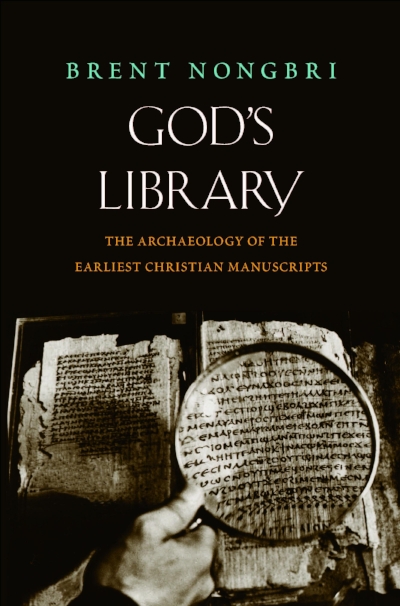
Ancient manuscripts are more than just carriers of texts. They are archaeological artifacts and deserve to be studied as such.
Read MoreWeek in Review (8/31/18)

The “Babylonian Map of the World,” Babylonian map on clay tablet (C6) | Found at Sippar, currently in the collection of the British Museum (BM 92687) | Image Source
The “Babylonian Map of the World,” Babylonian map on clay tablet (C6) | Found at Sippar, currently in the collection of the British Museum (BM 92687) | Image Source
This Week: Summer pedagogy forum, Bulgarian archaeology, early New Testament manuscripts, volcanic explosions, Museum of the Bible, chained books – and more!
Read MoreCharting the Course: Using Maps for Pedagogical Progress

Babylonian Map ca. 6th century BCE (Wikimedia Commons)
Babylonian Map ca. 6th century BCE (Wikimedia Commons)
Borders change, today and throughout history. Incorporating maps into the classroom encourages the students to view this for themselves and to begin to understand the myriad of ways that politics shapes geographical borders.
Read MoreDissertation Spotlight | Scribal Habits in Selected New Testament Manuscripts, Including those with Surviving Exemplars
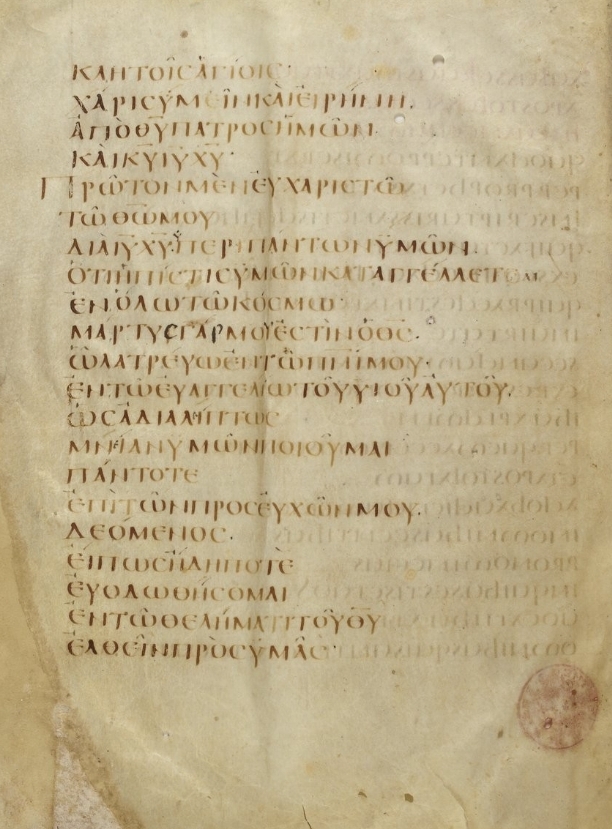
Codex Claromontanus: Romans 1:7-1 (Image courtesy of the Bibliothèque nationale de France)
Codex Claromontanus: Romans 1:7-1 (Image courtesy of the Bibliothèque nationale de France)
At the core of the dissertation, three chapters analyze the scribal habits of the copyists of various manuscripts.
Read MoreWeek in Review (8/24/18)

Late thirteenth-century restored “Deisis” (δέησις) Mosaic | Hagia Sophia, Istanbul | Image Source
Late thirteenth-century restored “Deisis” (δέησις) Mosaic | Hagia Sophia, Istanbul | Image Source
This Week: Dunhuang manuscripts, calls for papers, Jewish foodways, ethnicity and the Peutinger Table, Shayna Sheinfeld on acting apocalypses – and more!
Read MorePerforming Apocalyptic Texts: Teaching the Eschatological Banquet from the Dead Sea Scrolls

The Wedding Banquet of Cupid and Psyche (1517) by Raphael. Villa Farnesina, Rome
The Wedding Banquet of Cupid and Psyche (1517) by Raphael. Villa Farnesina, Rome
“Performing the banquet shifted their analysis from the realm of the academic into the realm of something that is socially functional, assisting with student thinking about the ancient texts as representative of real people and their actions and beliefs.”
Read MoreBook Note | The Jewish Dietary Laws in the Ancient World

“To briefly sketch some of Rosenblum's findings, we see that Greek and Roman sources are often perplexed by or antagonistic to these laws, Hellenistic Jews justify the laws via allegory, reason, and revelation, Rabbinic sources only begin to provide justifications beyond revelation with the Amoraim, and later Christian sources return to allegory, while denying the literal adherence to these prohibitions.”
Read MoreWeek in Review (8/17/18)


Folio 1r from Hebrew Bible manuscript with Targum and commentaries | Bodleian Library Ms. Canon Or. 62, Oxford | Image Source

Folio 1r from Hebrew Bible manuscript with Targum and commentaries | Bodleian Library Ms. Canon Or. 62, Oxford | Image Source
This Week: St Catherine’s Monastery and digital humanities, multilingualism along the Nile, antiquities trafficking, philosopher monks, ethical philology - and more!
Read More