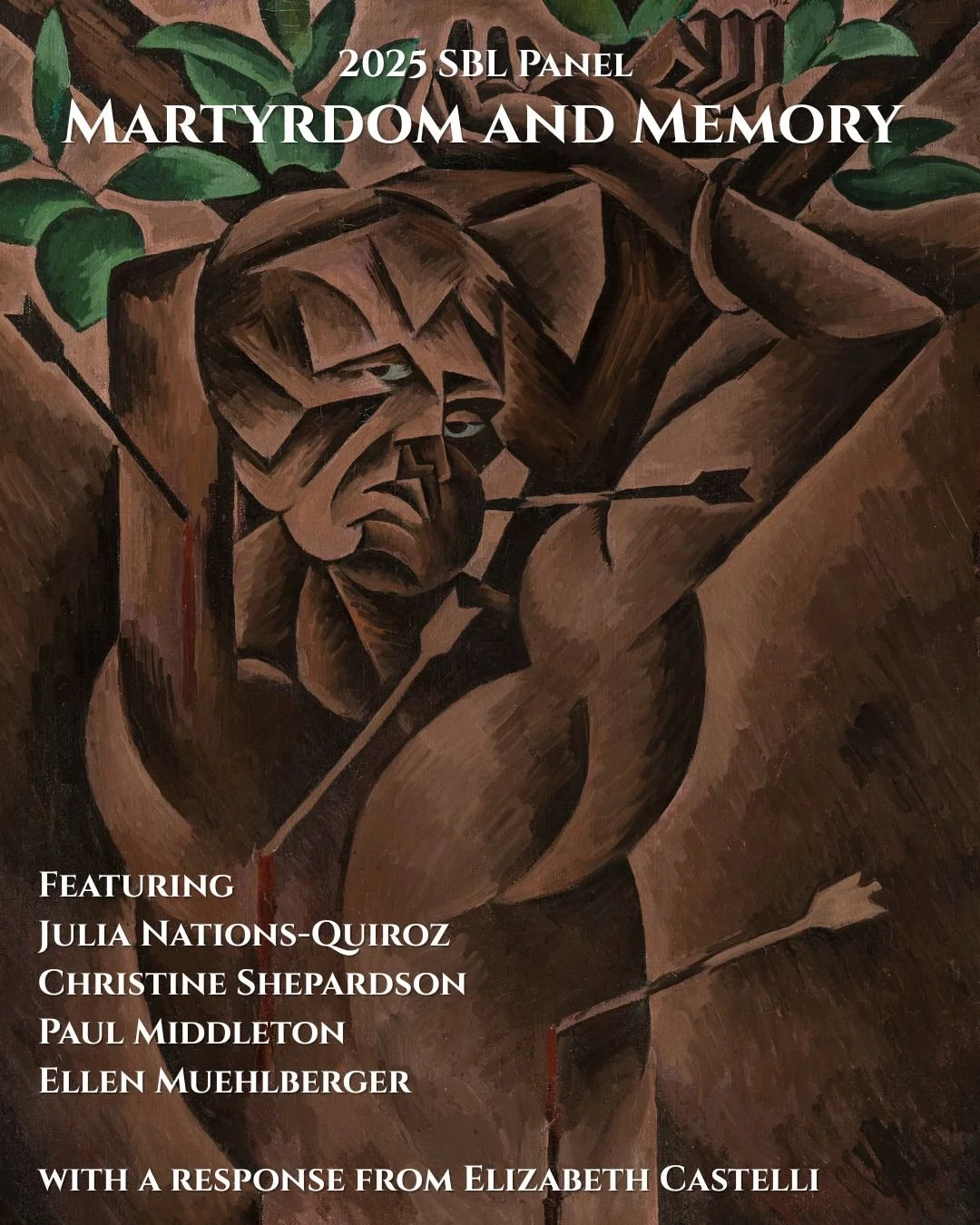
At the 2025 Annual Meeting of the Society of Biblical Literature, the Inventing Christianity Unit sponsored a panel celebrating the work of Elizabeth Castelli, highlighting her landmark 2004 book, Martyrdom and Memory: Early Christian Culture Making. AJR is honored to feature the panelists’ remarks and Elizabeth Castelli’s response.
Reconceptualizing Martyrdom in Late Antiquity: A Martyrial Lens and Living Martyrs
In Martrydom and Memory, Elizabeth Castelli fruitfully applied the theoretical framework of collective memory to ancient Christian martyrdom accounts, helping us understand how early Christian communities constructed and presented the past.
A Memory of Violence: Sixth-Century “Culture Making” in a Heretical Empire
In her groundbreaking 2004 book Martyrdom and Memory: Early Christian Culture Making, Elizabeth Castelli memorably shifted our gaze from the martyrs’ torn bodies to their hagiographers, requiring us to consider how these narrators shaped their stories and to what ends, with a firm eye on such studies’ relevance for our own world.
Do Martyrs Matter in Martyrdom? Charlie Kirk as a Case Study
Do martyrs matter in martyrdom? This may seem like a question with an obvious answer. How could they not? Surely martyrdom is all about the martyrs, and without martyrs, there would be no martyrdom?
I am thrilled to reflect here on the importance of Elizabeth Castelli’s work, but before I begin, I want to take a detour , to just give a moment of thought to the work she has done that does not show up in publications.
On Being Read: Reflections on Martyrdom and Memory
As colleagues have noted, Martyrdom and Memory is now old enough to drink, having come into the world twenty-one years ago. When it first appeared, the SBL “Violence and Representations of Violence” program unit graciously organized an “author-meets-critics” panel for the book, which took place in 2005 and was a wonderful experience. Our panel today feels very much like a salutary bookend to that earlier event.