Scholars working in the adjacent fields of Christianity and Judaism in late antiquity have shared a focus on anonymously written Adversus Iudaeos dialogues and rabbinic multivocal narratives, but this common interest has not spurred comparative analysis of Rabbinic and Christian evidence.
Read MoreBook Note | Augustine and the Dialogue
Drawing on literary theory, Kenyon explores the dialogues with an eye to their pedagogical features, allowing the dialogues to be read “on their own terms.”
Read MoreDissertation Spotlight | Jael’s Gender Ambiguity in Judges 4 and 5
Judges 4–5 includes a range of gender markers (objects, spaces, language, etc.) that suggest that Jael demonstrates femininity and masculinity and thus indicate Jael’s gender ambiguity. Jael performs roles and behaviours constructed as masculine (violence, warrior, killer) and feminine (mother, seductress, nurturer) simultaneously throughout their narrative.
Read MoreBook Note | Constantinople: Ritual, Violence, and Memory in the Making of a Christian Imperial Capital
Falcasantos’ Constantinople demonstrates how change and continuity stood in tension in late antique Constantinople.
Read MoreBook Note | Egyptian Hieroglyphs in the Late Antique Imagination
Egyptian Hieroglyphs in the Late Antique Imagination is a broad-ranging and accessible treatment of how late ancient writers engaged with pharaonic history and culture in the midst of the Christianization of Egypt.
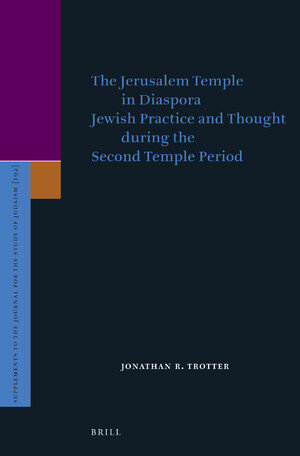
Read MoreBook Note | The Jerusalem Temple in Diaspora: Jewish Practice and Thought during the Second Temple Period
In The Jerusalem Temple in Diaspora, Jonathan Trotter offers a new reconstruction of the relationship between diaspora Jews and the Jerusalem temple that is both grounded in lived practices and informed by literary analysis.
Read MoreDyeing the Martyr’s Death: Exploring Martyrdom and Memory through a Coloring Book
This assignment encouraged students to confront and interrogate their role (even, at times, their complicity) as active participants in forming martyrdom traditions through the act of vivifying these images with color.
Read More“Mirror, Mirror!” Speaking Objects and Speaking to Objects in the Classroom
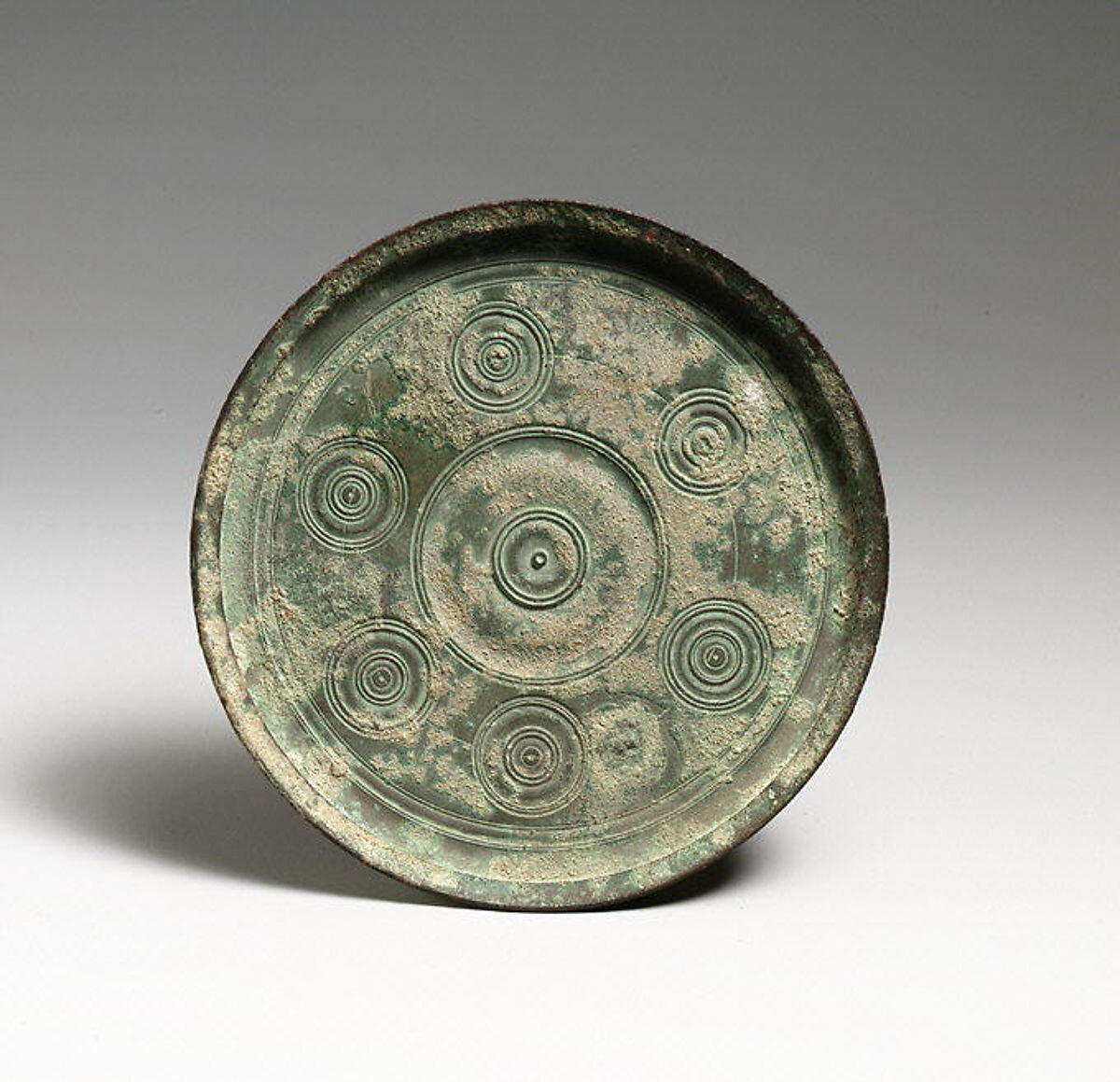
Bronze mirror ca. 100 B.C.–A.D. 100. Accession Number: 74.51.5405 at the Met.
Dr. Reyhan Durmaz describes how her students brought objects to life with creative autobiographies.
Read MoreYear in Review: Top Ten Articles of 2020
As 2020 draws to a close, the editors of Ancient Jew Review want to thank our contributors and readers for a wonderful year! Here are the most popular AJR articles:
#10 Sarah Wolf - The Rabbinic Legal Imagination
#9 Krista Dalton - Incantation Bowls and Embodied Knowledge
#8 Yakov Z. Mayer - Book Note | Between Mishna and Midrash
#7 Chance E. Bonar - Book Note | The Rise of Coptic: Egyptian Versus Greek in Late Antiquity
#6 Geoffrey Smith - Make Your Own Magical Papyrus
#5 Sarah Rollens - Essay | Notes on the Historical Paul and his Intellectual Activity
#4 David Marcus - Introduction to the Masorah | The Masorah of Biblia Hebraica Quinta (BHQ)
#3 Shayna Sheinfeld - Book Note | When Christians Were Jews
#2 Ross Kraemer - Publications | The Mediterranean Diaspora in Late Antiquity
#1 Sarit Kattan Gribetz - Using Zoom for Online Instruction: Tips for Undergraduate and Graduate as well as Adult Education Courses
We are busy preparing new content for 2021. Posts will resume January 11th!
Reading Biblical Texts with a Focus on Status and Gender
Equipped with the insights of material evidence and theoretical reflection, I thereby approach Luke-Acts as a text ripe for re-valuation.
Read MoreBook Note | Humor, Resistance, and Jewish Cultural Persistence
How can we account for the seemingly contradictory perspectives of responses to empire and imperial subjugation in the Book of Revelation? Through the lenses of humor studies and trauma theory in postcolonial discourse, Sarah Emanuel’s innovative work addresses this question and demonstrates how comic is used as a mode of survival for the Jewish community of John’s Apocalypse.
Read MoreAJR Conversations I Appalling Bodies
AJR continues its #conversations series with an exchange between Joseph A. Marchal and Jennifer W. Knust on Marchal’s new book, Appalling Bodies: Queer Figures Before and After Paul’s Letters.
Read MoreBook Note | Self-Portrait in Three Colors: Gregory of Nazianzus’s Epistolary Autobiography
Storin’s work, both monograph and translation, marks another excellent entry in the UC Press Christianity in Late Antiquity series. Taken together, these volumes will prove valuable not only to scholars of Gregory or ancient epistolography, but all those interested in the interdependent constructions of rhetoric, philosophy, and the self in late antiquity.
Read MoreSBL/AAR 2020 Panel | Beyond Canon
Ancient Jew Review is pleased to host a series of papers delivered at the annual SBL/AAR conference as part of a panel organized by Janet Spittler and Lily Vuong, chairs of the Christian Apocrypha Section.
Read MoreSBL 2019 Review Panel | Food and Transformation
AJR is happy to host publish remarks delivered as part of a review panel for Dr. Meredith J. C. Warren’s recent publication, Food and Transformation in Ancient Mediterranean Literature.
Read MoreBeyond Canon: An Introduction to the Project
Even if the fourth and fifth centuries may have brought important changes for large parts of the “Christian” movement (or better: the different groups of Christ followers), the production of texts which reasonably can be labelled “Christian apocrypha” did not simply stop. To the contrary, with some genres the production of texts seems to have exploded.
Read MoreSenator Marcellus as an Early Christian Role Model: The Destruction and Restoration of a ‘Statue of the Emperor’ in Acta Petri 11
Marcellus might be seen as a role model of how to negotiate a relationship with Roman authorities, on the one hand, and with the Christian faith and a Christian life, on the other.
Read MoreSt. Thomas the Apostle in the Armenian Church Tradition
Therefore, while in general the Armenian apocrypha have rarely been the focus of interest, the acts/martyrdoms of the founders of the Armenian Church—which, in fact, were not considered ‘apocryphal’ in medieval times—can boast of being at the center of great interest for scholars.
Read MoreVisual Representations of Early Marian Apocryphal Texts: Some Notes on the Top Register of the Triumphal Arch at Santa Maria Maggiore
While there may be books that “should not be read,” does that injunction necessarily equate to art that should not be painted or viewed?
Read MoreRetelling Thomas’ Story: Reception of the Apocryphal Acts of Thomas in the Synaxarion of the Liturgical Thomas-Feast
The indisputable presence of information from the Apocryphal Acts of Thomas in the Synaxarion of the Thomas-Feast (concerning especially the beginning of the Thomasine mission in India and his martyrdom there) proves the liturgical functionality of the reception of this apocryphal text.
Read More