
James Nati reviews Barton’s Ethics in Ancient Israel: “Barton’s work is thus meant not at offering clarity for believers as they try to live more “biblically,” but rather to argue that ancient Israelite thinkers deserve a seat at the table among other ethical thinkers throughout history.”
Read MoreThe Samaritan Other: Representation, History, and Lost Late Ancient Difference

Top register: the Good Samaritan | Rossano Gospels, f. 7v | Image Source
Top register: the Good Samaritan | Rossano Gospels, f. 7v | Image Source
What happens when we render Samaritans as full-bodied participants in an array of representation and counterrepresentation?
Read MoreBook Note | In the Image of Origen
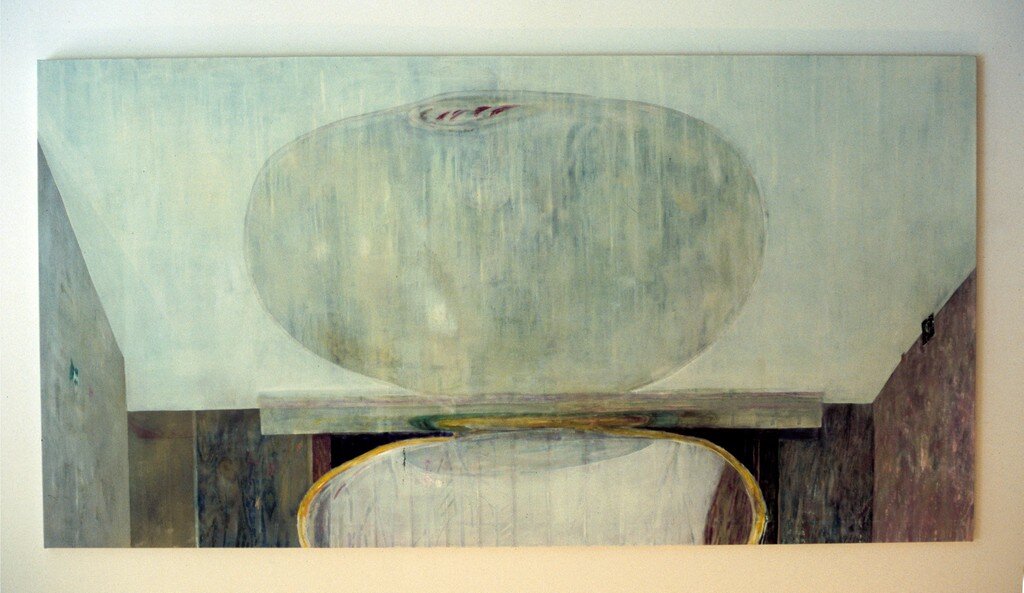
Hiroshi Sugito. 2005. mirror. Paintings. https://library.artstor.org/asset/LARRY_QUALLS_10312611076.
Hiroshi Sugito. 2005. mirror. Paintings. https://library.artstor.org/asset/LARRY_QUALLS_10312611076.
To whom are we entrusting ourselves when we follow a particular instructor? To what extent should our will be constrained by a teacher, friend, rabbi, abba? Or is it an image of these figures? What do we make of teaching practices that restrain habits of thinking and opinion? What is the role of Tradition?
Read MoreJustice for The Poor

Benjamin Porat provides a preview of his new book, Justice for the Poor: The Principles of Welfare Regulations from Biblical Law to Rabbinic Literature [hebrew].
Read MoreBook Note | Shifting Images of the Hasmoneans
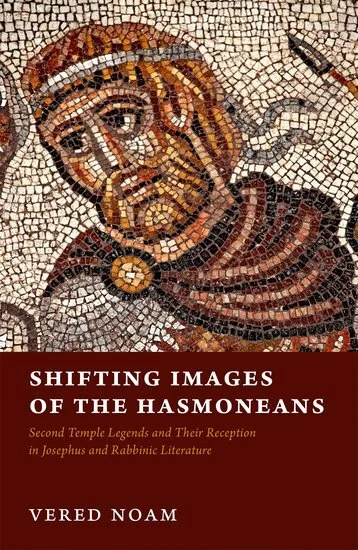
Noam shies away from firmly positing the existence of a concrete document or text that served as the shared source of rabbinic and Josephan traditions. Rather, she suggests that we conceive of a “pool of traditions,” a shared storehouse of stories and narratives, perhaps containing multiple documents, likely written in Hebrew and Aramaic, to which the rabbis and Josephus both had access.
Read MoreWeek in Review (11/1/19)

Roman mosaic depicting Thucydides | Third-century, from Jerash in Jordan; currently held in Berlin | Image Source
Roman mosaic depicting Thucydides | Third-century, from Jerash in Jordan; currently held in Berlin | Image Source
This Week: Rhetoric, doctrine, and Gregory of Nyssa, Decian persecution, archaeology and Paul, upcoming apocrypha, King David – and more!
Read MoreBook Note | Gregory of Nyssa’s Doctrinal Works: A Literary Study

Fresco from Saint John’s Church (Karşı Kilise) in Cappadocia, Turkey (Image courtesy of Tiberio Frascari).
Fresco from Saint John’s Church (Karşı Kilise) in Cappadocia, Turkey (Image courtesy of Tiberio Frascari).
“With this steadily growing interest in Gregory, specialization in particular texts has become the norm. Radde-Gallwitz, having done some of that slow, careful work in his previous books, translations, and articles, argues that there is value in panning back to look at broader patterns, parallels, and divergences.”
Read MoreThe History and Literature of Late Antique Babylonian Rabbis

Richard Kalmin offers a retrospective of his work on the historical analysis of Talmudic narratives.
Read MoreBook Note | Arguing with Aseneth: Gentile Access to Israel’s Living God in Jewish Antiquity
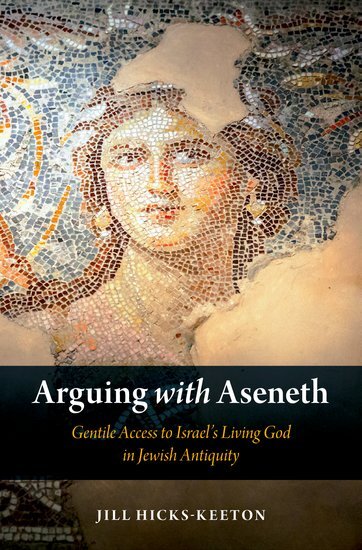
Gillian Glass reviews Hicks-Keeton’s Arguing with Aseneth: Gentile Access to Israel’s Living God in Jewish Antiquity.
Read MorePublications | Christian Dialogues and Late Antiquity

The volume is conceived as a comprehensive guide to Christian dialogues composed in Greek and in Syriac from the earliest examples in the second century until the end of the sixth century.
Read MoreWeek in Review (10/11/19)

Illustration of Moses before Pharaoh | f.8r in the Syriac Bible of Paris (Bibliothèque Nationale, MS syr. 341) | Image Source
Illustration of Moses before Pharaoh | f.8r in the Syriac Bible of Paris (Bibliothèque Nationale, MS syr. 341) | Image Source
This Week: Apocalypse now, Pseudo-Matthew, imperial women and Lactantius, Allegro Qumran images online, Syriac teaching – and more!
Read More“The Time Is Fulfilled”: Jesus’s Apocalypticism in the Context of Continental Philosophy

In this book, I aim to expand beyond the traditional critical-exegetical methods (while these always remain indispensable) to show how Continental philosophy, with its emphasis on disrupting metaphysical and dualistic orders, offers a useful hermeneutical resource that poses new lines of questioning to the biblical texts.
Read MoreThe Manichaeans of Kellis: Religion, Community, and Everyday Life

Excavation at the Roman town of Kellis (Image courtesy of ISAW on Flickr)
Excavation at the Roman town of Kellis (Image courtesy of ISAW on Flickr)
When would the Manichaeans of Kellis have felt “Manichaeanness” as the most relevant factor to define their behavioral choices?
Read MoreThe Masada Myth(s)

Jodi Magness discusses the myths of Masada while offering a preview of her recent book, Masada: From Jewish Revolt to Modern Myth (Princeton University Press, 2019).
Read MoreBook Note | Synagogues in the Works of Flavius Josephus: Rhetoric, Spatiality, and First-Century Jewish Institutions

This nuance does not help scholars reconstruct detailed synagogue practices, but helps us understand an idea of what synagogues could mean for Jews of the first-century CE.
Read MoreFood and Transformation in Ancient Mediterranean Literature
In other words, if transformational eating like hierophagy is something that ancient authors took for granted, why is it that eating or tasting other-worldly food has such a profound effect?
Read MoreBook Note | Rewriting Masculinity

"Gideon thanks God for the Miracle of the Dew", painting by Maarten van Heemskerck (Musée des Beaux-Arts de Strasbourg)
"Gideon thanks God for the Miracle of the Dew", painting by Maarten van Heemskerck (Musée des Beaux-Arts de Strasbourg)
Kelly Murphy’s Rewriting Masculinity: Gideon, Men, and Might (OUP 2019)offers a fascinating journey through the multiple and layered maculinities of the biblical character Gideon (Judges 6-8), while providing a methodological model for biblical masculinity studies to emulate.
Read MoreExecution and Irony

Dr. Beth Berkowitz writes a retrospective of her first book, Execution and Invention: Death Penalty Discourse in Early Rabbinic and Christian Cultures (Oxford UP, 2006).
Read MoreBook Note | Pantheon

For students of the rabbis, Roman religion is often thought of as a constant. It is a yardstick against which we measure changing conceptions and ideas of the rabbis. But we would do well to remember that the period in which the rabbis, writ large, were active, is one of the headiest periods of religious change and upheaval in the Roman Empire.
Read MoreHow to Get a Head in Ancient Israel: Women-Turned-Warriors and Queer Theory


Judith and the Head of Holofernes by Gustav Klimt.
Judith and the Head of Holofernes by Gustav Klimt.
Caryn Tamber-Rosenau provides an overview of her recent publication, Women in Drag: Gender and Performance in the Hebrew Bible and Early Jewish Literature (Gorgias, 2018).
Read More