
Jonah being thrown into the Sea. Catacomb of Saint Peter and Saint Marcellino, Rome, Italy, via wikicommons.
Eric Smith responds to Maia Kotrosits’s Rethinking Early Christian Identity: Affect, Violence, and Belonging (Fortress, 2015).
Read MoreJonah being thrown into the Sea. Catacomb of Saint Peter and Saint Marcellino, Rome, Italy, via wikicommons.
Jonah being thrown into the Sea. Catacomb of Saint Peter and Saint Marcellino, Rome, Italy, via wikicommons.
Eric Smith responds to Maia Kotrosits’s Rethinking Early Christian Identity: Affect, Violence, and Belonging (Fortress, 2015).
Read MoreTeresa Calpino responds to Maia Kotrosits’s Rethinking Early Christian Identity: Affect, Violence, and Belonging (Fortress, 2015).
Read MoreWax encaustic funerary painting on wood | Second-century Roman Egypt, in the collection of the Badisches Landesmuseum (Karlsruhe) | Image Source
Wax encaustic funerary painting on wood | Second-century Roman Egypt, in the collection of the Badisches Landesmuseum (Karlsruhe) | Image Source
This Week: New forum complicating early Christian identity with Maia Kotrosits, forgery, Roman-era Egyptian tombs, museum ethics – and more!
Read MoreImage provided free through Unsplash
Image provided free through Unsplash
Donovan Schaefer responds to Maia Kotrosits’s Rethinking Early Christian Identity: Affect, Violence, and Belonging (Fortress, 2015) at the 2018 SBL review panel.
Read MoreImage provided free through Unsplash @chuttersnap.
Image provided free through Unsplash @chuttersnap.
Shayna Sheinfeld responds to Maia Kotrosits’s Rethinking Early Christian Identity: Affect, Violence, and Belonging (Fortress, 2015) at the 2018 SBL review panel.
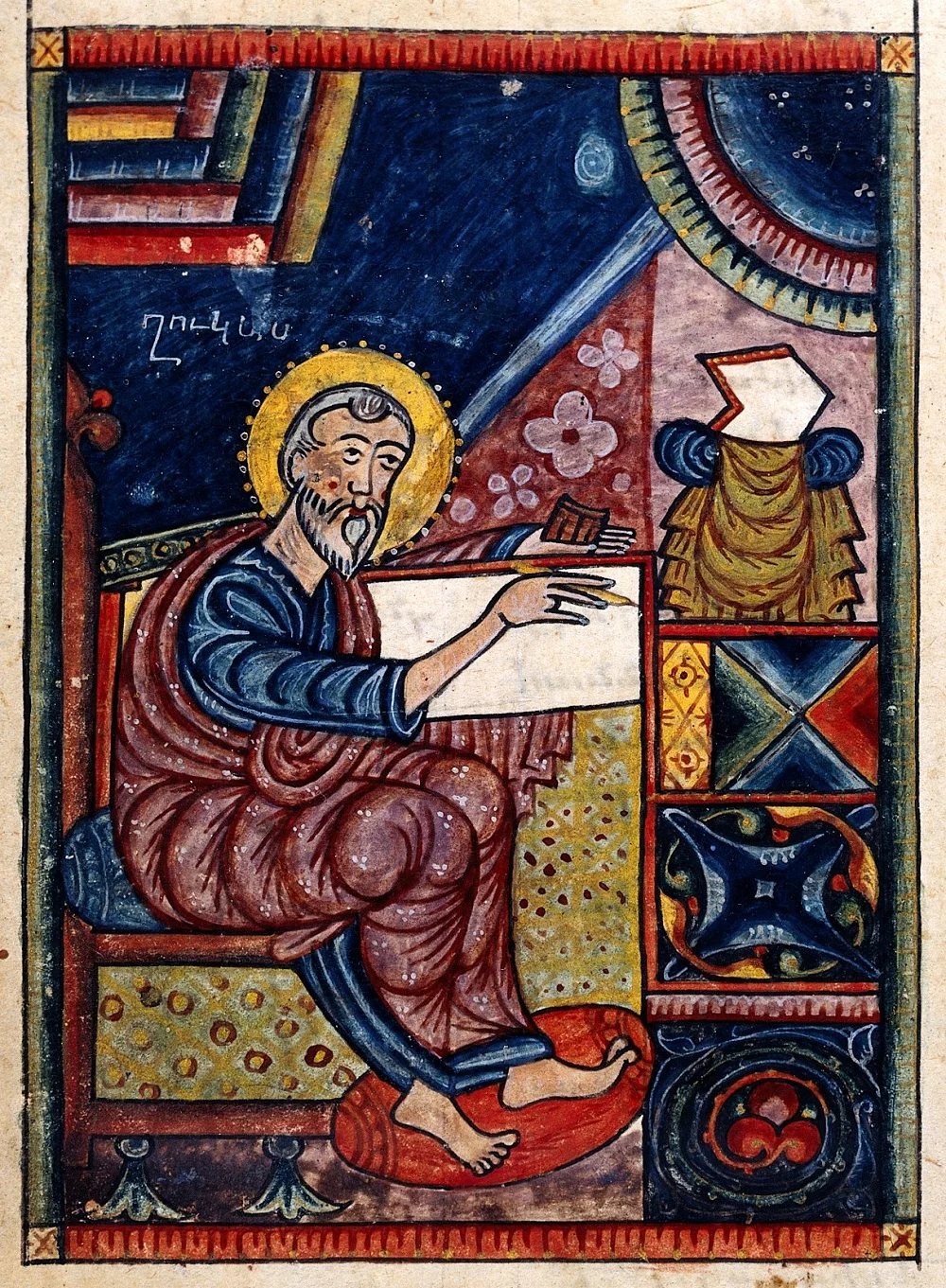
Read MoreIllustration of St. Luke in an Armenian Gospel manuscript | WMS Armenian MS no.1, dated to 1495 | Image Source
Illustration of St. Luke in an Armenian Gospel manuscript | WMS Armenian MS no.1, dated to 1495 | Image Source
This Week: Book notes and Byzantium, Coptic magic, Ishtar’s netherworld descent, open access all over the place, Armenia! - the year begins!
Read MoreFour Gospels in Armenian (1434/5 CE) - MET Collection
Four Gospels in Armenian (1434/5 CE) - MET Collection
This exhibition aims to showcase Armenia as an artistic civilization in its own right rather than a postscript to the more prominent and the better-known achievements of Byzantium or Near Eastern cultures.
Read MoreBeginning of Luke’s Gospel from the 11th c. (Wikimedia Commons)
Beginning of Luke’s Gospel from the 11th c. (Wikimedia Commons)
This volume, replete with color images and detailed charts, is both a resource and an invitation for further research. The range of expertise offered by the volume’s contributors testifies to the interdisciplinarity that animates Byzantine Studies.
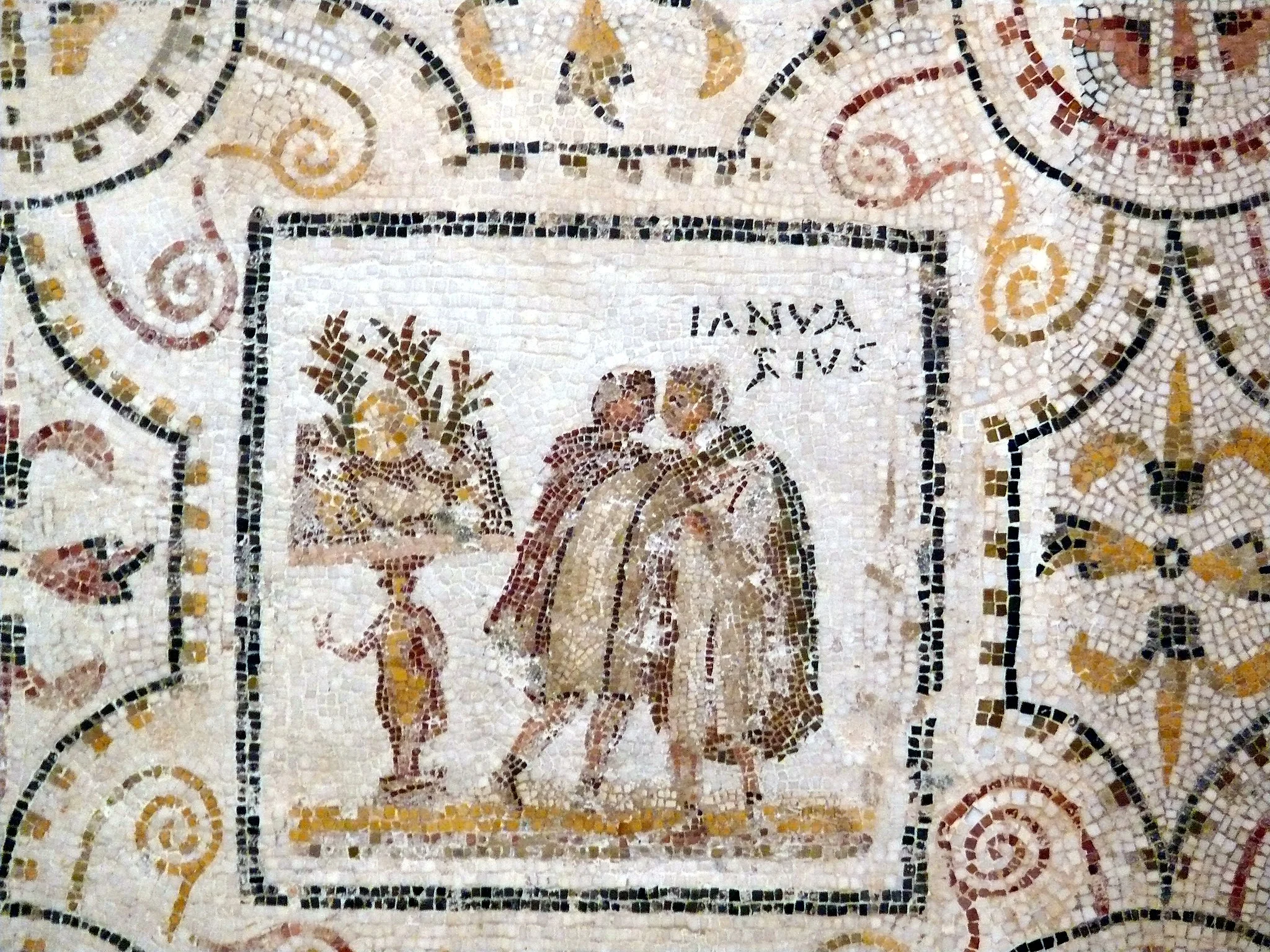
Read MoreMosaic from a series on the months of the year (early 3rd century CE). Image courtesy of Ad Meskins via Wikimedia Commons.
Mosaic from a series on the months of the year (early 3rd century CE). Image courtesy of Ad Meskins via Wikimedia Commons.
A list of our most popular articles from 2018.
Read MoreCuneiform synonym list clay tablet from the Library of Ashurbanipal | Neo-Assyrian (934-608BCE), currently on display in the British Museum | Image Source
Cuneiform synonym list clay tablet from the Library of Ashurbanipal | Neo-Assyrian (934-608BCE), currently on display in the British Museum | Image Source
This Week: Primeval Roman kings, inconsistent Torah, Egyptian royal tombs, clay tablets, excavation reports, plus, oh, Atlantis – and more!
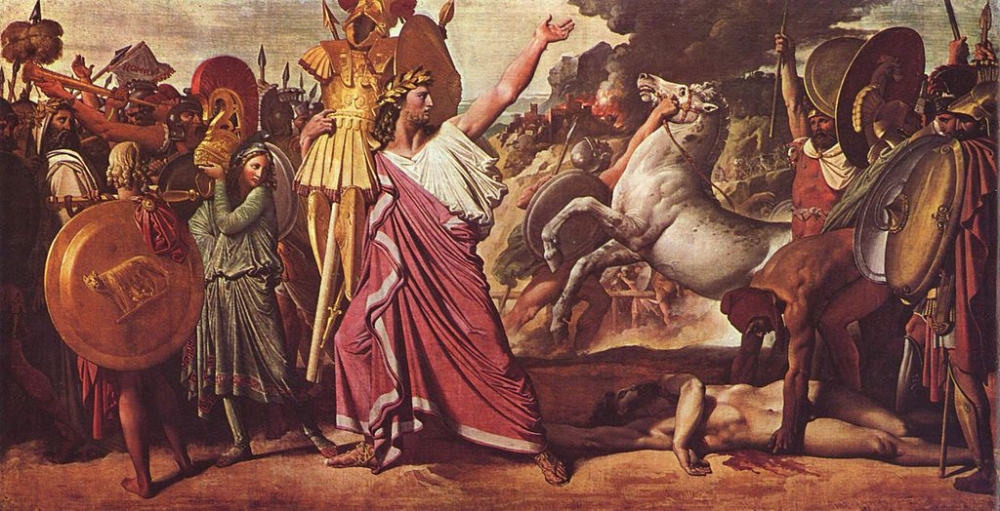
Read MoreJean Auguste Dominique Ingres, "Romulus, vainqueur d'Acron, porte les dépouilles opimes au temple de Jupiter" (1812), (Wikimedia Commons)
Jean Auguste Dominique Ingres, "Romulus, vainqueur d'Acron, porte les dépouilles opimes au temple de Jupiter" (1812), (Wikimedia Commons)
In my dissertation, I group twelve authors by chronology and language of writing. Chapter two treats Velleius Paterculus (d. 31 CE), Tacitus, and Suetonius (d. 126 CE), three authors separated by time, genre, rank, and aims, but unified in their approach to imperial history as in certain respects a recapitulation of regal history; determined by the ancestry of the Julio-Claudian emperors.
Read MoreIn Inconsistency in the Torah, Joshua A. Berman turns the critical lens on source criticism itself, arguing that it is built upon several epistemological flaws and illustrating these with a variety of case studies.
Read MoreCoptic Papyrus Fragment | Seventh-century papyrus and ink from the Monastery of Epiphanius, Egypt | Image Source
Coptic Papyrus Fragment | Seventh-century papyrus and ink from the Monastery of Epiphanius, Egypt | Image Source
This Week: Creative pedagogy, unfinished Bibles, ancient letter networks, Yemeni cultural heritage, Coptic magical papyri – and much more!
Read More“The Bible is, and will likely long continue to be, both building material and building. It’s a treasury of the ancient world, a storehouse in which lie a large percentage of the glittering gems which survived the ancient Levant in any form. And it’s a doorway through which the ancient Levant continues to shape the present, as well as the history of how this heritage has been repeatedly reshaped and by whom.”
Read MorePort Scene, Roman fresco from Stabiae housed at Museo Archeologico Nazionale (Naples) (Image courtesy of Wolfgang Rieger on Wikimedia Commons)
Port Scene, Roman fresco from Stabiae housed at Museo Archeologico Nazionale (Naples) (Image courtesy of Wolfgang Rieger on Wikimedia Commons)
Cavan Concannon’s Assembling Early Christianity: Trade, Networks, and the Letters of Dionysios of Corinth examines the traces of an understudied bishop to draw larger conclusions about how early Christianities effloresced and dissolved over time.
Read MoreNeo-Assyrian bas-relief from Ninevah of Assyrian king Ashurbanipal slaying a lion | Currently housed in the British Museum, London | Image Source
Neo-Assyrian bas-relief from Ninevah of Assyrian king Ashurbanipal slaying a lion | Currently housed in the British Museum, London | Image Source
This Week: Journeys in the east, Assyrian kings, Gothic queens, surprises with Sappho, ambitious digital humanities initiatives, Torah on display – and more!
Read MoreDiptych of Rufus Gennadius Probus Orestes, Ivory, ca. 530 CE (Victoria and Albert Museum)
Diptych of Rufus Gennadius Probus Orestes, Ivory, ca. 530 CE (Victoria and Albert Museum)
Unlike these Gothic queens, Amalasuintha was more than an instrument of diplomacy: she was diplomacy, a ruling mother who dealt with legates directly, without an interpreter since she knew so many languages
Read MoreTabula Peutingeriana
Tabula Peutingeriana
“Like a Roman idol marking a crossroads in a way that makes visible the danger and domination that was always there, focusing on travel allows writers ancient and modern a vantage point on interplays between materiality and ideology that otherwise might slip by us.”
Read MoreAnnouncement of the resurrection of Christ, from a C13 Peshitta Gospel | State Library of Berlin, Sachau 304, parchment manuscript 195 Bl., f.106v | Image Source
Announcement of the resurrection of Christ, from a C13 Peshitta Gospel | State Library of Berlin, Sachau 304, parchment manuscript 195 Bl., f.106v | Image Source
This week we return from break: forgery, apocrypha, disreputable professions, Syriac, material ancient religion, a liberal sprinkling of Samaritans – and more!
Read MoreIn fact, Bond argues, it is in part because of the indispensability of these professions that they were so stigmatized. The lowbrow, servile nature of these labors disqualified members of the elite from practicing them, but the dependency of civic institutions and day-to-day well-being upon them brought great wealth and power to those within the trade.
Read More








.jpg)
.jpg)


