Roman mosaic of Dionysus riding a tiger | House of the Faun, Pompeii | Image source
This Week: Ancient Animals, Future Philology, the Acts of Thomas, Messianic Secrets, Jewish hex scrolls, state-of-field surveys – and more!
Read MoreRoman mosaic of Dionysus riding a tiger | House of the Faun, Pompeii | Image source
Roman mosaic of Dionysus riding a tiger | House of the Faun, Pompeii | Image source
This Week: Ancient Animals, Future Philology, the Acts of Thomas, Messianic Secrets, Jewish hex scrolls, state-of-field surveys – and more!
Read MoreByzantine Mosaic, Istanbul, 5th c. CE (The Yorck Project - Image Source)
Byzantine Mosaic, Istanbul, 5th c. CE (The Yorck Project - Image Source)
Janet Spittler continues AJR’s Animal Forum: “To be sure: the writings of many of the early Christian authors most closely associated with negative evaluations of animals are, upon closer inspection, much more complex than a cursory reading might suggest.”
Read MoreHezser treats body language exclusively and comprehensively, studying the phenomenon from head to toes and demonstrating its wide scope in classical rabbinic literature.
Read MoreByzantine-period mosaic of a stag | Caesarea, Israel | Image Source
Byzantine-period mosaic of a stag | Caesarea, Israel | Image Source
This Week: Deciphering Dead Sea Scrolls, digital humanities, animals in late antiquity month, rabbinic smarts, bitesize podcasts, Greek race – and more!
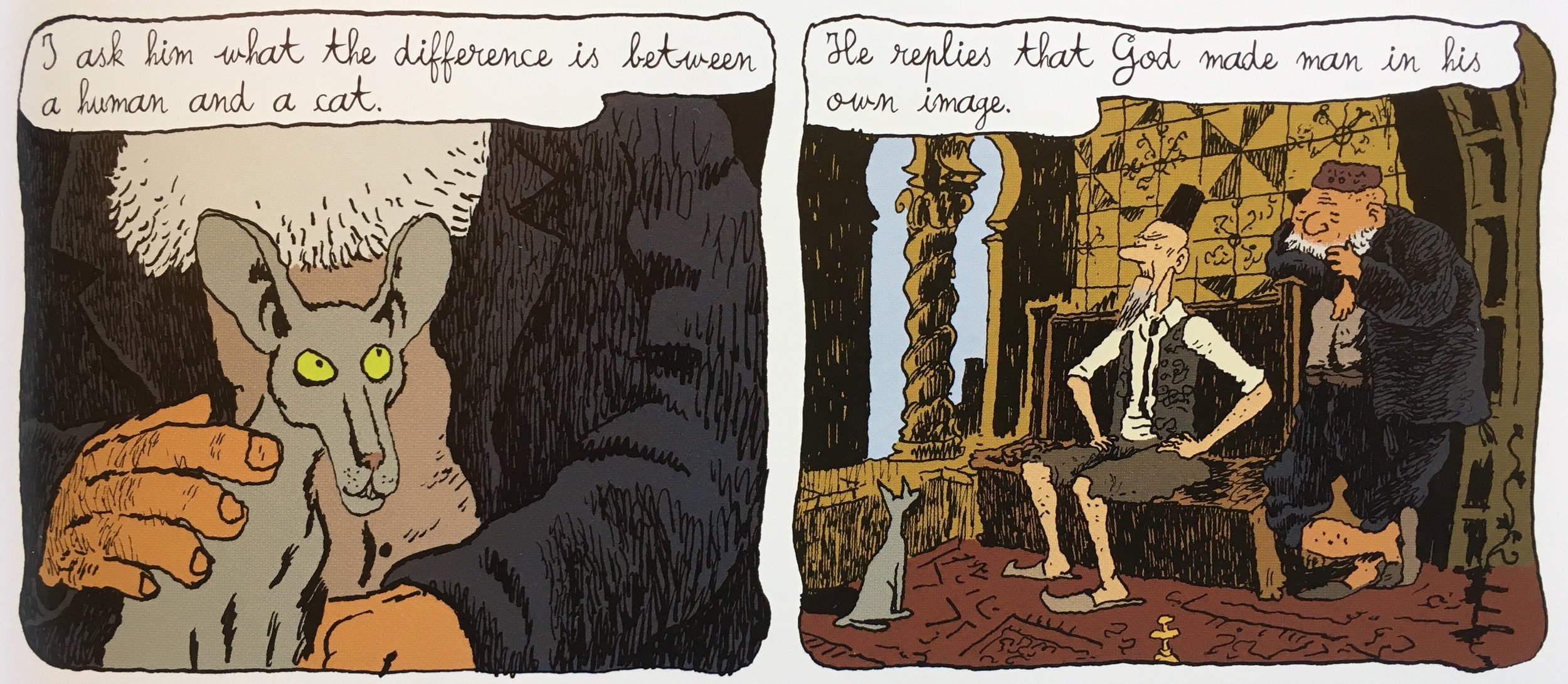
Read MoreJoann Sfar, The Rabbi’s Cat, New York : Pantheon Books, 2005), 11/3-4 (image used with kind permission of artist)
Joann Sfar, The Rabbi’s Cat, New York : Pantheon Books, 2005), 11/3-4 (image used with kind permission of artist)
R.R. Neis begins the AJR Animal Forum: To the extent that concerns about the human, species, animality, and reproduction criss-cross antiquity and the present, a species-informed approach to late antiquity not only allows us to hazard ways of thinking/being the non/human, it also can short-circuit rhetorical invocations of a “Judeo-Christian tradition” by falsifying cherished myths.
Read MoreKingship and Memory in Ancient Judah is useful in reframing historiographic methods in biblical studies. Wilson aptly moves beyond the use of memory studies to merely determine the historicity of events of Israel’s past.
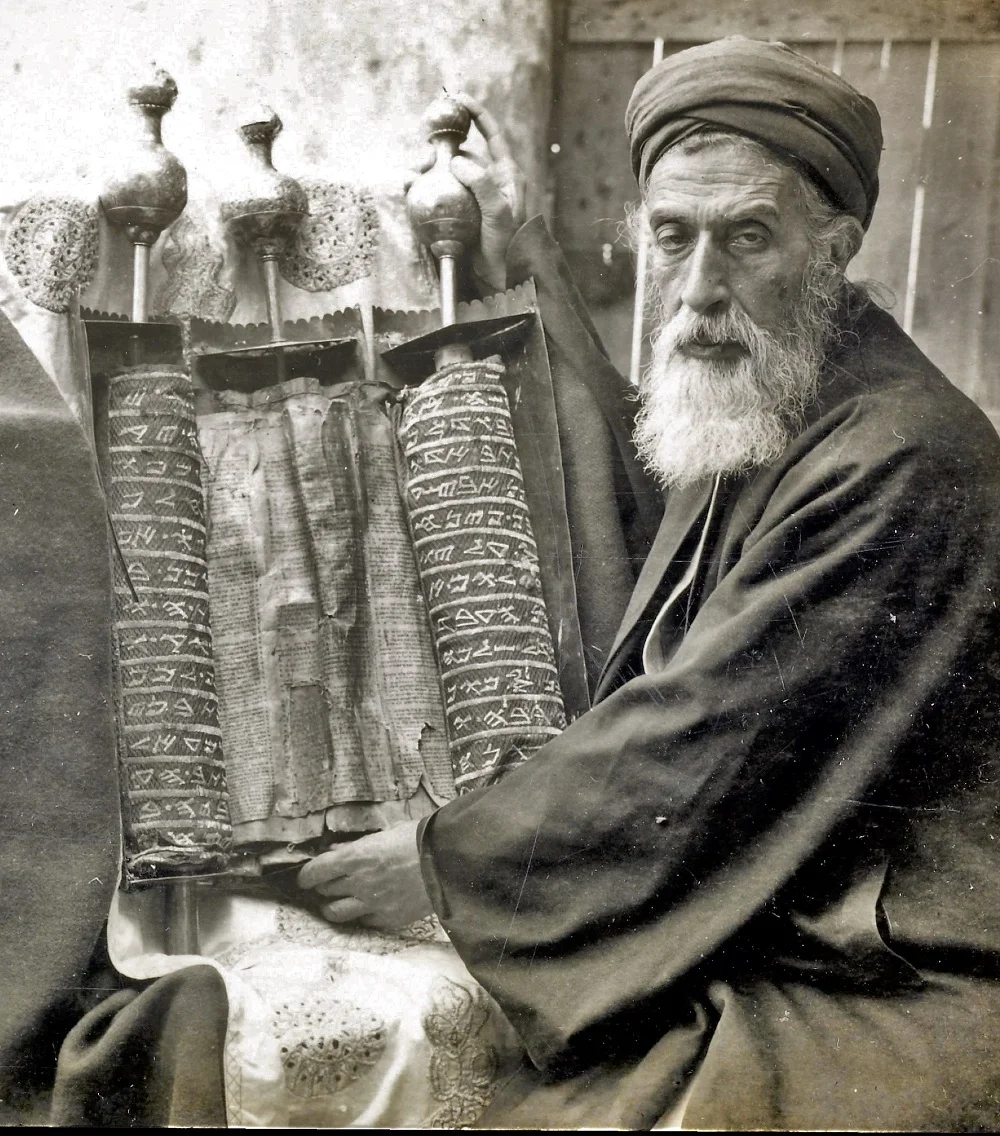
Read MoreYaakov ben Aharon, Samaritan High Priest (1896-1916), with a Samaritan Pentateuch | Part of a stereograph series from Views of Palestine (1905) | Image source
Yaakov ben Aharon, Samaritan High Priest (1896-1916), with a Samaritan Pentateuch | Part of a stereograph series from Views of Palestine (1905) | Image source
This Week: Palmyra, stolen Samaritan Pentateuchs, smuggled cultural heritage, Virgil, animal personhood, sacred landscapes – and more!
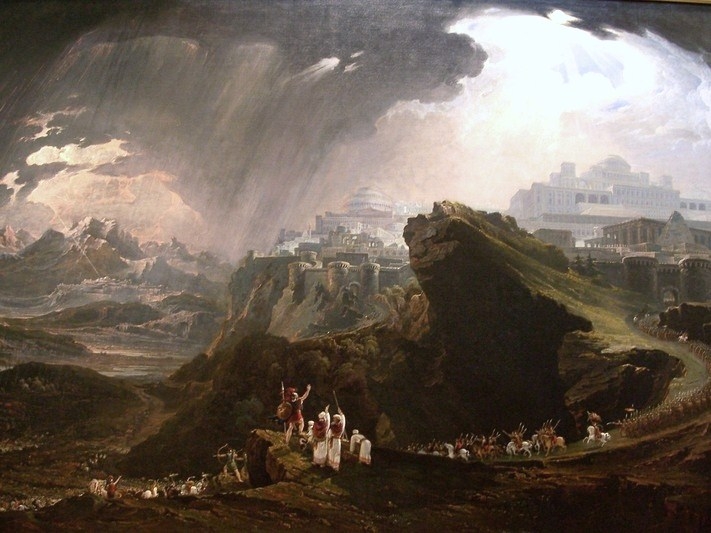
Read MoreJohn Martin - Joshua Commanding the Sun to Stand Still upon Gibeon (1816) National Gallery of Art, Washington, D.C.
John Martin - Joshua Commanding the Sun to Stand Still upon Gibeon (1816) National Gallery of Art, Washington, D.C.
In my dissertation I explore such texts – what I call “personalistic nature texts” – and their potential contribution to contemporary environmental ethics. I argue that the biblical writers lived in a world populated with a wide variety of “persons,” only some of whom are human.
Read MoreDeambulatory Mosaic in S. Costanza, Rome (Image Source)
Deambulatory Mosaic in S. Costanza, Rome (Image Source)
Drawing on the phenomenology of movement – landscape made knowable through movement in it – Grey explored an alternative way to get to know ancient sources.
Read MorePapyrus Amulet, with citation of Romans 12.1 and John 2:1-2 | Vienna, Nationalbibliothek G 2312 | Image Source and Trismegistos Entry
Papyrus Amulet, with citation of Romans 12.1 and John 2:1-2 | Vienna, Nationalbibliothek G 2312 | Image Source and Trismegistos Entry
This Week: Magical amulets, pedagogy workshops, Hagar, Sinai palimpsests, digital humanities everywhere you look, Qumran photos – and more!
Read MoreWilliam Bell’s 1849 translation of Friedrich Strass’s ‘Strom der Zeiten’ (Stream of Time). Image from http://bibliodyssey.blogspot.co.il/2010/04/time-after-time.html
William Bell’s 1849 translation of Friedrich Strass’s ‘Strom der Zeiten’ (Stream of Time). Image from http://bibliodyssey.blogspot.co.il/2010/04/time-after-time.html
How do we encourage our students to think of the past not as a grand narrative to be learned from a textbook (or a teacher), but as a complex constellation of events, values, personalities, and ideas that can be analyzed and understood from a variety of perspectives and that can be used to construct multiple possible stories about the past?
Read MoreAlthough many of the topics discussed in the book could shed light on ritual practice elsewhere in the Mediterranean world, de Bruyn limits himself to Egypt because this is where the bulk of textual amulets from this period are found.
Read MoreA minstrel plays for King Solomon | Illumination for opening verse of Song of Songs, in the Rothschild Mahzor (Florence, 1492) | Image Source
A minstrel plays for King Solomon | Illumination for opening verse of Song of Songs, in the Rothschild Mahzor (Florence, 1492) | Image Source
Song of Songs, heresy, magnificent mosaics, digital humanities, angels, secret knowledge, forgetting – and more!
Read More"Herod Takes Jerusalem" from Flavius Josèphe, Les Antiquités judaïques, illuminations of Jean Fouquet, 1470-1475.
"Herod Takes Jerusalem" from Flavius Josèphe, Les Antiquités judaïques, illuminations of Jean Fouquet, 1470-1475.
Drawing on insights from scholars in Religious Studies who have demonstrated the artificiality of modern distinctions between religious, political, and economic spheres, I consider the ways that political and religious institutions and frameworks could have shaped the boundaries and incentives of economic behavior among Jews in Early Roman Galilee.
Read MoreShuve demonstrates that for some of its most prominent Latin readers, the Song was self-evidently an allegory about the Church and its purity.
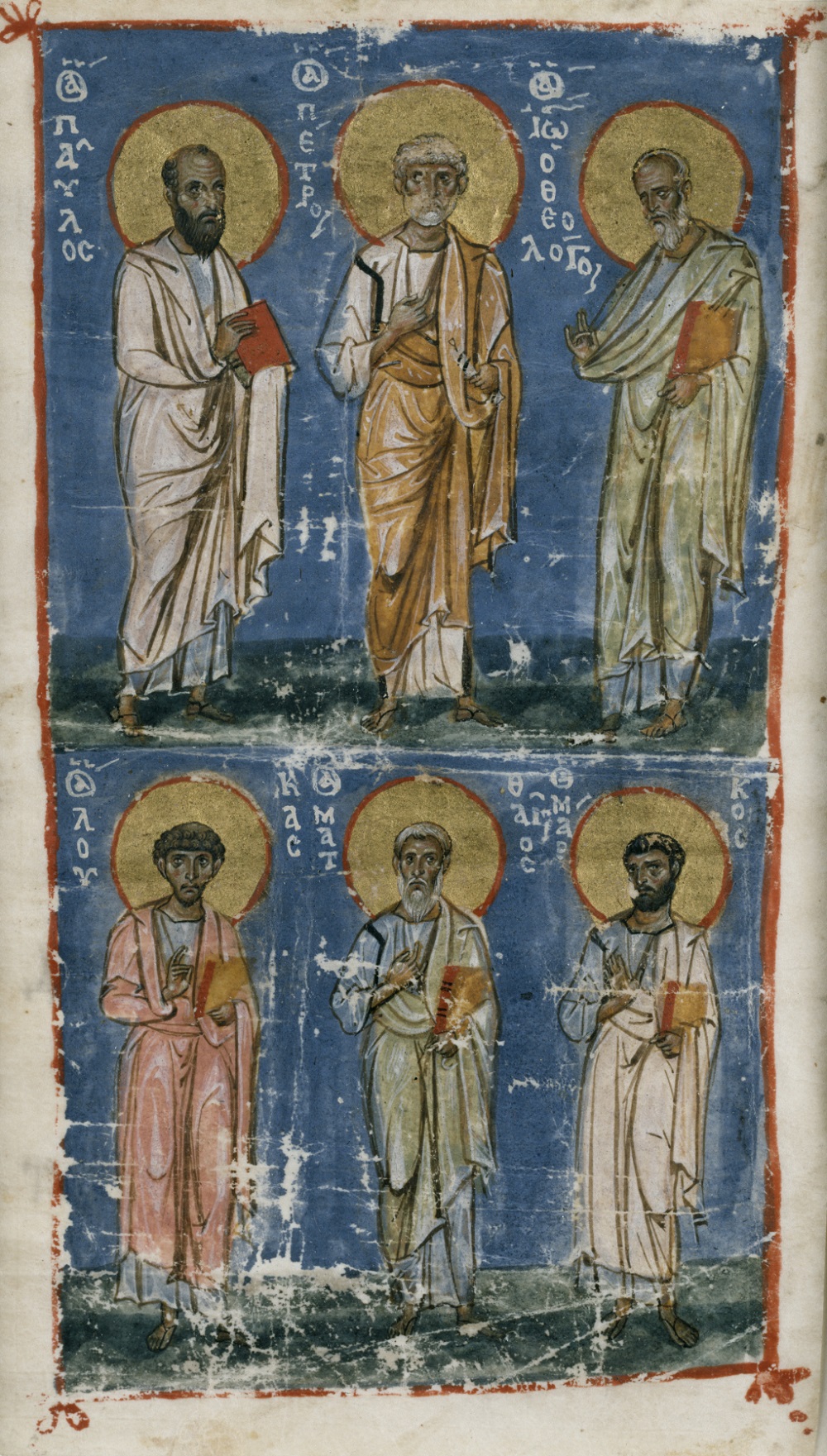
Read MorePainted Miniature, with Paul, Peter, and the Evangelists | Tempera on Parchment, Byzantine Empire (ca.1070-1100) | Image Source
Painted Miniature, with Paul, Peter, and the Evangelists | Tempera on Parchment, Byzantine Empire (ca.1070-1100) | Image Source
This Week: Adele Reinhartz on anti-Judaism, biblical repentance, Cairo Genizah, ancient Coptic, digital humanities – and more!
Read MoreEl Greco, "Saint John the Evangelist" (ca. 1605) | Image Source
El Greco, "Saint John the Evangelist" (ca. 1605) | Image Source
For my part, I am satisfied that I have said what I can, and want, to say about this Gospel. Aside from my growing discomfort with John’s anti-Jewish language, I have gained much from my longstanding relationship with this Gospel, including a community of scholars whom I value and respect.
In How Repentance Became Biblical, David Lambert argues that, rather than an inherently biblical concept, “repentance” came to be understood as such in a long process that continued into late antiquity.
Read MoreIllustration of the Magi | Harvard, MS Syr. 168 | Image Source
Illustration of the Magi | Harvard, MS Syr. 168 | Image Source
This Week: Finding the family of Jesus, Egyptian monasticism, West Syriac liturgy apps, imaginary Phoenicians, Passover, open access journals - and more!
Read MoreAs I studied the infancy gospels, I began to wonder if something had been overlooked in the intense scholarly focus on the figures of Jesus and Mary. That something, I concluded, was the depiction of familial relationships.
Read More