Vaulted ceiling painting | Bathhouse at Qusayr Amra, Jordan | Image Source
This Week: Museum of the Bible, ancient Christian martyrs, demons, race and ethnicity, #digitalhumanities 3D monasteries – and more!
Vaulted ceiling painting | Bathhouse at Qusayr Amra, Jordan | Image Source
Vaulted ceiling painting | Bathhouse at Qusayr Amra, Jordan | Image Source
This Week: Museum of the Bible, ancient Christian martyrs, demons, race and ethnicity, #digitalhumanities 3D monasteries – and more!
Photo courtesy of the author
Photo courtesy of the author
"While making pretenses to neutrality, the Museum of the Bible is fundamentally a political project attempting to define what the Bible is and who owns it."
Read MoreThis panel sparked further discussion among scholars and the broader public, such as in a Washington Post article. In collaboration with AJR, scholars from this panel will be sharing their work with the larger scholarly community and the public.
Read MoreHans Leu der Ältere - Saints Barbara, Jerome and Agnes (ca. 1495) Schweizerisches Nationalmuseum, Zürich (Wikimedia Commons)
Hans Leu der Ältere - Saints Barbara, Jerome and Agnes (ca. 1495) Schweizerisches Nationalmuseum, Zürich (Wikimedia Commons)
With respect to this important set of late antique sources, Éric Rebillard’s texts, translations, and commentary of the most ancient martyr texts preserved in Latin and Greek are a valuable addition to the scholarly toolkit.
Read MoreBen Sira, from the Fugger Honorary | Illustration from the workshop of Jörg Breu, c.1545-49 | Image Source
Ben Sira, from the Fugger Honorary | Illustration from the workshop of Jörg Breu, c.1545-49 | Image Source
This Week: Reviews galore, Cairo Genizah, #pedagogy, a fabulous digital festschrift for a pivotal scholar of Second Temple Judaism – and more!
Read MoreSean Adams (“On Ben Wright and the Modeling of Scholarship”) engages Ben’s work on genre theory to consider how the Letter of Aristeas might be read alongside Greek symposia, and offers a retrospective on the work and example of an inspiring teacher.
Read MoreJudgement of Solomon by Antoine Sallaert in Stedelijke Administratie Roeselare. Public Domain.
Judgement of Solomon by Antoine Sallaert in Stedelijke Administratie Roeselare. Public Domain.
James Nati (“Solomon, the Septuagint, and Second Temple Studies”) illustrates how crossing generic and canonical boundaries—in his case study, reading Ben Sira and the Septuagint side by side—can reveal new insights about how early Jewish traditions developed.
Read More11th Century Manuscript of Letter of Aristeas from Biblioteca Apostolica Vaticana
11th Century Manuscript of Letter of Aristeas from Biblioteca Apostolica Vaticana
Jason M. Zurawski (“Education as Demonstrated and Education as Discussed in the Letter of Aristeas”) shows how we might enrich our understanding of ancient education by reading both for a text’s ideology and rhetoric, and for its unwittingly revealed social context, while knowing the difference between these two kinds of evidence.
Read MoreZodiac mosaic at the Beit Alpha synagogue.
Zodiac mosaic at the Beit Alpha synagogue.
Francis Borchardt (“Erasing the Hyphen from the Study of Early Judaism”) builds on Ben’s work on Hellenistic Jewish ethnicity to discuss how to think about Jewish self-definition in the Hellenistic period, in light of the great diversity of the sources, practices, and communities we call Jewish.
Read MorePrint introducing Sirach from 17th century Claes Janszoon Visscher Dutch Polyglot Bible
Print introducing Sirach from 17th century Claes Janszoon Visscher Dutch Polyglot Bible
Elisa Uusimäki’s essay (“Emulation in Ben Sira and its Hellenistic Context”) shows how the idea of the sage might be better understood by reading Jewish texts like Ben Sira together with non-Jewish Greek philosophical writing on how to learn virtue.
Read MoreThe Rosetta Stone in the British Museum. Attribution: © Hans Hillewaert
The Rosetta Stone in the British Museum. Attribution: © Hans Hillewaert
Stewart Moore (“The Translation of the Torah in Alexandria and the Relevance of the Rosetta Stone”) engages Ben’s scholarship on the purpose of the Septuagint translation, highlighting its possible implications for the ethnic identity of Judeans in Egypt.
Read More"The Librarian" by Guiseppe Arcimboldos. Public Domain.
"The Librarian" by Guiseppe Arcimboldos. Public Domain.
James Tucker (“The Role of Wisdom for the Scribe and Scholar”) considers how our understanding of the Qumran Community Rule and the Damascus Document might be informed by critiques of traditional philological concepts of “original text” and “work,” considerations familiar from Ben’s work on the complicated textual history of Ben Sira.
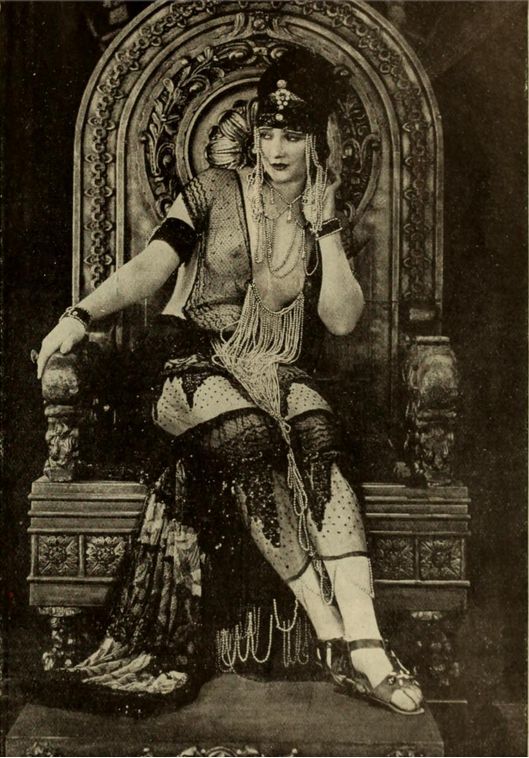
Read MoreBetty Blythe as the Queen of Sheba, 1921
Betty Blythe as the Queen of Sheba, 1921
Jillian Stinchcomb (“Ben Sira as a Baby: The Alphabet of Ben Sira and Authorial Personae”) shows how the persona of the sage and “author” we see in the early Jewish book of Ben Sira takes surprising--and sometimes shocking--turns in Ben Sira’s medieval afterlife.
Read More"Sarai Is Taken to Pharaoh's Palace" by James Tissot. The Jewish Museum of NYC.
"Sarai Is Taken to Pharaoh's Palace" by James Tissot. The Jewish Museum of NYC.
Dr. Jacqueline Vayntrub (“Voice and Presence in the Genesis Apocryphon”) considers how the voice and agency of Sarai in the Genesis Apocryphon, an Aramaic text from Qumran, complicates our ideas about the authoritative first person voice in Second Temple Jewish texts.
Read MoreFrancis Borchardt and Eva Mroczek introduce the "alternative Festschrift" in Dr. Ben Wright's honor.
Read MoreNine contributors consider many facets of Ben’s scholarship on translation, authorial personae and voice, concepts of text and transmission, wisdom and the sage, and Jewish identity in the Hellenistic world.
Read MoreMosaic of Mary and Angelic Court | Basilica of Sant'Apollinare Nuovo, Ravenna | Image Source
Mosaic of Mary and Angelic Court | Basilica of Sant'Apollinare Nuovo, Ravenna | Image Source
A New Year & Ancient Jew Review returns! This Week: Papyrus mystery, graphic novels, infinity, Elijah, Romanos, podcasts – and more!
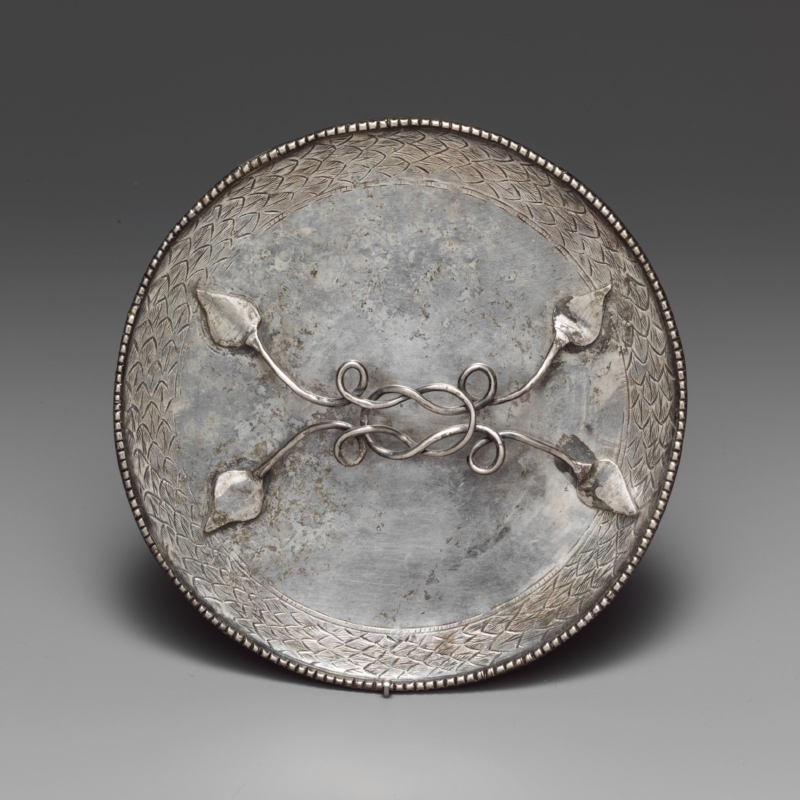
Read MoreSilver Mirror (4th c. CE) - The Metropolitan Museum of Art
Silver Mirror (4th c. CE) - The Metropolitan Museum of Art
If Gregory describes the aim or perfection of the Christian life as “never to stop growing towards what is better and never placing any limit on perfection,” how does mīmēis (Greek: imitation, representation) function within that endless pursuit?
Read MoreIn The Virgin in Song, Thomas Arentzen demonstrates the centrality of Mary within the “civic imaginary” of sixth-century Constantinople through an examination of Romanos’s characterization of the Virgin Mother in his kontakia.
Read More17th cent icon of Elijah and Enoch in Historic Museum in Sanok, Poland. Przykuta [Public domain], via Wikimedia Commons.
17th cent icon of Elijah and Enoch in Historic Museum in Sanok, Poland. Przykuta [Public domain], via Wikimedia Commons.
Hilla Alouf's dissertation argues that "the Elijah traditions reflect the influence of not only the Torah-Centered wisdom tradition which viewed the law as the source of wisdom, but also the Apocalyptic-Centered and the Spirit-Centered wisdom traditions."
Read More