
Nine contributors consider many facets of Ben’s scholarship on translation, authorial personae and voice, concepts of text and transmission, wisdom and the sage, and Jewish identity in the Hellenistic world.
Read MoreWeek in Review (01/12/18)

Mosaic of Mary and Angelic Court | Basilica of Sant'Apollinare Nuovo, Ravenna | Image Source
Mosaic of Mary and Angelic Court | Basilica of Sant'Apollinare Nuovo, Ravenna | Image Source
A New Year & Ancient Jew Review returns! This Week: Papyrus mystery, graphic novels, infinity, Elijah, Romanos, podcasts – and more!
Read MoreDissertation Spotlight | Michael Motia
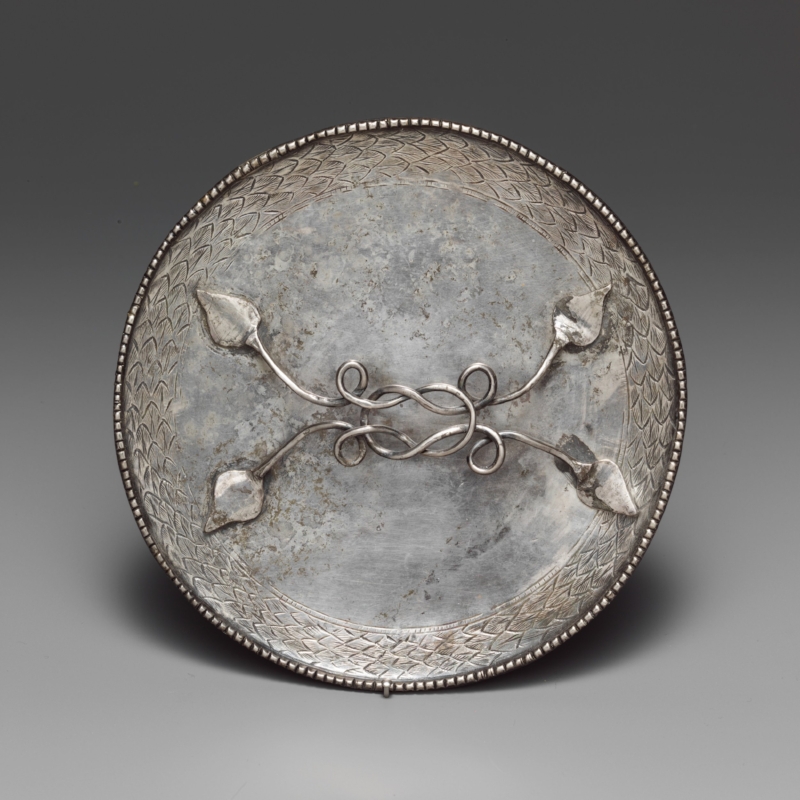
Silver Mirror (4th c. CE) - The Metropolitan Museum of Art
Silver Mirror (4th c. CE) - The Metropolitan Museum of Art
If Gregory describes the aim or perfection of the Christian life as “never to stop growing towards what is better and never placing any limit on perfection,” how does mīmēis (Greek: imitation, representation) function within that endless pursuit?
Read MoreBook Note | The Virgin in Song

In The Virgin in Song, Thomas Arentzen demonstrates the centrality of Mary within the “civic imaginary” of sixth-century Constantinople through an examination of Romanos’s characterization of the Virgin Mother in his kontakia.
Read MoreDissertation Spotlight | Hilla Alouf
![17th cent icon of Elijah and Enoch in Historic Museum in Sanok, Poland. Przykuta [Public domain], via Wikimedia Commons.](https://images.squarespace-cdn.com/content/v1/5449167fe4b078c86b41f810/1514987405965-Y10A3AY8PH8635QUSHX3/1024px-MHS_Eliasz_i_Enoch_XVII_w_p.jpg)
17th cent icon of Elijah and Enoch in Historic Museum in Sanok, Poland. Przykuta [Public domain], via Wikimedia Commons.
17th cent icon of Elijah and Enoch in Historic Museum in Sanok, Poland. Przykuta [Public domain], via Wikimedia Commons.
Hilla Alouf's dissertation argues that "the Elijah traditions reflect the influence of not only the Torah-Centered wisdom tradition which viewed the law as the source of wisdom, but also the Apocalyptic-Centered and the Spirit-Centered wisdom traditions."
Read MoreWeek in Review (12/22/17)

Medieval Byzantine mosaic of Mary, with child and genealogy | Church of the Holy Savior in Chora, Istanbul | Image Source
Medieval Byzantine mosaic of Mary, with child and genealogy | Church of the Holy Savior in Chora, Istanbul | Image Source
This Week: Forgery, golems, posthumanism, medieval Africa, Jewish supernatural, #BigData antiquity – and much more!
Read MoreDissertation Spotlight | Phillip Fackler

Saint Ignatius of Antioch - 10th century ceramic (Turkey) courtesy of The Walters Museum
Saint Ignatius of Antioch - 10th century ceramic (Turkey) courtesy of The Walters Museum
Sometime near the end of the fourth century, an anonymous scribe carefully read and revised the Ignatian epistles, extensively amending many of the letters and adding a few of his own in Ignatius’s name.
Read MoreBook Note | Jews, Gentiles, and Other Animals: The Talmud After the Humanities

M Tong with a book note on Mira Wasserman's Jews, Gentiles, and Other Animals: "Wasserman’s book does something very important: it sets the table for a new kind of conversation––one where the Talmud can lead to a greater understanding of theory, not just the other way around.
Read MoreWeek in Review (12/15/17)

Christ preaches to the Cynocephali | From the Kievan Psalter (1397) | Image source
Christ preaches to the Cynocephali | From the Kievan Psalter (1397) | Image source
This Week: Ancient Animal Knowledge, Dead Sea Scrolls, piyyut and #Hanukkah2017, illustrated papyri – and more!
Read MorePSCO 2017-18: Thinking with Ancient Animals

Centaur - Bestiary, Royal MS 12 C XIX; 1200-1210 | Image source
Centaur - Bestiary, Royal MS 12 C XIX; 1200-1210 | Image source
How do claims, explicit or implicit, about what animals are—and what they do, suffer, or feel—reflect assumptions about what people are? And what types of knowing engage animals?
Read MoreScriptures and Sectarianism: Essays on the Dead Sea Scrolls

Together the essays of this volume explore the themes of Scriptures and Sectarianism from a variety of lenses, ranging from close study of specific texts to broad assessments of scriptural authority and meaning-making in the Second Temple Period.
Read MoreWeek in Review (12/8/17)
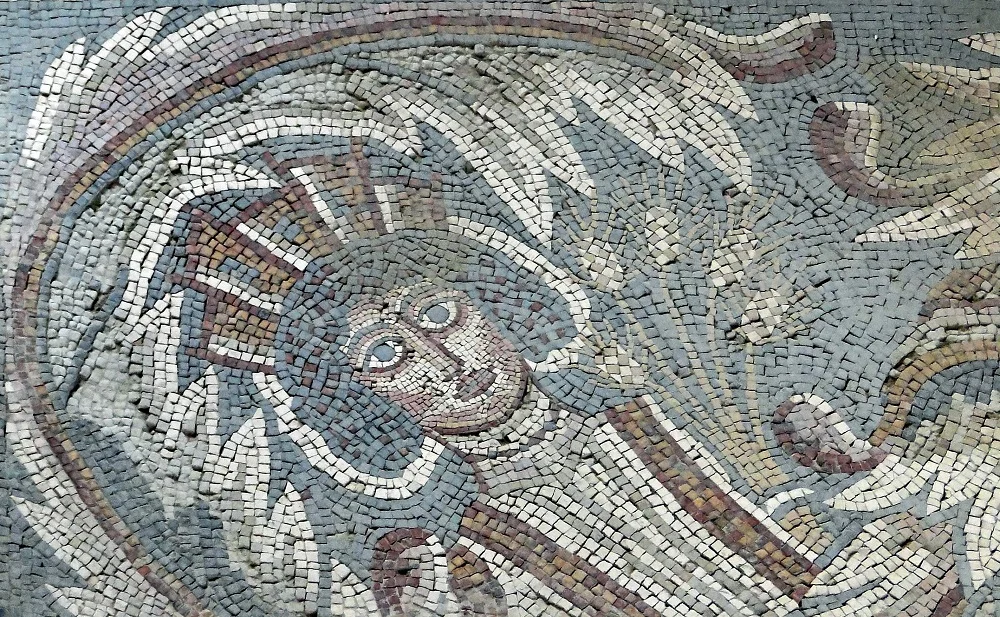
Detail of the sixth-century Hippolytus Mosaic | Madaba, Jordan | Image Source
Detail of the sixth-century Hippolytus Mosaic | Madaba, Jordan | Image Source
This Week: Syrian cultural heritage, Arab conquest, subversive biblical sexuality, Ecclesiastes, lived #lateantiquity – and more!
Read MoreDissertation Spotlight | Yael Landman

Louvre Reproduction of the Law Code of Hammurabi via CC BY-SA 2.0 Mary Harrsch
Louvre Reproduction of the Law Code of Hammurabi via CC BY-SA 2.0 Mary Harrsch
When viewed in conjunction with the wealth of pertinent biblical and ANE sources, the biblical law of bailment can tell us about a law in its many contexts, about divine justice and compassion, about the interactions of law with literature, about everyday life in ancient societies, and about the earliest articulations of a legal topic whose relevance has persisted into the modern era.
Read MoreBook Note | Ecclesiastes and the Riddle of Authorship

In short, Bolin argues that the well-known interpretive problems posed by the book of Ecclesiastes, and in particular the shadowy figure of Qohelet, are generative.
Read MoreWeek in Review (12/1/17)

The Oval Forum, Gerasa | Image source
The Oval Forum, Gerasa | Image source
This Week: Apocrypha upon apocrypha, German royalty, Jewish catacombs, pigeons in antiquity, biblical epic – and more!
Read MoreDissertation Spotlight | Jessica Dello Russo
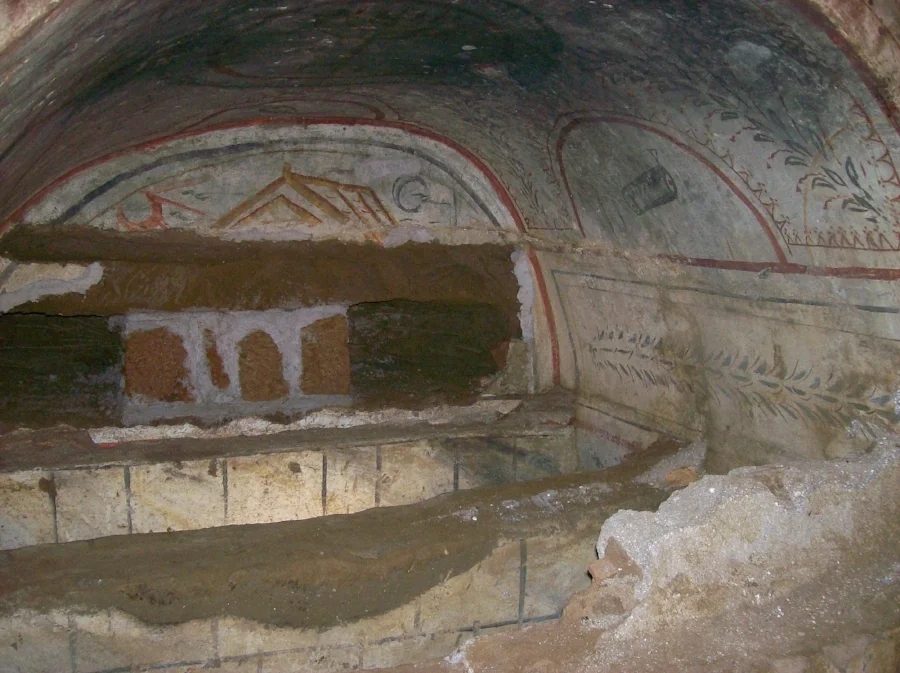
View inside of an arched burial niche or arcosolim inside of the Villa Torlonia catacombs. The walls, vault, and even the insides of the burial troughs were originally plastered and painted, but were subsequently damaged by additional burials in the back wall and above the original tomb covers. Photo: International Catacomb Society
View inside of an arched burial niche or arcosolim inside of the Villa Torlonia catacombs. The walls, vault, and even the insides of the burial troughs were originally plastered and painted, but were subsequently damaged by additional burials in the back wall and above the original tomb covers. Photo: International Catacomb Society
Ironically enough, at the time these stories, literally, made history, the catacombs for Jews remained "secret" and known to a minimal extent. Nevertheless, they, too, were seen as collective responses to ritual needs and distinctly Biblical traditions.
Read MoreBook Note | Valuing the past in the Greco-Roman World
Valuing the Past in the Greco-Roman World asks how the past was defined, accessed, and valued in that period of time so often considered “our” antiquity (18) and provides an array of fascinating examples that work together to undercut notions of the value of the past in the past as in any way uniform or monolithic.
Read MoreAdrian's Introduction: An "Antiochene" Handbook on Biblical Exegesis

Adrian’s Introduction to the Divine Scriptures, likely dated to the fifth century, is our earliest surviving “Antiochene” handbook on biblical exegesis.
Read MoreBook Note | Urban Dreams and Realities in Antiquity: Remains and Representations of the Ancient City
Indeed, central to the volume are two implicit acknowledgements: 1) that the ancient urban “realities” are inaccessible to the modern scholar except by means of imaginative approaches, and 2) that urban “dreams” no less “real” than their material counterparts.
Read MorePSCO 2017-18: Jews and the Land from Muslim to Christian Spain


"Berns’ talk, and the seminar discussion, enabled reflection from an unexpected angle on the PSCO theme for the year: what does it mean for us to have expertise about what ancient Jews knew (and how they knew it)?
Read More