Hilla Alouf's dissertation argues that "the Elijah traditions reflect the influence of not only the Torah-Centered wisdom tradition which viewed the law as the source of wisdom, but also the Apocalyptic-Centered and the Spirit-Centered wisdom traditions."
Read More
Sometime near the end of the fourth century, an anonymous scribe carefully read and revised the Ignatian epistles, extensively amending many of the letters and adding a few of his own in Ignatius’s name.
Read More
M Tong with a book note on Mira Wasserman's Jews, Gentiles, and Other Animals: "Wasserman’s book does something very important: it sets the table for a new kind of conversation––one where the Talmud can lead to a greater understanding of theory, not just the other way around.
Read More
How do claims, explicit or implicit, about what animals are—and what they do, suffer, or feel—reflect assumptions about what people are? And what types of knowing engage animals?
Read More
Together the essays of this volume explore the themes of Scriptures and Sectarianism from a variety of lenses, ranging from close study of specific texts to broad assessments of scriptural authority and meaning-making in the Second Temple Period.
Read More
When viewed in conjunction with the wealth of pertinent biblical and ANE sources, the biblical law of bailment can tell us about a law in its many contexts, about divine justice and compassion, about the interactions of law with literature, about everyday life in ancient societies, and about the earliest articulations of a legal topic whose relevance has persisted into the modern era.
Read More
In short, Bolin argues that the well-known interpretive problems posed by the book of Ecclesiastes, and in particular the shadowy figure of Qohelet, are generative.
Read More
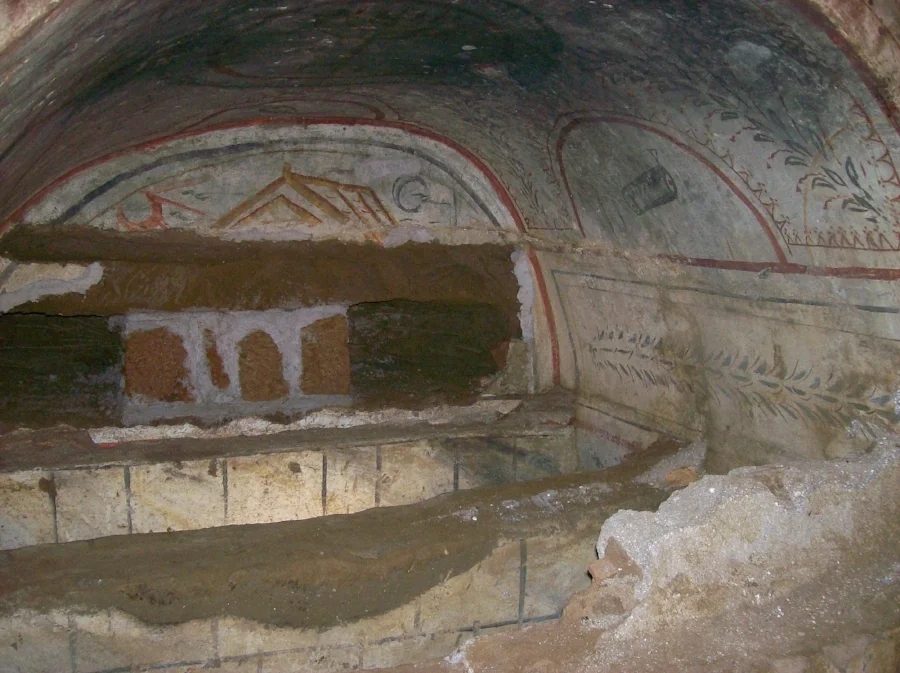
Ironically enough, at the time these stories, literally, made history, the catacombs for Jews remained "secret" and known to a minimal extent. Nevertheless, they, too, were seen as collective responses to ritual needs and distinctly Biblical traditions.
Read More
Valuing the Past in the Greco-Roman World asks how the past was defined, accessed, and valued in that period of time so often considered “our” antiquity (18) and provides an array of fascinating examples that work together to undercut notions of the value of the past in the past as in any way uniform or monolithic.
Read More
Adrian’s Introduction to the Divine Scriptures, likely dated to the fifth century, is our earliest surviving “Antiochene” handbook on biblical exegesis.
Read More
Indeed, central to the volume are two implicit acknowledgements: 1) that the ancient urban “realities” are inaccessible to the modern scholar except by means of imaginative approaches, and 2) that urban “dreams” no less “real” than their material counterparts.
Read More
"Berns’ talk, and the seminar discussion, enabled reflection from an unexpected angle on the PSCO theme for the year: what does it mean for us to have expertise about what ancient Jews knew (and how they knew it)?
Read More
AJR will be sharing highlights from the Philadelphia Seminar on Christian Origins. This year's theme "science and the scientific" asks, "Does considering knowledge as practiced in the ancient world disrupt, modify, and nuance our understanding of the “scientific”?"
Read More
How did ancient scientists think about the ways plants fit into the larger cosmological order in relation to other ontological forms such as metals/minerals, animals, celestial beings, and other divinities?
Read More
Divine Deliverance contributes to the rich variety of scholarship that examines ancient texts not for historical detail but for rhetorical effect.
Read More
![17th cent icon of Elijah and Enoch in Historic Museum in Sanok, Poland. Przykuta [Public domain], via Wikimedia Commons.](https://images.squarespace-cdn.com/content/v1/5449167fe4b078c86b41f810/1514987405965-Y10A3AY8PH8635QUSHX3/1024px-MHS_Eliasz_i_Enoch_XVII_w_p.jpg)






.jpg)