
The Oval Forum, Gerasa | Image source
This Week: Apocrypha upon apocrypha, German royalty, Jewish catacombs, pigeons in antiquity, biblical epic – and more!
Read MoreThe Oval Forum, Gerasa | Image source
The Oval Forum, Gerasa | Image source
This Week: Apocrypha upon apocrypha, German royalty, Jewish catacombs, pigeons in antiquity, biblical epic – and more!
Read MoreView inside of an arched burial niche or arcosolim inside of the Villa Torlonia catacombs. The walls, vault, and even the insides of the burial troughs were originally plastered and painted, but were subsequently damaged by additional burials in the back wall and above the original tomb covers. Photo: International Catacomb Society
View inside of an arched burial niche or arcosolim inside of the Villa Torlonia catacombs. The walls, vault, and even the insides of the burial troughs were originally plastered and painted, but were subsequently damaged by additional burials in the back wall and above the original tomb covers. Photo: International Catacomb Society
Ironically enough, at the time these stories, literally, made history, the catacombs for Jews remained "secret" and known to a minimal extent. Nevertheless, they, too, were seen as collective responses to ritual needs and distinctly Biblical traditions.
Read MoreValuing the Past in the Greco-Roman World asks how the past was defined, accessed, and valued in that period of time so often considered “our” antiquity (18) and provides an array of fascinating examples that work together to undercut notions of the value of the past in the past as in any way uniform or monolithic.
Read MoreAdrian’s Introduction to the Divine Scriptures, likely dated to the fifth century, is our earliest surviving “Antiochene” handbook on biblical exegesis.
Read MoreIndeed, central to the volume are two implicit acknowledgements: 1) that the ancient urban “realities” are inaccessible to the modern scholar except by means of imaginative approaches, and 2) that urban “dreams” no less “real” than their material counterparts.
Read More"Berns’ talk, and the seminar discussion, enabled reflection from an unexpected angle on the PSCO theme for the year: what does it mean for us to have expertise about what ancient Jews knew (and how they knew it)?
Read MoreAJR will be sharing highlights from the Philadelphia Seminar on Christian Origins. This year's theme "science and the scientific" asks, "Does considering knowledge as practiced in the ancient world disrupt, modify, and nuance our understanding of the “scientific”?"
Read MoreMarble relief of Asclepius and his daughter Hygieia. From Therme, Greece, end of the 5th century BC. Istanbul Archaeological Museums. (Wikimedia Commons)
Marble relief of Asclepius and his daughter Hygieia. From Therme, Greece, end of the 5th century BC. Istanbul Archaeological Museums. (Wikimedia Commons)
How did ancient scientists think about the ways plants fit into the larger cosmological order in relation to other ontological forms such as metals/minerals, animals, celestial beings, and other divinities?
Read MoreDivine Deliverance contributes to the rich variety of scholarship that examines ancient texts not for historical detail but for rhetorical effect.
Read MoreIllustration of Galen and other ancient medics | Vienna Dioskorides (ca.512), f. 3v | Image source
Illustration of Galen and other ancient medics | Vienna Dioskorides (ca.512), f. 3v | Image source
This Week: Disability Studies, rabbis and Romans, carbon dating, theaters, Bladerunner, buddhas - and more!
Read MoreCaroline Wazer, Lennart Lehmhaus, Chris De Wet, Julia Watts Belser, and Heid Marx examine aspects of ancient medicine from their own research.
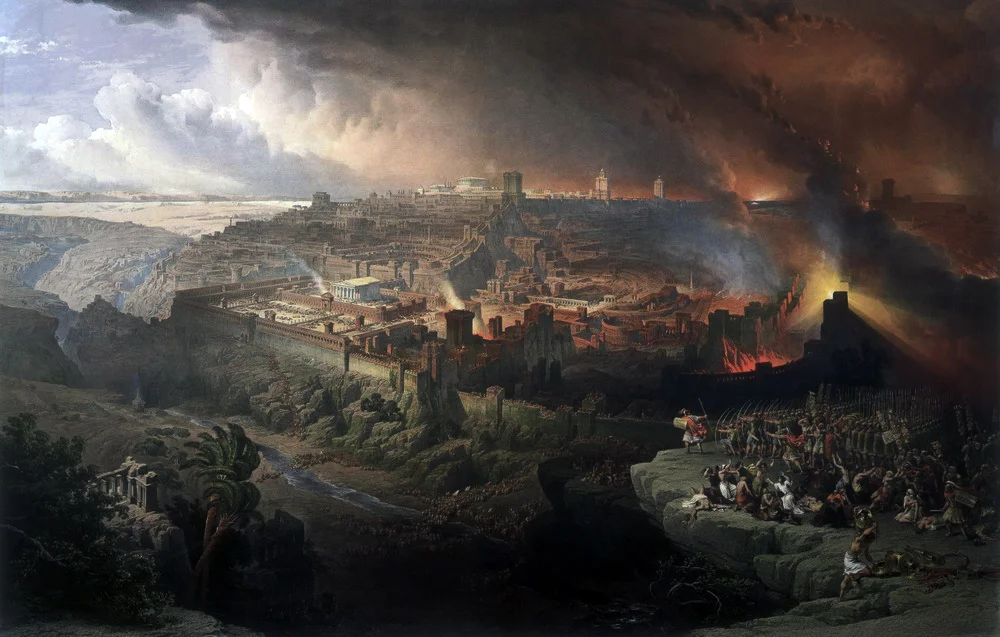
Read MoreThe Siege and Destruction of Jerusalem by the Romans Under the Command of Titus, A.D. 70, David Roberts Oil on canvas, 1850.
The Siege and Destruction of Jerusalem by the Romans Under the Command of Titus, A.D. 70, David Roberts Oil on canvas, 1850.
Dr. Julia Watts Belser uses disability theory to read rabbinic narratives about the destruction of Jerusalem, identifying how "the disabled Jewish body serves both as a visceral occasion for lament and a potent site of protest against empire."
Read MoreJoshua Matson with a summary of the edited volume On Prophets, Warriors, and Kings, which contains conference papers from "various scholars who explored how the Former Prophets have been read, interpreted, and utilized throughout the ages."
Read MoreFig.: The yellow indicates the vagal nerve running from the nervous system to the stomach (from Gray’s Anatomy, plate 793; Wikimedia commons [public domain]).
Fig.: The yellow indicates the vagal nerve running from the nervous system to the stomach (from Gray’s Anatomy, plate 793; Wikimedia commons [public domain]).
"What is intriguing about such statements as cited above—and one can list many similar cases with other authors—is that in them we witness how health, physiology, and anatomy are structured by means of social and cultural discursive formations. In this case, the discourse of slavery, which I have termed doulology,[iv] structures the dynamics between mental and gastric health. By their extension into the realm of the material psychē, these dynamics, in turn, shape the self. You are how you eat."
Read MoreJoshua Blachorsky with a book note of Burns' The Christian Schism in Jewish History and Jewish Memory: "Burns continues the trend of eschewing the traditional parting model and envisioning a split only after the beginning of the 4th century. But he does so with a novel lens, focusing on the rabbinic evidence."
Read MoreBusts of Sol Invictus and Constantine I | Gold solidus minted in Ticinum in 313CE to commemorate victory at the Milvian Bridge | Image source
Busts of Sol Invictus and Constantine I | Gold solidus minted in Ticinum in 313CE to commemorate victory at the Milvian Bridge | Image source
This Week: Constantine, Jewish warrior poets, Talmudic medicine, magic incantation amulets – and more!
Read MoreGalen and Hippokrates from Anagni Italy. Photo: Nina Aldin Thune via wikimedia commons.
Galen and Hippokrates from Anagni Italy. Photo: Nina Aldin Thune via wikimedia commons.
Dr. Lennart Lehmhaus shares a rabbinic case study in order to reflect upon the history of science and rabbinic texts: "A careful study of the discursive strategies and the embeddedness of such medical knowledge within their broader contexts of theology or religious law (Halakhah), allows one to highlight the differences in form and content in the variants of this narrative."
Read More"Lenski’s book thus offers not a picture of Constantine at all, but a series of portraits artfully arranged – some by Constantine himself, some by his image-makers, and some by contemporary scholars trying to make sense of this complex, enigmatic, kaleidoscopic character. "
Read MoreDr. Caroline Wazer shares her work on Roman public health in the AJR forum on Ancient Medicine, concluding "that Roman ideas of what could and should be done in the interest of public health were more intimately connected to political climates than they were to the state of scientific knowledge, such as it was."
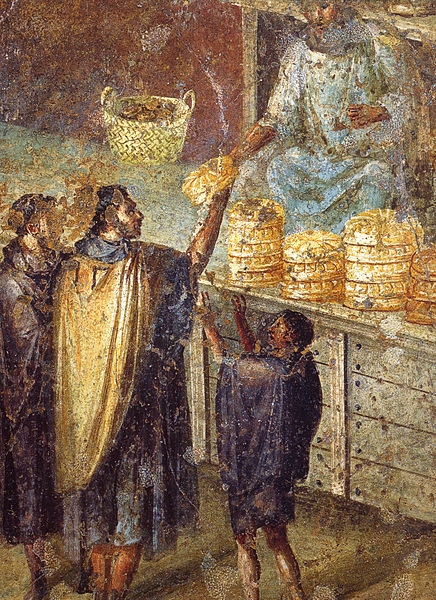
Read MoreSale of Bread at a Market Stall - Roman fresco from the Praedia of Julia Felix in Pompeii. Museo Archeologico Nazionale (Naples)
Sale of Bread at a Market Stall - Roman fresco from the Praedia of Julia Felix in Pompeii. Museo Archeologico Nazionale (Naples)
"When I asked what this emerging Christian food culture might have meant for the ordinary fourth century Christian, I found that it was not merely a trickle-down or oppositional model of lay vs. monastic or institutional piety. Rather, food helped early Christians negotiate among ideas across the spectrum of lived experience."
Read More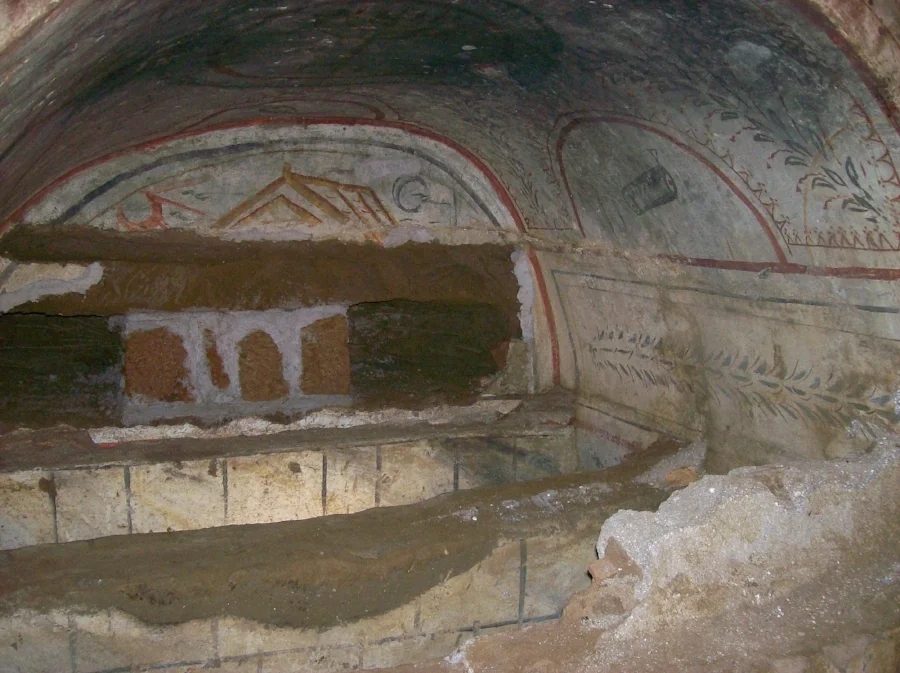



![Fig.: The yellow indicates the vagal nerve running from the nervous system to the stomach (from Gray’s Anatomy, plate 793; Wikimedia commons [public domain]).](https://images.squarespace-cdn.com/content/v1/5449167fe4b078c86b41f810/1506362512031-CY0T2K6AEF0K345F70S4/Untitled.jpg)



.jpg)
