Pallas Athena and Aegis surrounded by the moon's cycle. Vatican Museum.
Dr. Henryk Drawnel on cultural competition and critique between Mesopotamia and Qumran.
Read MorePallas Athena and Aegis surrounded by the moon's cycle. Vatican Museum.
Pallas Athena and Aegis surrounded by the moon's cycle. Vatican Museum.
Dr. Henryk Drawnel on cultural competition and critique between Mesopotamia and Qumran.
Read More"Mosaïque des échansons", du IIe siècle ap. J.-C., provenant de Dougga, au Musée national du Bardo (Tunisie) - Pascal Radigue (2001) - Wikimedia Commons
"Mosaïque des échansons", du IIe siècle ap. J.-C., provenant de Dougga, au Musée national du Bardo (Tunisie) - Pascal Radigue (2001) - Wikimedia Commons
"Ultimately, while Pliny clearly had an eye for prices, the actual numbers he provides aren’t especially useful. His discussions of price formation, however, do give us considerable insight into the way the market functioned in Pliny’s time as well as into Pliny’s ‘economic thought’. In various places Pliny mentions the role of supply and demand, changes in fashion, lying salesmen and other forms of fraud, as well as labor costs."
Read More"The New Jerusalem" number 80 from 'The Apocalypse of Angers', 1373-87 (tapestry) by Nicholas Bataille. Photograph by Kimon Berlin, CC BY-SA 2.5-2.0-1.0, via Wikimedia Commons
"The New Jerusalem" number 80 from 'The Apocalypse of Angers', 1373-87 (tapestry) by Nicholas Bataille. Photograph by Kimon Berlin, CC BY-SA 2.5-2.0-1.0, via Wikimedia Commons
Dr. Andrew Perrin on the origins of the apocalypse in ancient Judaism.
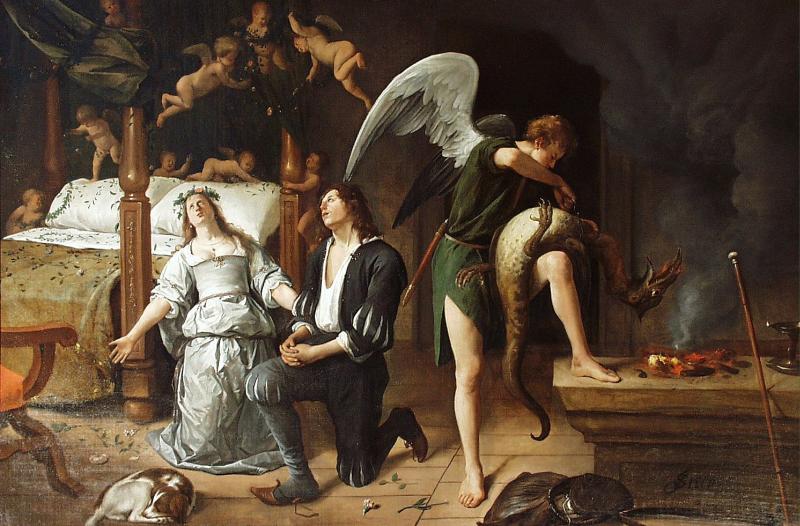
Read More"Tobias' and Sara's Wedding Night" by Jan Havicksz Steen ca. 1626 – 1679 in Museum Bredius
"Tobias' and Sara's Wedding Night" by Jan Havicksz Steen ca. 1626 – 1679 in Museum Bredius
Dr. Devorah Dimant on marriage, demons, burials, and halakhah in Tobit and Qumran.
Read MoreConrad Cichorius: "Die Reliefs der Traianssäule", Zweiter Tafelband: "Die Reliefs des Zweiten Dakischen Krieges", Tafeln 58-113, Verlag von Georg Reimer, Berlin 1900
Conrad Cichorius: "Die Reliefs der Traianssäule", Zweiter Tafelband: "Die Reliefs des Zweiten Dakischen Krieges", Tafeln 58-113, Verlag von Georg Reimer, Berlin 1900
"In the field of classical studies, the 2008 publication of The Cambridge Economic History of the Greco-Roman World has effectively ushered in a post-Finleyan era in the study of Greco-Roman economies by incorporating methods developed in the field of New Institutional Economics. In what follows, we examine representative samples of three emergent methodological trends: (1) the turn toward New Institutional Economics in studies of Greece and Rome; (2) Roland Boer’s model of the economy of ancient Israel; and (3) K. C. Hanson and Douglas Oakman’s social-scientific approach in New Testament studies."
Read MoreGenesis Apocryphon Scroll (1QapGen) © The Israel Museum, Jerusalem
Genesis Apocryphon Scroll (1QapGen) © The Israel Museum, Jerusalem
Dr. Daniel Machiela on the linguistic makeup Aramaic at Qumran and the Bible.
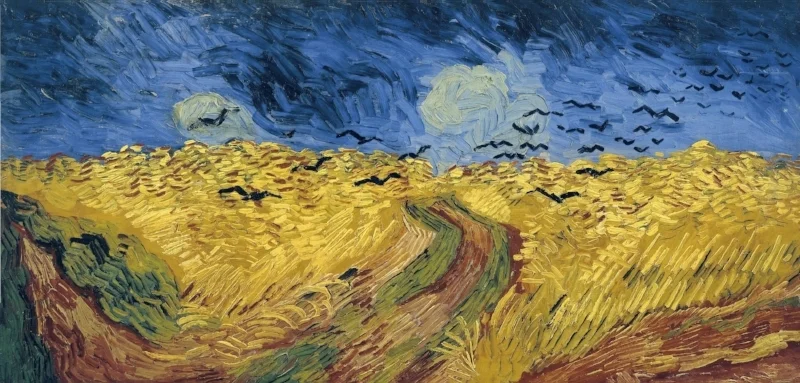
Read MoreVincent van Gogh - Wheatfield with Crows (1890) Wikimedia Commons
Vincent van Gogh - Wheatfield with Crows (1890) Wikimedia Commons
"Rarely does the evidence available in textual remains invite us to see the underlying, generative way that conflict and competition textured religious cultures in the late ancient world. This study is an attempt to read Jewish and Christian history in the 2nd-3rd centuries, CE by and seeing the points of overlap and confrontation that can be seen beyond the frame."
Read MorePersepolis tablets with Aramaic. The Oriental Institute, University of Chicago
Persepolis tablets with Aramaic. The Oriental Institute, University of Chicago
Dr. Jonathan Ben-Dov on the ideology of language choice in ancient Judaism
Read More"Himmelfarb’s incisive reading of Sefer Zerubbabel greatly enriches our understanding of Jewish messianism between the Second Temple period and the rise of Islam. By exploring common themes and figures in a wide range of sources, Himmelfarb works “backward” to uncover a vibrant “Judaism” that actively appropriates key elements of the Christian messianic narrative, much to the consternation of the rabbis."
Read MoreThe River Nile. Michael Gwyther-Jones, 2008.
The River Nile. Michael Gwyther-Jones, 2008.
"Water was not simply part of the background of Jewish experiences in Egypt; rather, it was central to their lives as they developed new perspectives towards the land."
Read More"This is the theoretical point Morgan is interested in proving with this volume – that in the endless growth of language into new meanings, there are very few grand leaps and very many infinitesimal steps. The earliest Christians did not (yet) redefine faith, Morgan insists, but changed its focus – toward God and Christ alone, rather than that “shared circle of reasoning” that pistis/fides spun among gods and humans (p. 123)."
Read MoreBeth Berkowitz and Ishay Rosen-Zvi share a book that was an "unexpected influence" upon their academic work.
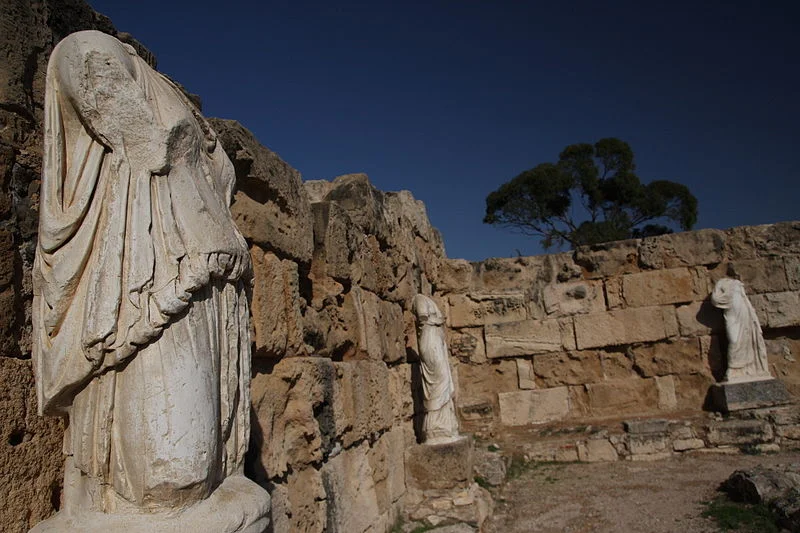
Read MoreAncient Salamis, Cyrpus Source: Wikimedia Commons
Ancient Salamis, Cyrpus Source: Wikimedia Commons
"Is there something fundamentally flawed or unhelpful about that intellectual judgment? By turning attention toward these other factors, are our authors actually seeking to problematize the style of intellectual history that does intrinsically judge who is the deeper, the more imaginative, the more coherent thinker?"
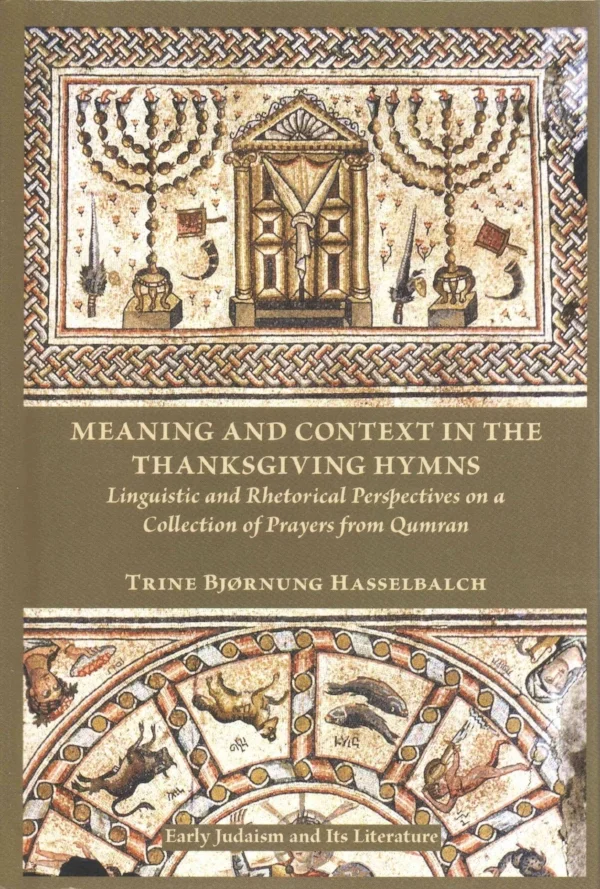
Read MoreAJR and @TWUDSSI’s first forum celebrating the 70th anniversary of the discovery of the Qumran scrolls with pieces by Reinhard Kratz, Drew Longacre, Menachem Kister, Charlotte Hempel.
Read MoreCommunity Scroll Photo © Israel Museum, Jerusalem, by David Harris
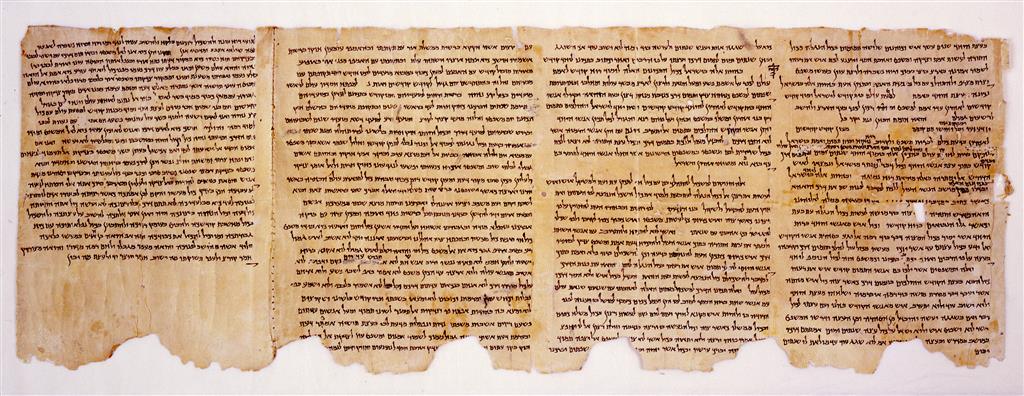
Community Scroll Photo © Israel Museum, Jerusalem, by David Harris
Dr. Charlotte Hempel on tracing the complex textual evolution of 1QS. Celebrating #DSSat70 with @twudssi.
Read MoreBenozzo Bozzoli, Fall of Simon Magus
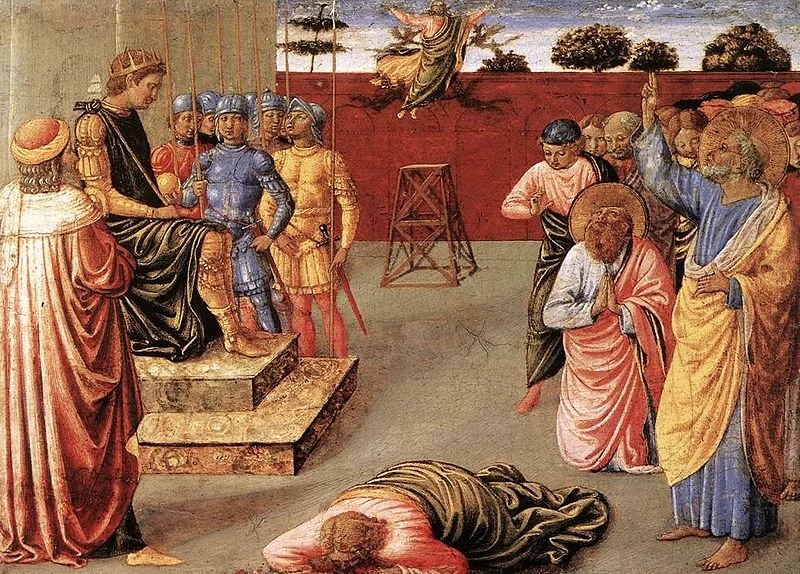
Benozzo Bozzoli, Fall of Simon Magus
"These violent images of the punishment and execution of dehumanized and embodied cognitive errors are the signs of a religious movement marked by dissent and disorder. Epiphanius, therefore, gives us a shameless and corporeal fantasy of exactly what is not happening in 370s after Julian and under the policies of Valens: the defeat and mastery of all error, whether idolatry or heresy. The contemporary proliferation of spiritual violence called forth the shameless exorcist, who fused disputation with death. "
Read More