The River Nile. Michael Gwyther-Jones, 2008.
"Water was not simply part of the background of Jewish experiences in Egypt; rather, it was central to their lives as they developed new perspectives towards the land."
Read MoreThe River Nile. Michael Gwyther-Jones, 2008.
The River Nile. Michael Gwyther-Jones, 2008.
"Water was not simply part of the background of Jewish experiences in Egypt; rather, it was central to their lives as they developed new perspectives towards the land."
Read More"This is the theoretical point Morgan is interested in proving with this volume – that in the endless growth of language into new meanings, there are very few grand leaps and very many infinitesimal steps. The earliest Christians did not (yet) redefine faith, Morgan insists, but changed its focus – toward God and Christ alone, rather than that “shared circle of reasoning” that pistis/fides spun among gods and humans (p. 123)."
Read MoreBeth Berkowitz and Ishay Rosen-Zvi share a book that was an "unexpected influence" upon their academic work.
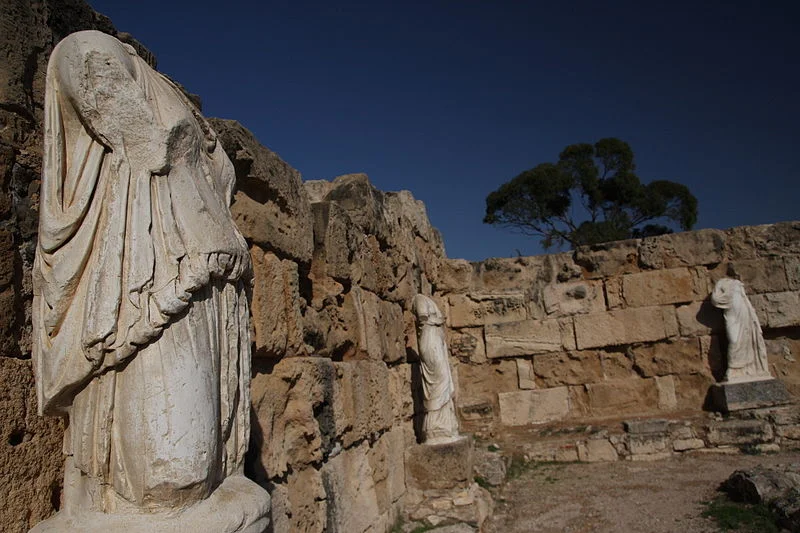
Read MoreAncient Salamis, Cyrpus Source: Wikimedia Commons
Ancient Salamis, Cyrpus Source: Wikimedia Commons
"Is there something fundamentally flawed or unhelpful about that intellectual judgment? By turning attention toward these other factors, are our authors actually seeking to problematize the style of intellectual history that does intrinsically judge who is the deeper, the more imaginative, the more coherent thinker?"
Read MoreAJR and @TWUDSSI’s first forum celebrating the 70th anniversary of the discovery of the Qumran scrolls with pieces by Reinhard Kratz, Drew Longacre, Menachem Kister, Charlotte Hempel.
Read MoreCommunity Scroll Photo © Israel Museum, Jerusalem, by David Harris
Community Scroll Photo © Israel Museum, Jerusalem, by David Harris
Dr. Charlotte Hempel on tracing the complex textual evolution of 1QS. Celebrating #DSSat70 with @twudssi.
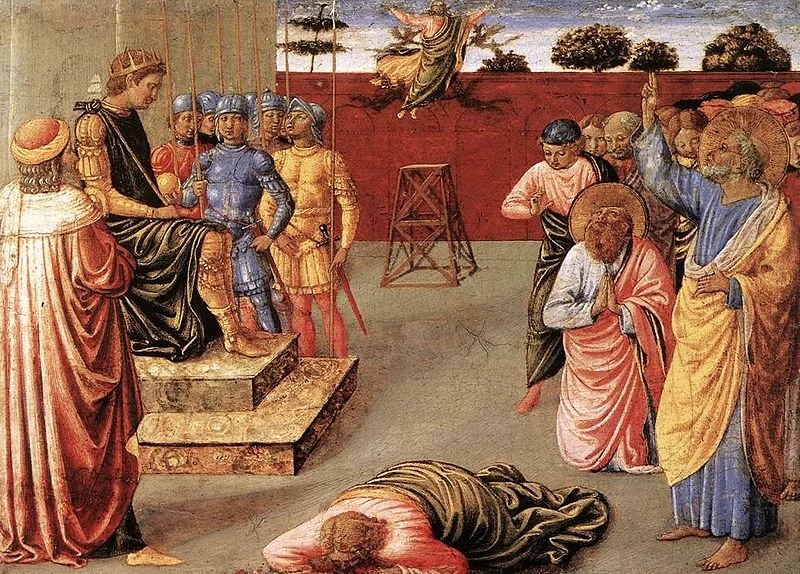
Read MoreBenozzo Bozzoli, Fall of Simon Magus
Benozzo Bozzoli, Fall of Simon Magus
"These violent images of the punishment and execution of dehumanized and embodied cognitive errors are the signs of a religious movement marked by dissent and disorder. Epiphanius, therefore, gives us a shameless and corporeal fantasy of exactly what is not happening in 370s after Julian and under the policies of Valens: the defeat and mastery of all error, whether idolatry or heresy. The contemporary proliferation of spiritual violence called forth the shameless exorcist, who fused disputation with death. "
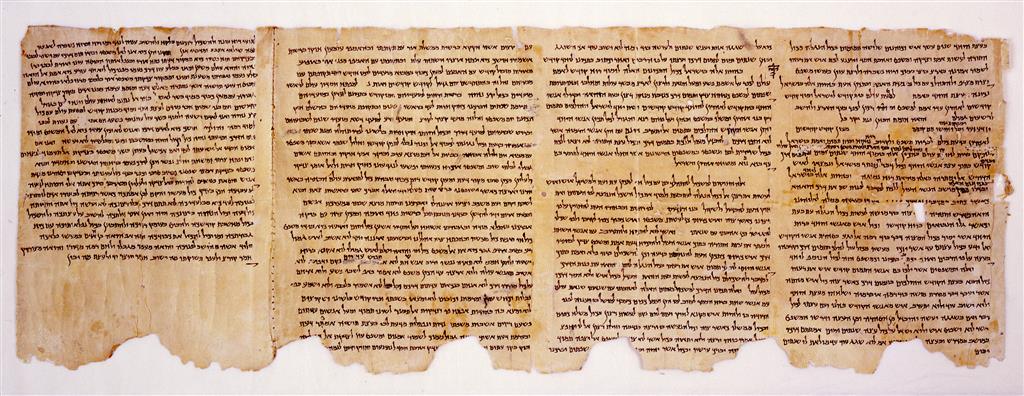
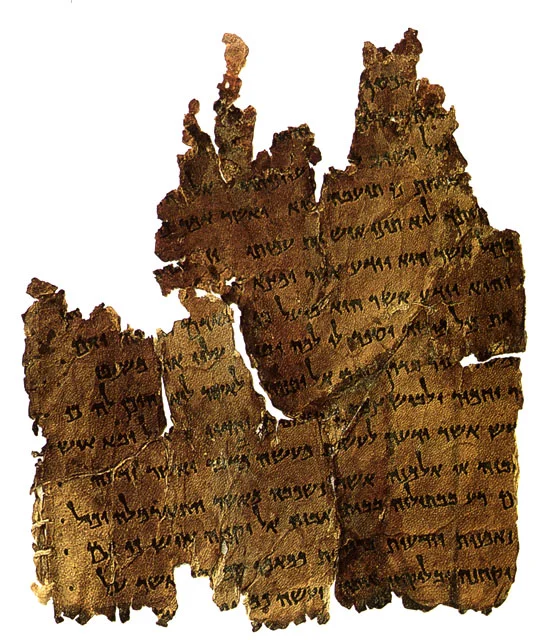
Read MoreThe Damascus Document, in the Library of Congress.
The Damascus Document, in the Library of Congress.
Dr. Menahem Kister on the phases and faces of Qumran sectarian writings.
Read MoreSaint Augustine of Hippo - attributed to Gerard Seghers (Wikimedia Commons)
Saint Augustine of Hippo - attributed to Gerard Seghers (Wikimedia Commons)
"In effect, then, both biographies unsettle the very presumption that underpins the genre—that is, confidence in the possibility of recovering enough of the life and experiences of a person to recount as a narrative in writing. The inner life and experiences of Epiphanius here remain bracketed. What is written, instead, is the story of his performed and constructed persona, in the case of Kim, and his iconicity and celebrity, in the case of Jacobs."
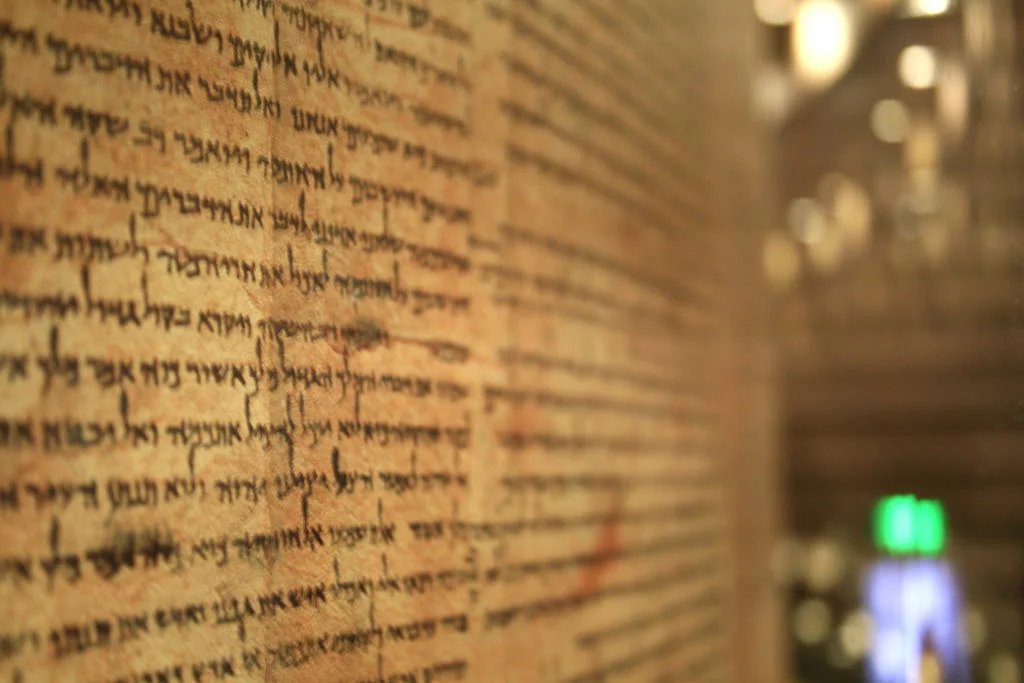
Read MoreScroll of Isaiah from Qumran at Israel Museum by KorePhotos.
Scroll of Isaiah from Qumran at Israel Museum by KorePhotos.
Dr. Drew Longacre on scribal intervention and innovation in the Pentateuch at Qumran. Celebrating #DSSat70 with @twudssi.
Read MoreYoung Richard Kim's Epiphanius of Cyprus: Imagining an Orthodox World (U Michigan, 2015)
Young Richard Kim's Epiphanius of Cyprus: Imagining an Orthodox World (U Michigan, 2015)
"Young’s main instrument in this task is close and contextual readings of key scenes in Epiphanius's master-work, the heresiographic Panarion, as autobiographical moments that allowed Epiphanius to imagine an orthodox world and his own central place in it."
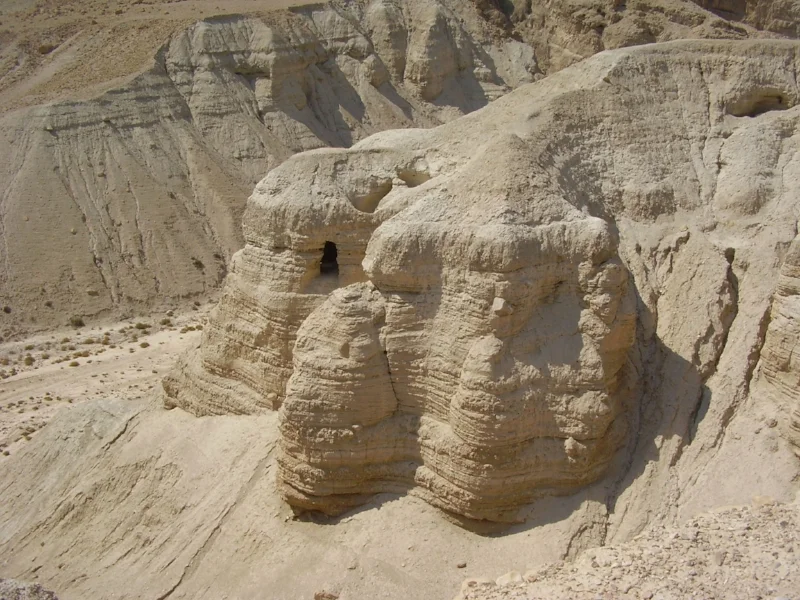
Read MoreQumran caves by Avishai Teicher, via Wikimedia Commons
Qumran caves by Avishai Teicher, via Wikimedia Commons
Dr. Reinhard Kratz on Qumran and compositional growth of biblical texts. Celebrating #DSSat70 with @twudssi.
Read More"Andrew takes us from present theory to past subject and ultimately brings us back to the present, rendering us the subject, and challenges us, the reader, to ponder our assumptions about what Late Antiquity was and is and how the pieces of our extant puzzle fit into it."
Read More"In modern scholarship Epiphanius has thus been routinely maligned as hell-bent on sniffing out heresy wherever it could be found, fanatical, narrow-minded, intransigent, aggressive, theologically inept, and even given to buffoonery. But is there more to this figure than these caricatures suggest?"
Read More"How does an orientation towards “a people’s history,” following Howard Zinn, help scholars ask new questions about the context and content of Paul’s Letter to the Philippians, a brief but important text in the Pauline corpus?"
Read MorePaul preaching in Beroia - Wikipedia Commons (Contributor: Edal Anton Lefterow)
Paul preaching in Beroia - Wikipedia Commons (Contributor: Edal Anton Lefterow)
"Around seven hundred homilies authored in Syriac survive from the fourth through sixth centuries. Yet most have resisted efforts to identify their dates, locations, and liturgical settings. By attending to these texts, we are forced to confront the difficulty of interpreting the seemingly de-contextualized remains of most sermons from late antiquity."
Read MoreReading at a Table, Pablo Picasso, 1934, oil on canvas
(image: http://www.metmuseum.org/toah/works-of-art/1996.403.1/)
Reading at a Table, Pablo Picasso, 1934, oil on canvas
(image: http://www.metmuseum.org/toah/works-of-art/1996.403.1/)
Dr. Sarit Kattan Gribetz shares her strategies for teaching the Mishnah to students with no exposure to rabbinic texts.
Read More