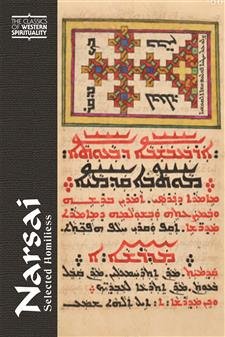
The exceptional influence and popularity enjoyed by DEH from late antiquity through the Middle Ages, and its critical interface with Jewish historiography as a work both based on and source of major Jewish histories, suggest that this work is important for scholars of pre-modern Judaism and/or Christianity to know.
Read More
“I hope the book further chips away at the deep-seated eurocentrism and Roman-triumphalism that continues to treat Iranian empires as backwards and primitive, employing different strategies of rule based on their lesser governing capabilities.”
Read More
“In the end what I think distinguishes Simcha’s account from others is the sense of the informality and improvisatory character of these arrangements, their non-institutionalization and their easy evadability. Thus, minority communities were not bound by any Personalitätsprinzip: they were not required to follow their own laws and did not even necessarily have any formal privilege to follow them, just accreted usage and custom.”
Read More
“Whatever the case, both Kartir and the Homilies converge on this one point, that is, that persecution now has an imperial scope. They agree that matters of religion are now imperial matters of concern, not just local. And it is perhaps this imperial vision of persecution that the early Sasanian experience with the Manichaeans bequeathed to later Sasanian Empire, especially following Constantine’s conversion and the later Christianization of the Roman Empire. “
Read More
“I want to respond to Gross’s call to read Bavli narratives differently – neither as pure literary creations nor as sources for historical fact, but as sites in which the rabbis are actively navigating their relationship with empire by incorporating and responding to imperial ideas and motifs.”
Read More
Actually, Simcha suggests, maybe all we have reflected in the Bavli is not a historical truth of kind kings versus mean magi but the effects of an imperial ideology which endeavored to get its Jewish subjects to think positively of the sovereigns and warily of the Zoroastrian clergy.
Read More
These two sets of patterns—rabbinic tensions with the non-rabbinic wealthy and their involvements with charity and the working poor—are arguably complementary. Not only should the rabbis prevail in the competition with the non-rabbinic wealthy for social capital because of their Torah study, interpretation, living, and teaching, they should prevail because they are benevolently mindful and even activist on behalf of their social inferiors (the working poor) and are willing and able to compel other Jews to be similarly mindful and also do charity in accordance with rabbinic visions of that cluster of practices.
Read More
The result is a radical revision of what we thought we knew about of Babylonian Jewish society, the place of the rabbis, and the nature of their textual tradition, as illuminated by comparison with other similarly-situated minority communities who were also navigating the realities of empire and being formed and transformed in the process. (I’ll return to this methodological point at the end.) But there’s more. The book also offers a radical revision of what we thought we knew about Sasanian rule.
Read More
A review panel from the 2024 Association for Jewish Studies featuring scholars engaging with Simcha Gross’s award winning Babylonian Jews and Sasanian Imperialism in Late Antiquity.
Read More
Catherine Hezser and Constantin Willems introduce the AHRC-DFG Collaborative UK-German Research Project in the Humanities (2023-26) on Rabbinic Civil Law in the Context of Ancient Legal History.
Read More
In this article, we argue that, despite and precisely because of these real cautions, public scholarship can further three core academic responsibilities: teaching, service, and even research.
Read More
Ancient Jew Review is thankful for our community of contributors and readers invested in learning about Jews and their neighbors in the ancient world. For the year of 2024, these are our ten most-read pieces published this year!
Read More
As I learned more about the literature and history of my tradition, I found myself drawn to another important author, Narsai, and wondered whether someday a similarly accessible and instructive volume might be written about him. This project has been both a dream and an aspiration ever since.
Read More
Indeed, these audiences in particular would benefit from Olyan’s treatment since they have adopted, at least in part, the academic tools of biblical scholarship, take the Bible seriously as a text of moral significance, and could theoretically affect social and political change in a way that is not limited to academic circles.
Read More
“I came to a realization similar to the one about composition history, though considerably more mundane: the jumble of words, numbers, and punctuation that make up a biblical reference is objectively confusing if you’re not used to it!”
Read More
The desire to construct harmonious pasts selectively highlights only those aspects of ancient identities and experiences that align with current ideals, conveniently omitting the less contemporarily palatable. This selective narrative fosters the belief that coexistence is inherent and natural, rather than a hard-fought process.
Read More
Advisory Board member Andrew Jacobs reflects upon the past 10 years of Ancient Jew Review.
Read More
After Echoes of Scripture, very few studies that stemmed from a NT context ever mention rabbinic literature anymore. My book works to revive and reframe this conversation, make room for early rabbinic texts in the study of Paul and make room for Paul in the study of ancient Midrash, without collapsing these texts into constricting and antiquated models of dependency and borrowing.
Read More
“All this to say that Paul’s emphasis in Romans 10 on speaking and subsequently hearing—orality—is not because it is relevant only to his gentile communities, but because it serves as an explanation for why part of Israel still not has yet believed; they cannot believe because they cannot “hear” the oral nomos speaking about Christ and righteousness by trust. “
Read More
Studies that seek to build on her path-breaking work in the history of midrash will have to pay closer attention to this fundamental X-factor in Pauline hermeneutics.
Read More