
“I tell students that writing is an inherently collaborative enterprise: we write in conversation with previous scholarship; we write for a future audience; we share drafts with colleagues and mentors; we submit work for peer review and to editors and editorial boards; we anticipate reviews of our books; we hope that our work will be engaged.”
Read More“Tinder Theology Project”: Biblical Dating Profiles
No two students created the same profile—even though many of them selected the same character—and this, too, was instructive. At its core, this assignment was about practicing interpretation.
Read MoreIt’s Magic! (Or is it?): Two Classroom Activities

Elena Dugan shares activities for both Hebrew Bible and New Testament classes that examines the distinction between magic and miracle.
Read MoreCreating a Commentary

Page of Rashi’s Commentary on the Megillot, courtesy of Wikimedia Commons
Page of Rashi’s Commentary on the Megillot, courtesy of Wikimedia Commons
With a “flipped classroom” format, this graduate seminar enabled students to create a commentary on key psalms with a focus on the history of Israelite religion.
Read MoreTeaching Textual Criticism through Manuscript Creation
“This lesson plan has been an effective means of reinforcing the physical, manuscript-based analysis of textual criticism, over against the theoretical texts of source criticism.”
Read MoreAncient Jewish Liturgy

What is an Ancient Jewish Liturgy?

Floor mosaic depicting the Jerusalem Temple, Hammat Tiberias [Flikr].
Were Early Rabbinic Prayers Scripted?

Photo of the synagogue of Capernaum, in the Galilee region of northern Israel [Wikimedia].
Photo of the synagogue of Capernaum, in the Galilee region of northern Israel [Wikimedia].
“Are we correct to presume that early rabbinic liturgy had a textual tradition coherent with the models we know, including from their predecessors at Qumran? Did early rabbis have a system of memorized, orally transmitted yet fixed texts, or did their worship operate in a more free-form system?”
Read MoreThe Ritualization of Psalms in the Dead Sea Scroll 1QHodayotᵃ (Thanksgiving Psalms from Qumran)

“Good to give thanks to HaShem.” Photo courtesy of Jocelyn Burney.
“Good to give thanks to HaShem.” Photo courtesy of Jocelyn Burney.
“One of the chief hurdles in the consideration of the psalms found in 1QHᵃ as compositions that may have been read aloud in communal settings is the use of the term “liturgical” to characterize such settings and texts.”
Read MoreJonah and Prayer

Detail of a page from Ms 21160 f. 262: micrography of Jonah being swallowed by the fish, at the text of Jonah, the haftarah for the afternoon service of Yom Kippur. Photo courtesy of the British Library.
Detail of a page from Ms 21160 f. 262: micrography of Jonah being swallowed by the fish, at the text of Jonah, the haftarah for the afternoon service of Yom Kippur. Photo courtesy of the British Library.
“Prophecy and prayer, performance, composition of scriptures and their interpretation were all intertwined in vital and vibrant ways... The two prayers in Jonah offer illustrations of two of the many patterns of how prayer might intersect with scriptural tradition.”
Read MoreDissertation Spotlight | Marshall Cunningham

Elephantine Papyrus of Ahiqar, image courtesy of Wikipedia
Elephantine Papyrus of Ahiqar, image courtesy of Wikipedia
I argue that the construction of Judeanness — like all collective identities — was a complex, contextual, and continuous process of identity formation that was undertaken, consciously or unconsciously, by individuals and communities throughout the Babylonian and Persian empires.
Read MorePharisees and Evangelical Preaching

Jesus and Nicodemus by Crijn Hendricksz, 1616–1645
Jesus and Nicodemus by Crijn Hendricksz, 1616–1645
“Evangelical Christian faith and Jewish faith, with all their nuances and varieties, have every right to dialogue, debate, and disagreement, but when criticism of the Pharisees crosses the line into maligning persons with whom we differ we need to raise a flag of denunciation.”
Read MorePharisees Part Two: Reception History
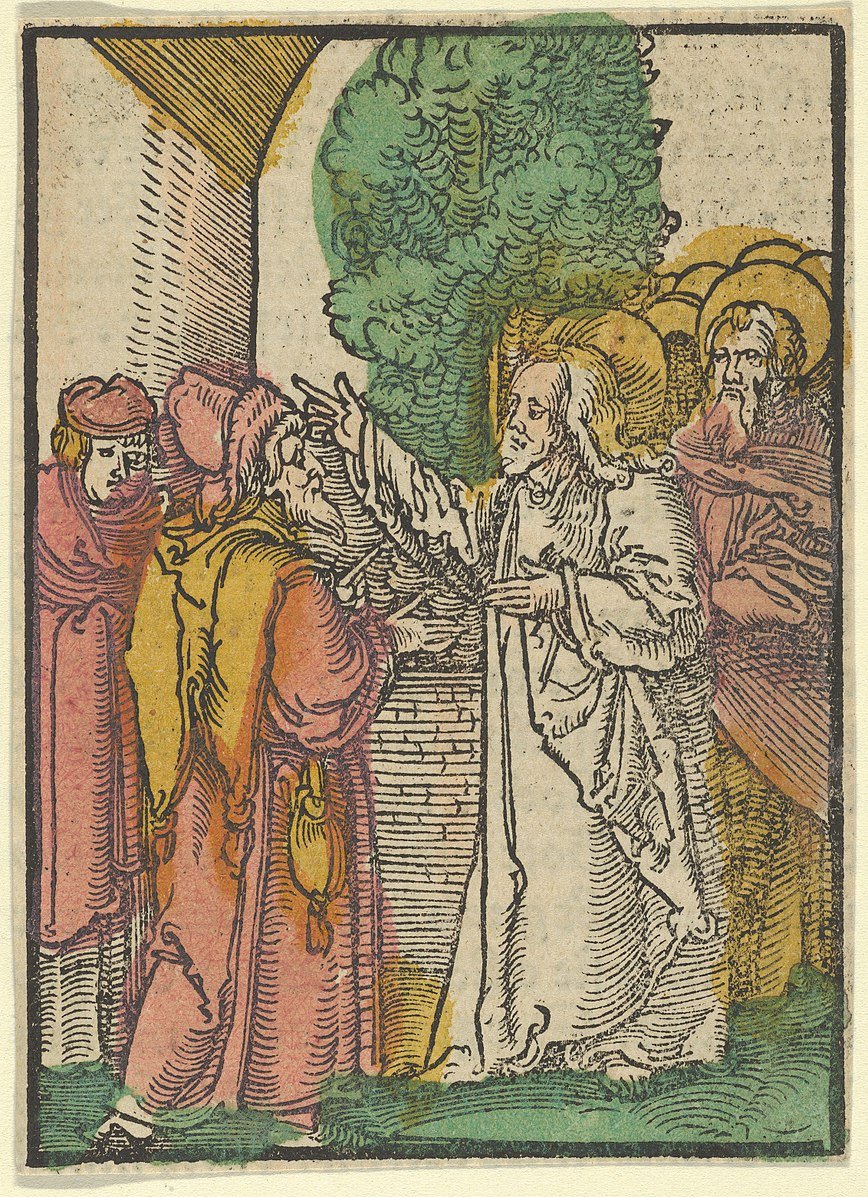
Parable of the Pharisees and the Tax-Collector, from Das Plenarium, print, Hans Schäufelein (MET, 61.663.364)
Parable of the Pharisees and the Tax-Collector, from Das Plenarium, print, Hans Schäufelein (MET, 61.663.364)
“My comments intend to address primarily those who have not yet read the book, to provide a brief taste of my assigned chapters, and to reflect on the significance of this work for Jewish-Christian relations, especially in terms of community engagement and education.”
Read MoreWho Needs the Pharisees? New Testament and Beyond
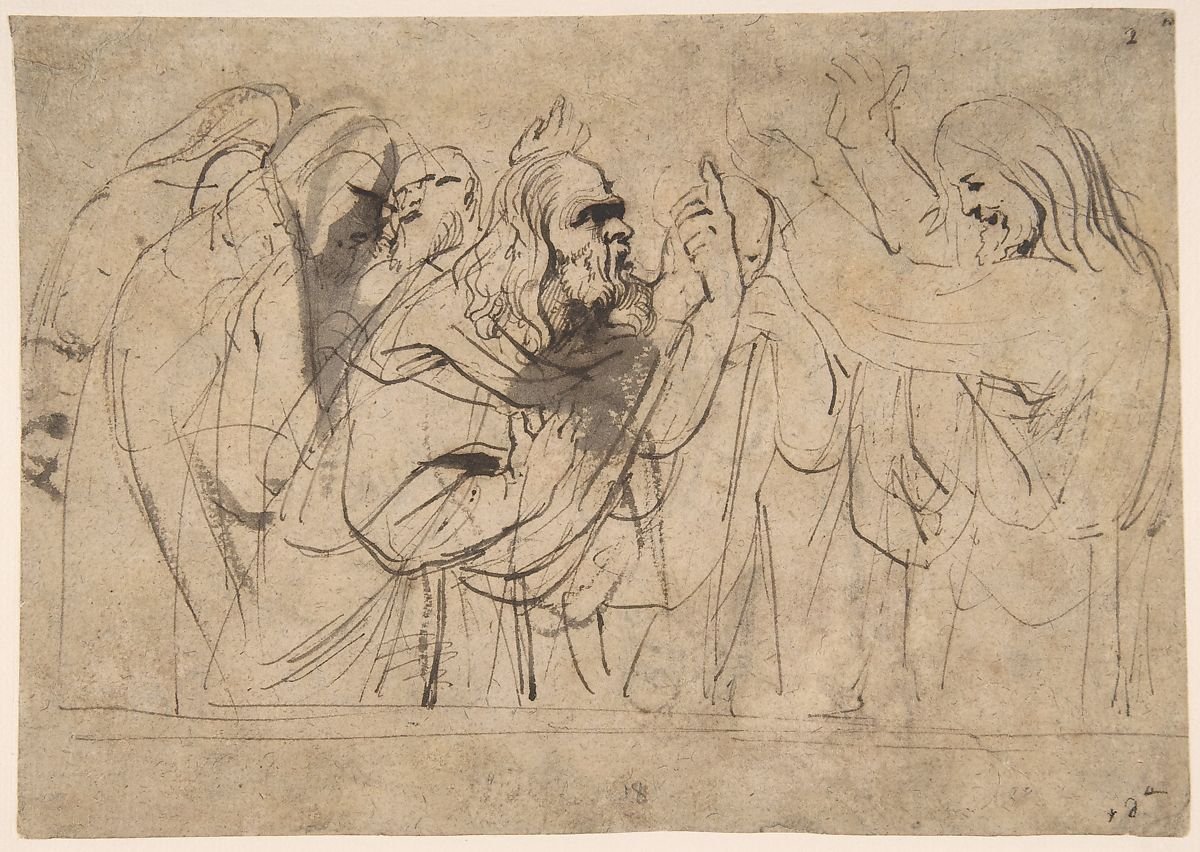
“Christ and a Pharisee,” early 17th century by Anthony van Dyck at the Met.
“Christ and a Pharisee,” early 17th century by Anthony van Dyck at the Met.
“Who needs the Pharisees?” – it seems that, on the whole, we today, both Jews and Christians, need them more than anyone has ever done before, but for very different reasons. And we need them in academic historical, non-polemical form.
Read MorePharisees Part One: Historical Reconstruction
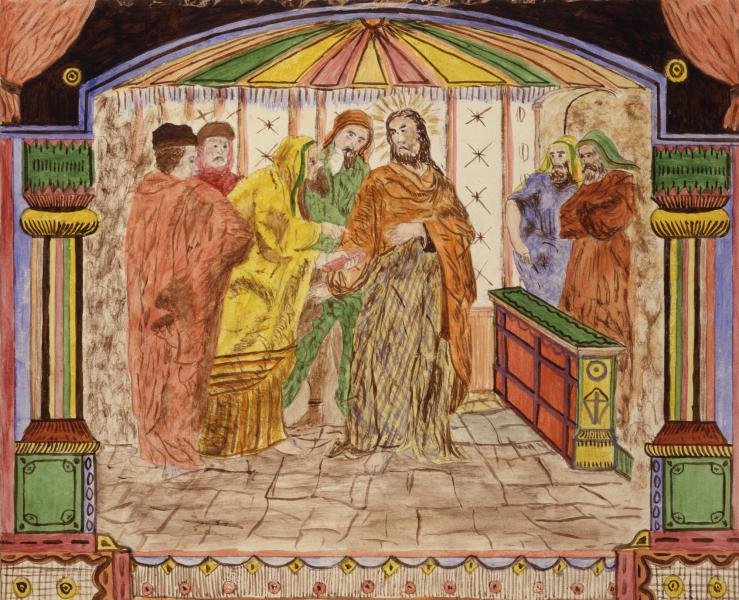
“Christ and the Pharisees” by Lawrence W. Ladd ca. 1880. Smithsonian American Art Museum
“Christ and the Pharisees” by Lawrence W. Ladd ca. 1880. Smithsonian American Art Museum
“This literary image of Pharisees has been conflated with Jews generally and been attributed to real people in the here and now of all centuries over and over again. The narratives have been read historically, as accurately real life people – with all the horrific consequences emanating from this equation.”
Read MoreThe Pharisees: a SBL 2021 Review Forum

“The Pharisees includes historical studies that range from archaeology and etymological investigation to contributions that take up the Pharisees in association with Dead Sea Scrolls, 1 Maccabees, Josephus, selections from the New Testament, and rabbinic literature.”
Read MoreResponse to the Respondents

Roman Funerary Relief from Nijmegen, showing a school scene. Courtesy of Wikimedia Commons.
Roman Funerary Relief from Nijmegen, showing a school scene. Courtesy of Wikimedia Commons.
The study of fragmented remains of manuscripts shows how an approach will always be in need of adjustment when we use it on new and different materials. Both my study and the studies that documentary papyrologists do, start with the material remains. However, in my study of the Syriac manuscripts, I have had access to whole codices, even some medieval bindings, to colophons and notes, to churches that still stand, and to monasteries that are still active.
Read MoreCelebrating the Remedy of Neglect: a review of Liv Ingeborg Lied, Invisible Manuscripts: Textual Scholarship and the Survival of 2 Baruch.
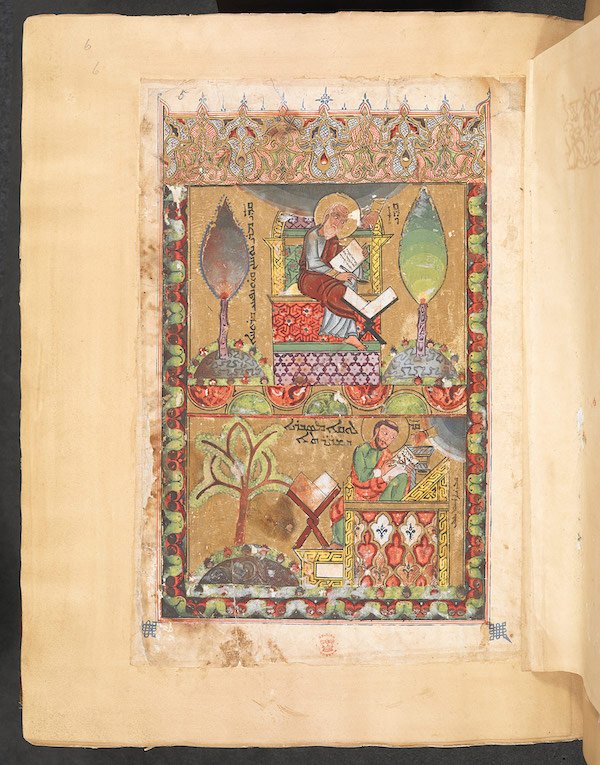
Syriac Gospel Lectionary, British Library Add MS 7170
Syriac Gospel Lectionary, British Library Add MS 7170
“But if we wished to correlate other embodiments of this work, whether whole or partial, in Bible manuscripts, lectionaries, and catenae, in order to approximate the richness of Lied’s study of the embodiments of 2 Baruch—even if we were to confine ourselves just to the Syriac versions of Isaiah—we would quickly find ourselves swimming in deep waters, with a veritable tidal wave of varied manuscripts and possible contexts of use piling up and threatening to overwhelm us.”
Read MoreIs That All There Is?: On Limits in the Study of Second Temple Literature

“Enoch and Elias” British Library Royal 6 E IX f. 2v
“Enoch and Elias” British Library Royal 6 E IX f. 2v
“What if, as is suggested by Lied, 2 Baruch is not so easily traced to the earliest centuries CE, on account of its far later and Christian manuscripts?”
Read MoreOther People’s Hands: A Response to Lied’s Invisible Manuscripts

_on_the_shore_of_the_Lake_of_Galilee,_Northern_Israel.jpg)
Saint Catherine's Monastery
Saint Catherine's Monastery
“This distinctively theological Christian supersessionism is just one iteration of a larger historiographical structure: one that involves claims to be the legitimate ‘heirs’ and best caretakers of a tradition, alongside the grudging and anxious awareness that the survival or access to that past is dependent on ‘someone else.’”
Read More