
“Enoch and Elias” British Library Royal 6 E IX f. 2v
“What if, as is suggested by Lied, 2 Baruch is not so easily traced to the earliest centuries CE, on account of its far later and Christian manuscripts?”
Read More“Enoch and Elias” British Library Royal 6 E IX f. 2v
“Enoch and Elias” British Library Royal 6 E IX f. 2v
“What if, as is suggested by Lied, 2 Baruch is not so easily traced to the earliest centuries CE, on account of its far later and Christian manuscripts?”
Read MoreSaint Catherine's Monastery
Saint Catherine's Monastery
“This distinctively theological Christian supersessionism is just one iteration of a larger historiographical structure: one that involves claims to be the legitimate ‘heirs’ and best caretakers of a tradition, alongside the grudging and anxious awareness that the survival or access to that past is dependent on ‘someone else.’”
Read Moreleaf of the Codex Ambrosianus B. Codex Ambrosianus S. 45 super
leaf of the Codex Ambrosianus B. Codex Ambrosianus S. 45 super
“It is not only useful but, indeed, methodologically imperative to distinguish between 2 Baruch, a Jewish composition of the late first century CE, and its Syriac translation as preserved in the Ambrosianus.”
Read More“It provides a new, critical look at the traditional academic narrative of this writing. And, it offers a critical and constructive engagement with approaches to textual scholarship in the field, paving the way for a provenance aware material philology.”
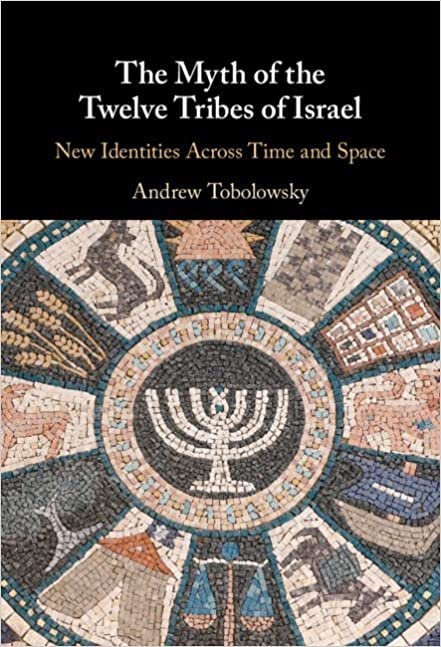
Read MoreThere were, in the ancient world and even into the medieval, those who claimed descent from the heroes of the Trojan War, and there have always been those who connected their genealogies to Noah’s Ark. I feel, however, very confident in saying that no identity in the history of the world has been assumed so often, in so many places, and for so long a time as Israel.
Read MorePesher Habakkuk. Image courtesy of Wikipedia.
Pesher Habakkuk. Image courtesy of Wikipedia.
The books that were eventually included in the canon share “family resemblances” with other books left out of the canon. For instance, just as the same eye colour can be found in people belonging to unrelated families, so too the story of Israel is evident in canonical and non-canonical books.
Read MoreMy study of “desire” (epithymeō, ho epithymētēs, epithymia, hereafter “desire”) in the Roman Empire arose because of the lack – at least as far as I am aware – of a single thesis or book examining the use of these lexemes within the Greek literature of the early Roman Empire.
Read More“Borrowing a concept already used in other areas of religious studies, one could speak here of a process of “priestification,” in which the priestly revisions of the Pentateuch—and possibly of other collections of scriptures as well—somehow go hand in hand with a conception conferring increased agency to the priests.”
Read More“I would thus conclude that the supplemented version of Lev 10 is “theocratic” in the same way as the basic layer might be called “theocratic”: The text strengthens the priestly family’s important role in Israel’s daily life and in keeping Israel’s relationship with their God in good order.”
Read More“The procedure for sacrificing the calf ends up looking like a hybrid form not because this text was written by a later author who doesn’t understand the details of the priestly sacrificial system, but rather because Aaron was forced to adapt and innovate due to circumstances in the story world.”
Read More“There are two intractable problems. First, what precisely was the error in vv. 1–2 that led to Nadav and Avihu being consumed by divine fire?… Secondly, why does Aaron’s enigmatic response in v. 19 mollify Moses and allow an irregular practice to be permitted?”
Read MoreAJR is pleased to host a series of articles from the SBL 2021 Pentateuch program unit’s panel responding to Leviticus 10.
Read MoreAJR is pleased to host a series of articles on method, ethics, and historiography in the study of late antique Christianity.
Read More“I would like to see nondisciplinary conversations about Paul’s archive, how his writings and themes moved through western history and how that movement involved configurations and operations with other texts, institutions, and politics.”
Read MoreBernd Krämer, Photo of Olympus Playground in Munich (2015) [Wikimedia].
Bernd Krämer, Photo of Olympus Playground in Munich (2015) [Wikimedia].
Could we step back for a moment from the work that we do that so captures our attention, to think about not just the state of the field as we usually discuss and debate, but also about its very relevance?
Read MoreCorita Kent, Pentecost (unknown date) Scottish National Gallery of Modern Art.
Corita Kent, Pentecost (unknown date) Scottish National Gallery of Modern Art.
One strategy of decolonializing the mind is to shift our interpretative allegiance from the dominant voice (the voice of the author, the master) to the subaltern voices.
Read MoreManuscript illumination of Manichaean priests (ca. 8th-9th century CE) from Gaochang, Tarim Basin, China [Wikimedia].
Manuscript illumination of Manichaean priests (ca. 8th-9th century CE) from Gaochang, Tarim Basin, China [Wikimedia].
We spend a lot of time speaking about what we study and how. When putting together the recent conference on “Tracing Christians in Global Late Antiquity,” the organizers wisely decided to open with a panel discussion on method, ethics, and historiography—a topic that opens a space for addressing what we talk about too little, namely, who.
Read MoreImage from inside San José Church, Puerto Rico [Image courtesy of the author].
Image from inside San José Church, Puerto Rico [Image courtesy of the author].
To say the least, these Caribbean versions of Constantine and Justinian turned Puerto Rico into one of the outermost and unlikeliest of territories of a Transatlantic Roman Empire, an eruption of late antiquity into the so-called American Century.
Read MoreThe Library of Celsus in Ephesus, near Selçuk, west Turkey [Wikimedia].
The Library of Celsus in Ephesus, near Selçuk, west Turkey [Wikimedia].
One of the big challenges is both working against the ideological bent of our written sources and working against this huge body of scholarship with its sexist, Eurocentric ideas about what constitutes knowledge in the teleological march toward Western Civilization.
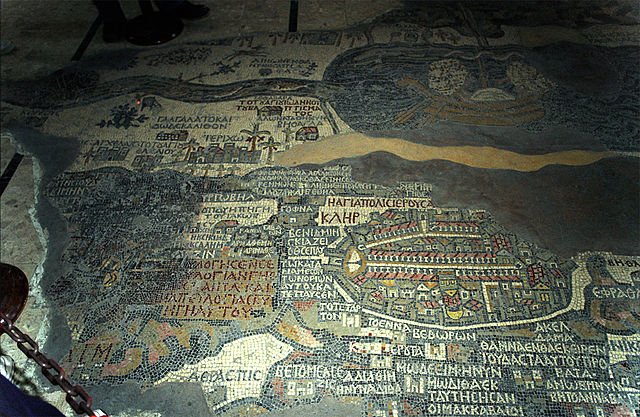
Read MoreMadaba Mosaic Map found in the Greek Orthodox Basilica of Saint George ca. 6th CE [Wikimedia].






![Wikimedia]](https://commons.wikimedia.org/wiki/File:Abstract_reflexions.JPG)


.jpg)