Deambulatory Mosaic in S. Costanza, Rome (Image Source)
Drawing on the phenomenology of movement – landscape made knowable through movement in it – Grey explored an alternative way to get to know ancient sources.
Read MoreDeambulatory Mosaic in S. Costanza, Rome (Image Source)
Deambulatory Mosaic in S. Costanza, Rome (Image Source)
Drawing on the phenomenology of movement – landscape made knowable through movement in it – Grey explored an alternative way to get to know ancient sources.
Read MoreWilliam Bell’s 1849 translation of Friedrich Strass’s ‘Strom der Zeiten’ (Stream of Time). Image from http://bibliodyssey.blogspot.co.il/2010/04/time-after-time.html
William Bell’s 1849 translation of Friedrich Strass’s ‘Strom der Zeiten’ (Stream of Time). Image from http://bibliodyssey.blogspot.co.il/2010/04/time-after-time.html
How do we encourage our students to think of the past not as a grand narrative to be learned from a textbook (or a teacher), but as a complex constellation of events, values, personalities, and ideas that can be analyzed and understood from a variety of perspectives and that can be used to construct multiple possible stories about the past?
Read More"Herod Takes Jerusalem" from Flavius Josèphe, Les Antiquités judaïques, illuminations of Jean Fouquet, 1470-1475.
"Herod Takes Jerusalem" from Flavius Josèphe, Les Antiquités judaïques, illuminations of Jean Fouquet, 1470-1475.
Drawing on insights from scholars in Religious Studies who have demonstrated the artificiality of modern distinctions between religious, political, and economic spheres, I consider the ways that political and religious institutions and frameworks could have shaped the boundaries and incentives of economic behavior among Jews in Early Roman Galilee.
Read MoreEl Greco, "Saint John the Evangelist" (ca. 1605) | Image Source
El Greco, "Saint John the Evangelist" (ca. 1605) | Image Source
For my part, I am satisfied that I have said what I can, and want, to say about this Gospel. Aside from my growing discomfort with John’s anti-Jewish language, I have gained much from my longstanding relationship with this Gospel, including a community of scholars whom I value and respect.
As I studied the infancy gospels, I began to wonder if something had been overlooked in the intense scholarly focus on the figures of Jesus and Mary. That something, I concluded, was the depiction of familial relationships.
Read MoreBritish Museum - Silver coin minted in Croton showing Apollo shooting Python (left) and a young Herakles seated (right). Licensed under CC BY-NC-SA 4.0
British Museum - Silver coin minted in Croton showing Apollo shooting Python (left) and a young Herakles seated (right). Licensed under CC BY-NC-SA 4.0
The ongoing appeal of prophecy as a rhetorical strategy in Revelation and Sibylline Oracles 4–5, and the ongoing rivalries in which these texts engage, argue for prophecy’s continuing significance in a larger ancient Mediterranean religious context
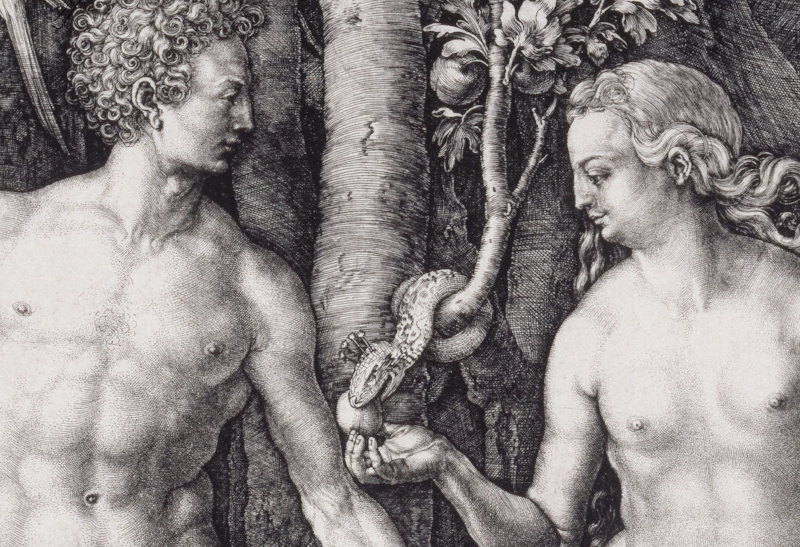
Read MoreAlbrecht Dürer - "The Fall of Man" (1504) | Image Source
Albrecht Dürer - "The Fall of Man" (1504) | Image Source
How do the rabbis conceptualize the biblical “cleverness” of the snake? How do such ideas map onto larger questions of human and animal embodiment?
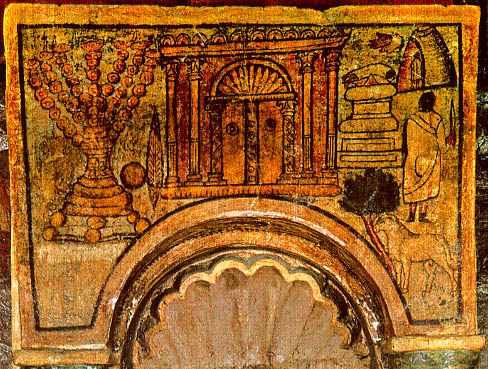
Read MoreThe Torah Shrine at Dura Europas via Wiki Commons
The Torah Shrine at Dura Europas via Wiki Commons
"Why does the Mishnah get so many historical details about the Second Temple period right?"
Read More"Vandal" Horseman Mosaic from Carthage (ca. 450-550 CE) - Courtesy of the British Museum
"Vandal" Horseman Mosaic from Carthage (ca. 450-550 CE) - Courtesy of the British Museum
My book aims in part to connect debates between Nicenes and Homoians in Vandal Africa—and across the post-imperial West—to those wider developments in the historiography of late ancient Christianity from which they have been peculiarly absent.
Read MoreJohn Tenniel (1865).
John Tenniel (1865).
Are there patterns among these descriptive detours, the rabbit-holes of the rabbinic imagination? Do they point to consistent interests? Retrace stock motifs and techniques? How can we map their interconnections, and how are they linked to normative projects–broadly defined–at the nerve-center of this rabbinic canon?
Read MoreSaint Augustine (Wikimedia Commons)
Saint Augustine (Wikimedia Commons)
To call a gentile Christian a “Jew” was likewise to accuse him of being un-Christian, indeed of being anti-Christian. The heretical Christian “Jew” – whatever current Christian doctrinal enemy that might be – was thereby identified with the scriptural enemies of Paul, of Jesus, and of God.
Read MoreFragmentary Colossal Head of a Youth, Greek, Hellenistic Period, 2nd century B.C.E., Marble
Berlin, Pergamonmuseum, Staatliche Museen zu Berlin (AvP VII 283) / Antikensammlung
Fragmentary Colossal Head of a Youth, Greek, Hellenistic Period, 2nd century B.C.E., Marble
Berlin, Pergamonmuseum, Staatliche Museen zu Berlin (AvP VII 283) / Antikensammlung
Whose voices from the past have been preserved, whose voices have been lost, and what is at stake, ethically and methodologically, for whose voices, past and present, we choose to hear today?
Read MoreRoman marble plaque showing parturition scene, 400BCE - 300CE (Ostia, Italy) - UK Science Museum
Roman marble plaque showing parturition scene, 400BCE - 300CE (Ostia, Italy) - UK Science Museum
Lehmhaus’s talk pointed to exciting possibilities for future scholarship which grapple with how to fully understand the multipolar functions, within rabbinic literature and beyond it, of discrete bits of scientific or medical data embedded in rabbinic texts.
Read MorePhoto courtesy of author
Photo courtesy of author
Perhaps we should trip in the same way on that word “museum.” We should attend to the stories museums and colonies tell about themselves; we should be cognizant of their designs on the body.
Read MorePhoto courtesy of Jill Hicks-Keeton
Photo courtesy of Jill Hicks-Keeton
The issue that concerns this paper is not how the MOTB lends credence to creationist claims, although this must be addressed to some extent, but how the MOTB becomes party to a disturbing misrepresentation of Jews and Judaism at the AiG attractions.
Read MorePhoto courtesy of the author
Photo courtesy of the author
"While making pretenses to neutrality, the Museum of the Bible is fundamentally a political project attempting to define what the Bible is and who owns it."
Read MoreThis panel sparked further discussion among scholars and the broader public, such as in a Washington Post article. In collaboration with AJR, scholars from this panel will be sharing their work with the larger scholarly community and the public.
Read MoreSean Adams (“On Ben Wright and the Modeling of Scholarship”) engages Ben’s work on genre theory to consider how the Letter of Aristeas might be read alongside Greek symposia, and offers a retrospective on the work and example of an inspiring teacher.
Read MoreJudgement of Solomon by Antoine Sallaert in Stedelijke Administratie Roeselare. Public Domain.
Judgement of Solomon by Antoine Sallaert in Stedelijke Administratie Roeselare. Public Domain.
James Nati (“Solomon, the Septuagint, and Second Temple Studies”) illustrates how crossing generic and canonical boundaries—in his case study, reading Ben Sira and the Septuagint side by side—can reveal new insights about how early Jewish traditions developed.
Read More11th Century Manuscript of Letter of Aristeas from Biblioteca Apostolica Vaticana
11th Century Manuscript of Letter of Aristeas from Biblioteca Apostolica Vaticana
Jason M. Zurawski (“Education as Demonstrated and Education as Discussed in the Letter of Aristeas”) shows how we might enrich our understanding of ancient education by reading both for a text’s ideology and rhetoric, and for its unwittingly revealed social context, while knowing the difference between these two kinds of evidence.
Read More