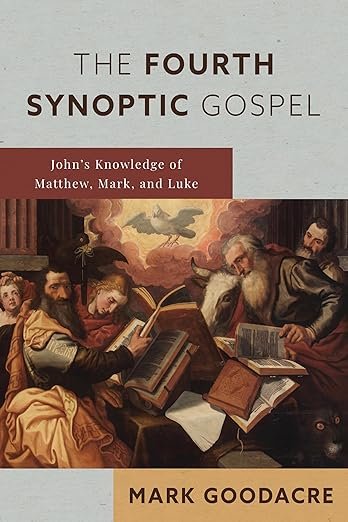
In The Fourth Synoptic Gospel, Mark Goodacre challenges this perspective and attempts to demonstrate that the author of the fourth gospel was not only aware of the Synoptic Gospels but also used them in the writing of their gospel text.
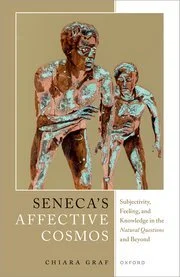
Read MoreSeneca’s Affective Cosmos: Subjectivity, Feeling, and Knowledge in the Natural Questions and Beyond
Graf serves as an able guide for readers through the complex ideas of Stoicism, Seneca’s philosophical vision, and affect theory. Readers less familiar with Senecan ideas will likely find this book a helpful introduction.
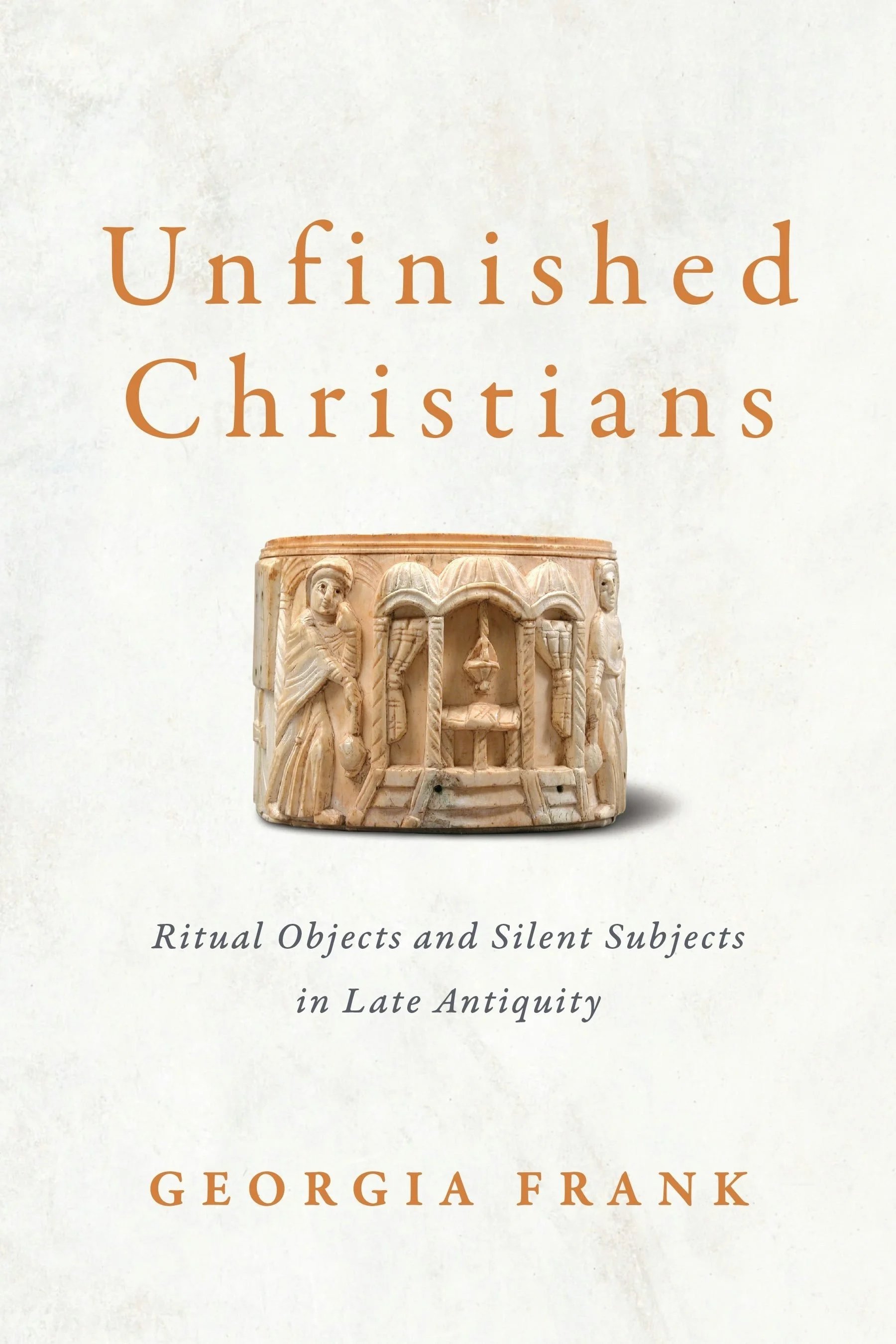
Read MoreUnfinished Christians: Ritual Objects and Silent Subjects in Late Antiquity
In Unfinished Christians, Frank focuses on literary records produced in and for shared spaces, liturgical and otherwise, where ordinary Christians would have gathered for various religious rites.
Read MoreCorpus Inscriptionum Iudaeae/Palaestinae, Volume V: Galilaea and Northern Regions
The intended audience for CIIP 5 consists of scholars specializing in the study of early Judaism, early to late antique Christianity, and the early Islamic period. However, given that every inscription is translated into English, non-specialists interested in any of these time periods in this location will benefit from this epigraphic collection.
Read MoreListening to the Static: An Author Response
Image of Exodus 15, from the Leningrad Codex
The white spaces on the page can be spaces both of death and breath. Both are texts of drowning, the Egyptian enemies, their horses and chariots, and the African slaves, who were thrown overboard the slave ship in an insurance scam. Somehow, I believe, through this unconscious visual echo, these enemies and victims meet in God’s lament to the angels, (though perhaps this lament is addressed to all of us who sing victory songs): “my creations are drowning in the sea, and you are singing song?”
Read MoreWeak Prophecy As A Critique of Just-So Secularization Stories
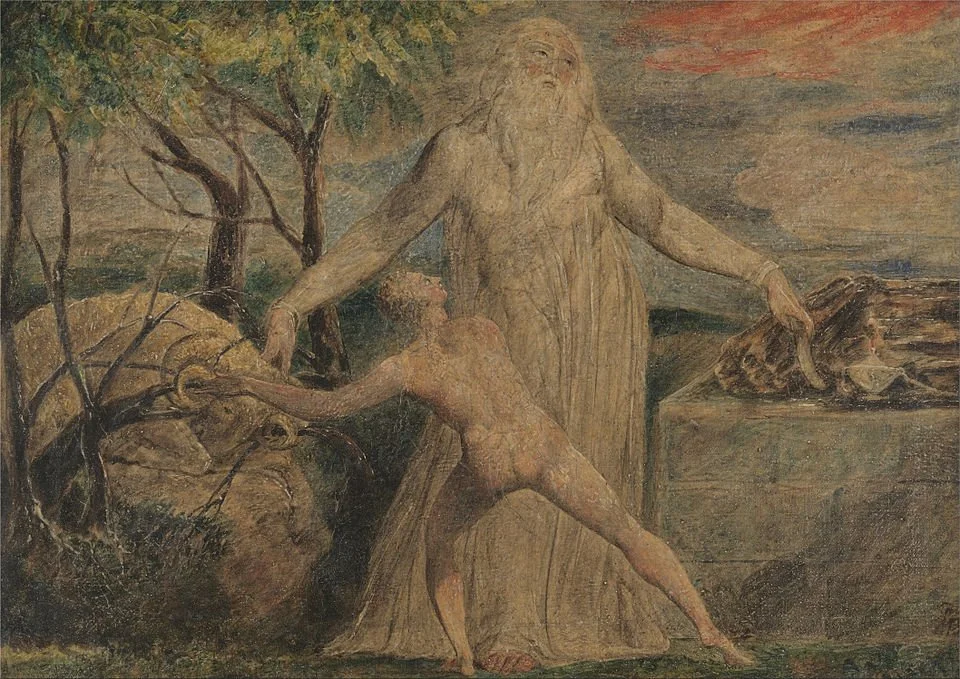
William Blake, Abraham and Isaac, 1799-1800
In the book’s conclusion, Raz offers weak prophecy as an alternative, reparative model, offering us doubt and circumspection instead of confident certainty, whether theological or nationalist. I would also suggest a second, complementary payoff. To me, the positing of an ancient source that is dogmatic, masculine, and assertively authoritative is one of modernity’s favorite alibis for its own violence.
Read MoreModern Mirrors
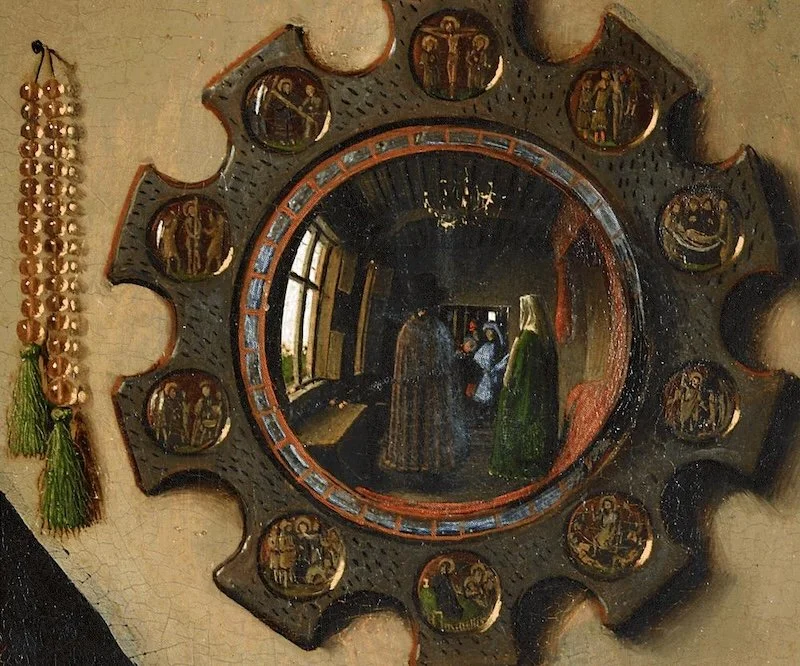
Mirror Detail from the Arnolfini Portrait, Jan van Eyck, 1434. Image Courtesy of Wikimedia Commons.
We gather from here that more than she wants to say something about prophecy, Raz wants to convey something about the history of its reception, about the way modern poets, and perhaps moderns, in general, think about prophets and prophecy and incorporate that thought into their poetry, utilizing poetic language or the characters of prophets.
Read More"Language of the Limp and the Wound"
William Blake Richmond, Song of Miriam, 1880. Image courtesy of Wikimedia Commons.
With Yosefa’s book, we now have nuanced poetic language with which we may read this homily. The Rabbis were not prophets, nor singers or poets. They were strong readers. They saw reading as an opportunity to stretch out biblical scenes into their present.
Read MoreA Memory of Violence
A Memory of Violence offers a useful overview for anyone interested in understanding Chalcedon and its effects at a more detailed level, as well as those interested in the history of Christianity writ large.
Read MoreHuman Salvation in Early Christianity: Exploring the Theology of Physicalist Soteriology
Scully’s book commendably demonstrates the need for renewed and careful attention to a pattern of thought that has been treated poorly, and it does so with sharp analytical clarity.
Read MoreReview | The Consuming Fire: The Complete Priestly Source, from Creation to the Promised Land
Ultimately, Feldman is doing two things in this book: she is making a source-critical argument about the Pentateuch, and she is translating P. These are two separate, and significant, tasks. They’re interrelated, but not the same thing.
Read MoreAncient Christianities: The First Five Hundred Years
Paula Fredriksen begins Ancient Christianities: The First Five Hundred Years with a question: considering the variety of gods and local deities present in both the ancient Mediterranean and the Roman Empire, how did one singular god end up dominating the focus of the late Roman Empire?
Read MoreExhibition Review | Elephantine: Island of the Millennia
Aramaic marriage document from Elephantine, dated 3 July, 449 BCE, currently at the Brooklyn Museum. Image courtesy of Wikimedia Commons.
The desire to construct harmonious pasts selectively highlights only those aspects of ancient identities and experiences that align with current ideals, conveniently omitting the less contemporarily palatable. This selective narrative fosters the belief that coexistence is inherent and natural, rather than a hard-fought process.
Read MoreSeder Mazikin: Law and Magic in Late Antique Jewish Society
As scholars continue to investigate the bowls from multiple angles – paleographic, onomastic, linguistic, social historical, legal, literary, ritual, visual, gendered, comparative – our understanding of Babylonian Judaism and late antique society will continue to develop. Manekin-Bamberger’s insights about the bowls’ contractual dimensions and the professional scribes who produced them – as well as about the overlap of law and magic on a broader scale – are an essential contribution to this field, and will no doubt shape, methodologically and historically, how future studies approach this corpus and its relationship to other ancient Jewish texts and artifacts and to the long history of magic, law, and religion.
Read MoreSlip Slidin' Away
Mira Balberg, however, points to the shifting attitudes towards forgetfulness and forgetting as a pivotal moment in the history of the rabbinic movement, and in Fractured Tablets she offers a fresh new reading of the rabbinic construction of forgetting. The rabbis shaped their subject as a fallible and often confused human being, bumbling around the world, trying to observe God’s commandments.
Read MoreRemembering the Story of Israel: Historical Summaries and Memory Formation in Second Temple Judaism
The volume shines when it considers the interplay between materiality and close readings of literature. But the question stands for our field as it grapples with memory studies: what, indeed, is the link between form and practice, between literature and history?
Read MoreAll the (Ancient) World’s a Stage
The saint, renowned for his discipline over the body, shows tenderness. These verses speak to genuine human fears about the finality of death and the chasm between the living and the dead. Just as Hamlet famously considers Yorick’s skull, a prop to invoke memento mori, Jacob depicts Symeon as holding out his foot for all to behold as we listen.
Read MoreWritten and Spoken Scripture in Wollenberg's The Closed Book
“Wollenberg’s book compels us to keep firmly in mind what the trope of Written Torah v. Oral Torah tends to obscure, namely, that the rabbis absorbed, studied, and taught Scripture chiefly as an oral text.”
Read MorePaul Transformed: Reception of the Person and Letters of Paul in Antiquity
Yarbro Collins’s goal in Paul Transformed is to capture the multiple images of Paul that early Christ-confessors created from reading the apostle’s letters.
Read MoreBefore the Scrolls: A Material Approach to Israel’s Prophetic Library
A bold, programmatic attempt to fill a significant methodological lacuna, Mastnjak’s Before the Scrolls argues that the study of the prophetic literature must begin with—and answer to—the material realities of textual production in ancient Israel and the Second Temple period.
Read More