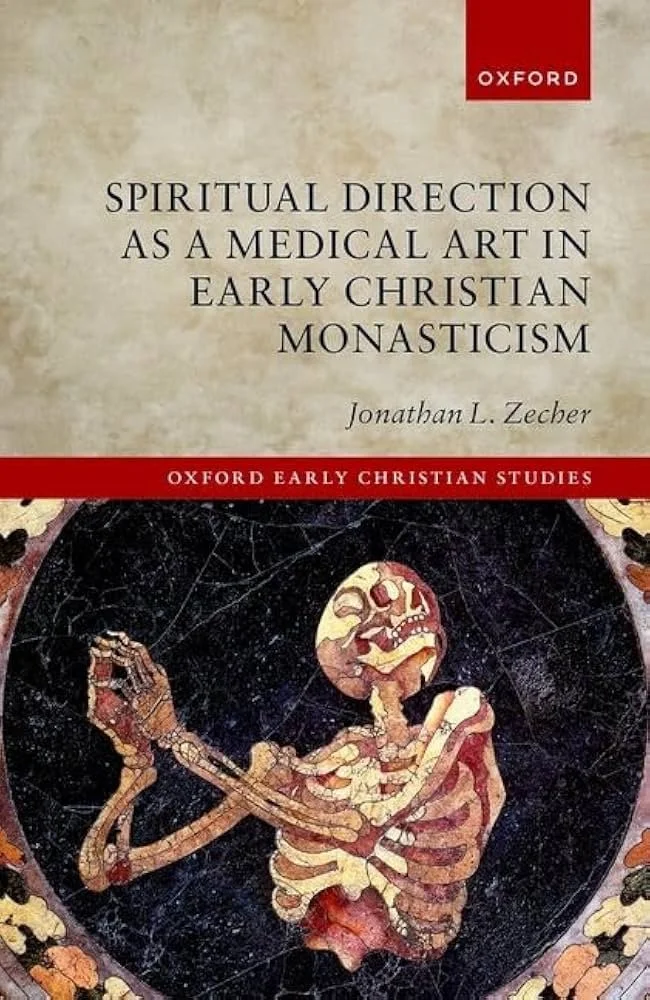
Ascetic authors throughout late antiquity gleaned descriptions from contemporaneous, non-monastic sources for detailing the challenges of monastic living.
Read MoreMythwashing and the Two Meanings of Mystery in Manuscript Discovery Stories

“People on road to caves of Qumran where Dead Sea scrolls were found.” G. Eric and Edith Matson Photograph Collection, 1958 via wiki commons.
“People on road to caves of Qumran where Dead Sea scrolls were found.” G. Eric and Edith Matson Photograph Collection, 1958 via wiki commons.
“When manuscript loss and discovery is framed this way--when we tell the stories of modern discovery the same way we recite religious texts—our reverence and desire distracts us from the material reality of trade in ancient artifacts. The other kind of mystery, hidden crime, remains obscure.”
Read MoreAdjusting the Past
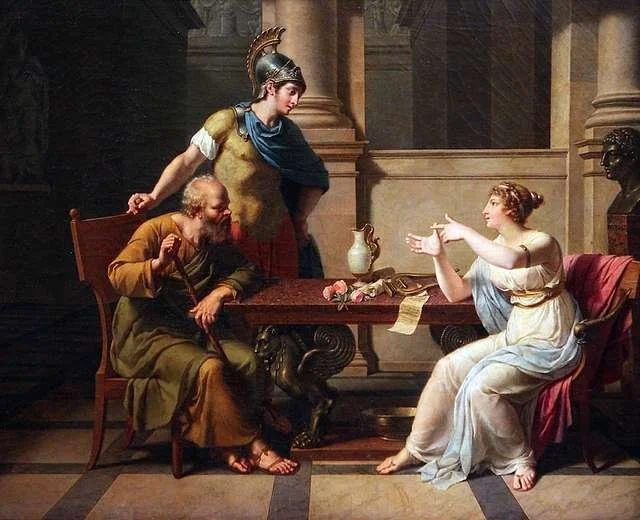
Nicolas-André Monsiau, Aspasia Conversing with Socrates and Alcibiades (1801), Musée Pouchkine [Wikimedia].
Nicolas-André Monsiau, Aspasia Conversing with Socrates and Alcibiades (1801), Musée Pouchkine [Wikimedia].
This essay was part of a 2026 NAPS Conference Book Review Panel devoted to Things Unseen: Essays on Evidence, Knowledge, and the Late Ancient World by Ellen Muehlberger. Read the full forum here.
As I started reading Ellen’s book, a viral meme from a few years ago popped into my head:
PhD student, circa 2020: “Here’s a limited argument I made based on years of specialized research. Hope it’s Okay!”
Philosopher dude, circa 1770: “Here are some Thoughts I had in the Bath. They constitute Universal & Self-Evident Laws of Nature. FIGHT ME!”[1]
It’s the philosopher’s spirit that animates this collection of essays: less hedging and more hacking. Fewer footnotes, more forays.
A thread of modern literary theory runs through this book: that the texts and images early Christians produced – their accounts of women (Chapter One), of forcible home entries (Chapter Two), and of the authorship of worrisome letters (Chapter Three) – did not reliably represent reality to their readers, or even back to themselves, and certainly not to us. These were, instead, constructions designed to meet their authors’ own needs. So many Things are Unseen. Even the Fayyum images discussed in the fourth and final chapter aren’t (obviously) photographs of historic individuals. But they might not even be portraits that point reliably to anyone out there. They are more akin to Rembrandt’s “tronies”: paintings of fictitious individuals (p. 153).
And we are no different. When we look at these Fayyum images, we tend to see what we want (e.g., racial admixture, colonial legacy). Indeed, we like to live in purposeful ignorance around images and texts like these, precisely so that we can speculate, improvise, and produce pseudo-knowledge, all under the warm sun of wonder. We want to feel all the feelings. But these too are manufactured by the puppeteers who have preceded us, and by ourselves, who live willingly in the dark about details that, if we cared to know them, would disenchant (pp. 155-157). The book concludes with a quick genuflection to almighty context: this will shed real knowledge, or as real as we can hope to get, about the tricky past (p. 156).
In the third chapter Ellen revisits an argument she has made elsewhere: the tendency among Christian writers to engage in “perpetual adjustments” of the past. This adjustment was, in her words, the
. . . penchant for inventing the textual, ritual, and material evidence necessary to authenticate the emerging narrative Christians were creating about their past. Edicts were drawn up and attributed to emperors who did not issue them, making them say what should have been said; stories were made up and then set in the past in order to justify emerging anti-Jewish politics as something original to Christianity and necessary for Christian piety; diaries were invented to provide audiences with the experiences of martyrs long commemorated in ritual; visions were recounted to place emerging late ancient Christian ideas about the dead in the mouths of venerable first-century figures; documents were composed to portray church organization as timeless, stable from the very earliest moments when followers of Jesus gathered; and existing texts were expanded and shaped to match the needs of the moment (pp. 112-113).
I find this claim persuasive. That this phenomenon occurs in our sources is, I think, beyond doubt. That it wreaks havoc with the historian’s desire to reconstruct the past as it was is obvious.
I struggled the most with the first chapter. Not that there weren’t mansplainers or echo chambers in the ancient world. As then, so now. But the interpretation of the exercise of ēthopoeia left me a bit puzzled. In my mind, this assignment was as much about breaking stereotypes as it was about reinforcing them. It wouldn’t have been much of an exercise if students simply foisted cliches on speakers. A Christian version, “What Hades would say when Lazarus is raised from the dead on the fourth day,” asked students to think very specifically and appropriately about a scene in John’s gospel (Jn 11:1-44).[2] Now for indefinite persons – such as the farmer or the prostitute or the coward – stereotyping was unavoidable (as one textbook has it, the student must pay attention to “the character generally belonging to cowards”[3]). But a conventional speech was probably not enough to get an A. The student had to individualize the type. Here is the advice Aelius Theon of Alexandria (first century CE) gives: “one should have in mind what the personality of the speaker is like, and to whom the speech is addressed: the speaker’s age, the occasion, the place, the social status of the speaker; also the general subject which the projected speeches are going to discuss.”[4] The point is, even with a type, the student was asked to imagine a character somewhere on a scale between the sui generis and the stereotypical. Presumably the teacher gave you trouble if you went too far one way or another.
Ellen takes us to an important source – the Anonymous Sequel – that shows just how much nuance and insight its author, presumably a teenage boy, could muster in imagining a speech that a prostitute who had come to her senses addressed to her pursuing lovers. Not all women are made to speak this way, and Ellen is impressed by it: “The imagined speech is genuinely the most ethically complex late ancient text I have encountered, with respect to gender, to sociability, to the powers of exclusion” (p. 33). I am similarly struck, as well as by other women in early Christian stories. These stories were usually composed by men, who nevertheless had their characters express agency, defy convention, assume male prerogative, and even stick it to the (male) clergy: a Thecla, a Perpetua, a Pelagia, a Mary of Egypt. Are there stereotypes here? Tropes? Yes and yes. But also individuality and diversity. Even more to the point, in stories like these, female characters often became vehicles for disseminating important criticisms. They weren’t always stratagems to block new information from coming in.
To whom is this book addressed? As I was reading, I imagined its central lesson, delivered in a lucid prose, landing very well in my undergraduate classrooms. This book will certainly be useful for blossoming historians who need to be alerted to the traps sets by the documentarian’s mindset which is so pervasive among our students, young and old. I suspect even those of us who have been doing this for a while need to be reminded that things were not always as they seemed.
A second, and related, question: just how perpetual was perpetual adjustment? Is this a part-for-whole situation: not just a regularly occurring feature of the archive, but its overriding quality? I am not sure Ellen weighed in on this matter. For my part, I suspect the former, not the latter: that our sources – and often one and the same author – often swung on a pendulum between representing reality in high and low fidelity ways. Scribes are a good example of this phenomenon. In recent decades scholars have built whole careers around the observation that scribes manipulated wording to solve the problems they found in texts. At the same time, this wasn’t the baseline disposition of scribes – not even close. Overall, whether viewed collectively or individually, scribes re-presented texts as they found them, even when these conflicted with the needs of the moment. The adjustments among scribes were not perpetual, but sporadic. The scholar of the variant knows at least two things: that adjustments happened, but also that they didn’t happen.
If our students need to learn that these sources often reshaped their subjects, the more experienced scholar, I think, needs to understand why this didn’t happen all the time. What kind of framework can we come up with that both acknowledges and pushes back against the insight of modern literary theory that propels this book?
My last question: is the bending of reality in the ways here described always bad? At times, it felt like this was the vote. I suspect many of us instinctively think this too is a problem – that our sources are too opportunistic, that they misrepresent and manipulate. But our instincts have also been conditioned. Scholars of early Christian studies usually have history and/or theology as their main disciplinary homes. Together we’re more akin to courtroom lawyers than performance artists. The past as it was really does matter to us. But we, not they, live in a world that sharply separates the humanities and the arts: our respective departments are usually not housed in the same college; humanities departments drill students in critical thinking, less creative thinking; our books go into libraries, while objects of art are displayed in museums. If I’m writing a novel, even a novel laced with patriotic schmaltz to commemorate the nation’s semiquincentennial anniversary, the National Endowment for the Humanities will reject my application and send me to the National Endowment for the Arts (which, in turn, will inform me that their Creative Writing Fellowship was cancelled this year). But many late antique authors straddled the humanities and the arts because the grammarians and sophists who trained them were also continually straddling these worlds.
Take Ephrem’s Commentary on Exodus. Much of it is paraphrastic, a faithful rendering of the biblical text. But it is not without its counterfactual moments. When Moses is concealed by his mother in an ark (as the Peshitta has it), Ephrem departs from the biblical text by adding to it. He invents a brief speech for Moses’ mother that is nowhere to be found in the text of Exodus. She has just returned to her home after putting Moses out on the water. What would a mother do in this situation? Ephrem has her kneeling and sobbing, directing a prayer to God against a man, a tyrant – against the Pharaoh: “You blessed our people so that they would multiply. . . But Pharaoh’s scheme is that . . . the seed that you blessed will die out altogether.”[5]
For most modern readers trained to examine biblical texts with regard to their actual wording and context, Ephrem distorts, invents, fantasizes. (And is perhaps misogynistic too: who are you to tell us what she did, said, and felt?). But we can also see it another way. The point here is not to get the past right, to reconstruct the historical mother of Moses, but instead to get Ephrem’s audience right. He adjusts the biblical story because, in a specific light, it is deficient. He wants his audiences to identify far more deeply than the text invites them to do with a grieving mother who finds herself in an especially precarious state: her son and her people face imminent extinction. Do they care? And what will come next? These are the things Ephrem wants readers then and now to see. This doesn’t seem so bad.
Peter W. Martens is the C. L. and H. Steber Professor of Early Christianity at Saint Louis University.
[1] Authored by Grace Mallon and widely shared on “Ethics in Bricks” (@EthicsInBricks on X/Twitter) on Feb 6, 2020.
[2] Nikephoros Basilakes, Rhetorical Exercises, Ethopoeiae 10 (The Rhetorical Exercises of Nikephoros Basilakes: Progymnasmata from Twelfth-Century Byzantium, trans. J. Beneker and C. A. Gibson, Dumbarton Oaks Medieval Library [Cambridge, Mass.: 2016], 195).
[3] Nicolaus the Sophist, Preliminary Exercises 10 (trans. G. A Kennedy, Progymnasmata: Greek Textbooks of Prose Composition and Rhetoric, Writings of the Greco-Roman World [Atlanta: 2003], 165).
[4] Aelius, Exercises 8 (Ibid., 47-48).
[5] Ephrem, Comm. Ex. 2.1 (The Exodus Commentary of St Ephrem, trans. A. Salvesen [Piscataway NJ: 2011], 14).
Book Review | Ethics in the Hebrew Bible and Beyond
Those who seek moral guidance from the Bible are faced with a further challenge: how does one interpret, distill, and apply the sheer variety of ethical views contained in these diverse texts in order to apply them to one’s life?
Read MoreAn Echo Across the Room: Re-encountering Body Language
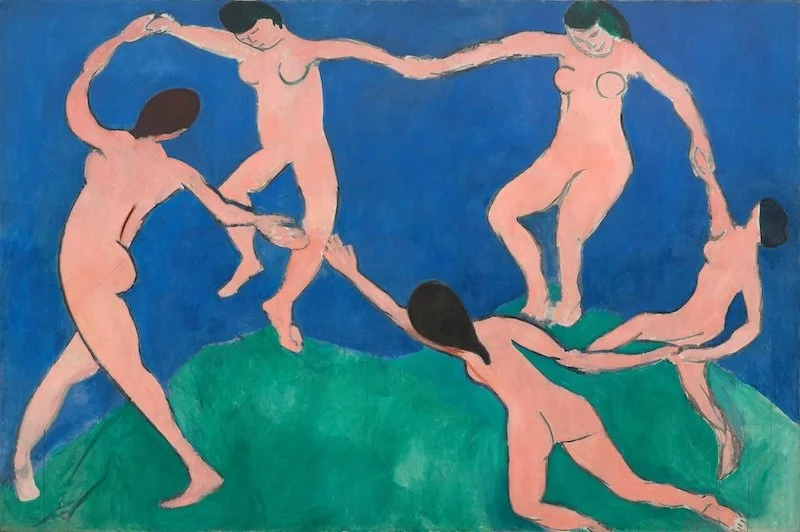
Henri Matisse, La Danse I. Image courtesy of Wikimedia Commons.
Henri Matisse, La Danse I. Image courtesy of Wikimedia Commons.
These reviews have shown me not only what I was looking at when writing Body Language, but where I was standing when I looked.
Read MoreFleshy, Embodied, Embedded Speech
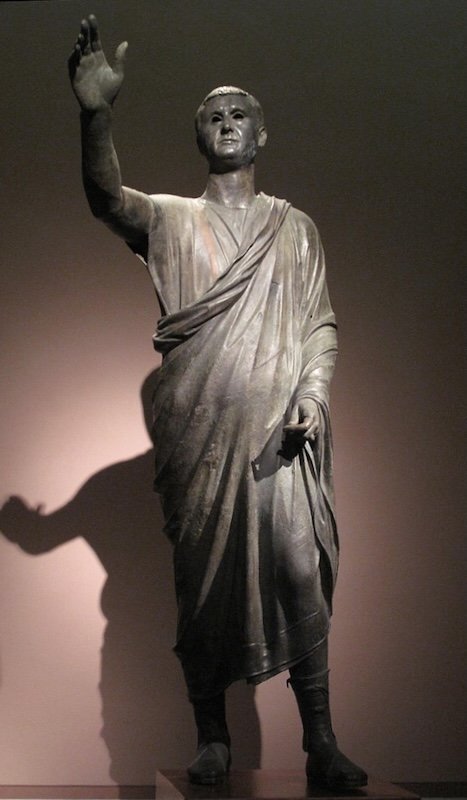
The Orator, 110-90 BCE. Image courtesy of Wikimedia Commons.
The Orator, 110-90 BCE. Image courtesy of Wikimedia Commons.
When reading texts from the Hebrew Bible or ancient Rome, it is tempting to focus on the similarities between ‘them’ and ‘us’, our shared humanity, and the very familiar descriptions of longing, love, fear, and despair that make us identify with the peoples of the past, and ‘understand’ them.
Read MoreReading with a Hermeneutics of Presence and Embodiment
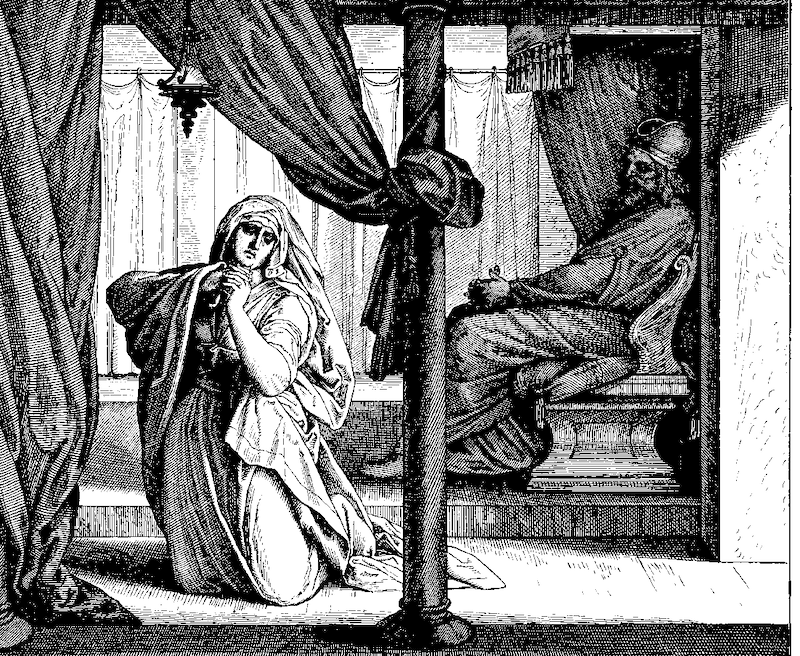
Hannah’s Prayer, by Julius Schnorr von Karolsfeld. Image courtesy of Wikimedia Commons.
Hannah’s Prayer, by Julius Schnorr von Karolsfeld. Image courtesy of Wikimedia Commons.
We share with ancient readers the condition of embodied and vulnerable human existence.
Read MoreSpeech, Efficacy, and Prophecy
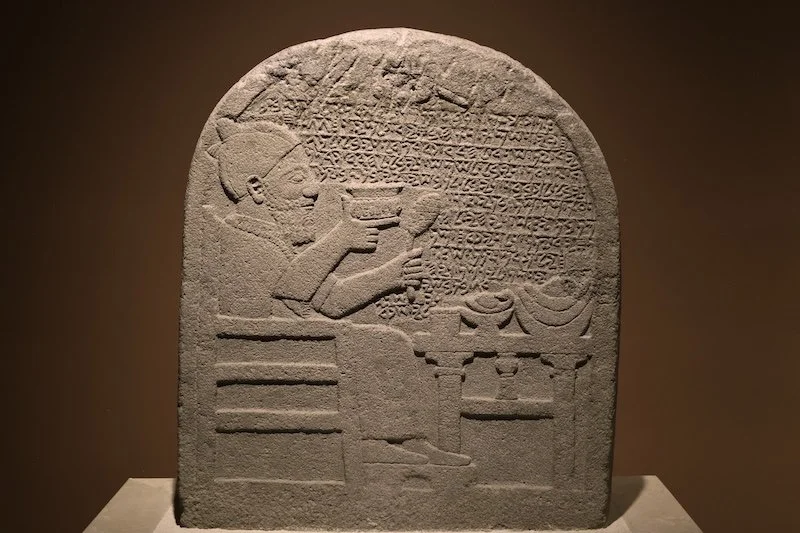
Kuttamuwa’s Grave Stele, Image courtesy of Wikimedia Commons
Kuttamuwa’s Grave Stele, Image courtesy of Wikimedia Commons
These ideas about representation are nearly everywhere assumed but rarely taken up for examination. But as Vayntrub points out, a glance outside the Hebrew Bible suggests the possibilities of different ontologies of representation at play in ancient West Asia.
Read MoreOn Metaphors of Bodies and Archeology
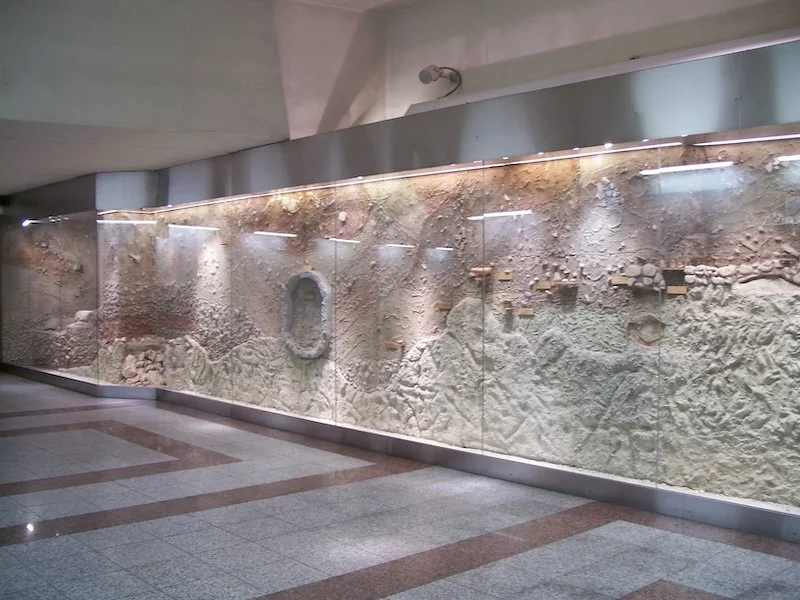
Archaeological stratification in the Athens Metro, Dafni Station. Image courtesy of Wikimedia Commons.
Archaeological stratification in the Athens Metro, Dafni Station. Image courtesy of Wikimedia Commons.
Jacqueline Vayntrub’s Body Language has a dialectical relationship to the pervasive metaphor of archeological excavation, which has indelibly shaped both the way we practice biblical scholarship and the way we encounter the self in modernity. On the surface – so goes the metaphor – we see ruins and dust, but if we dig deeper, with our spades and shovels, we can uncover valuable treasures, columns and temples, sense and vitality.
Read MoreVoices of Wing and Bone
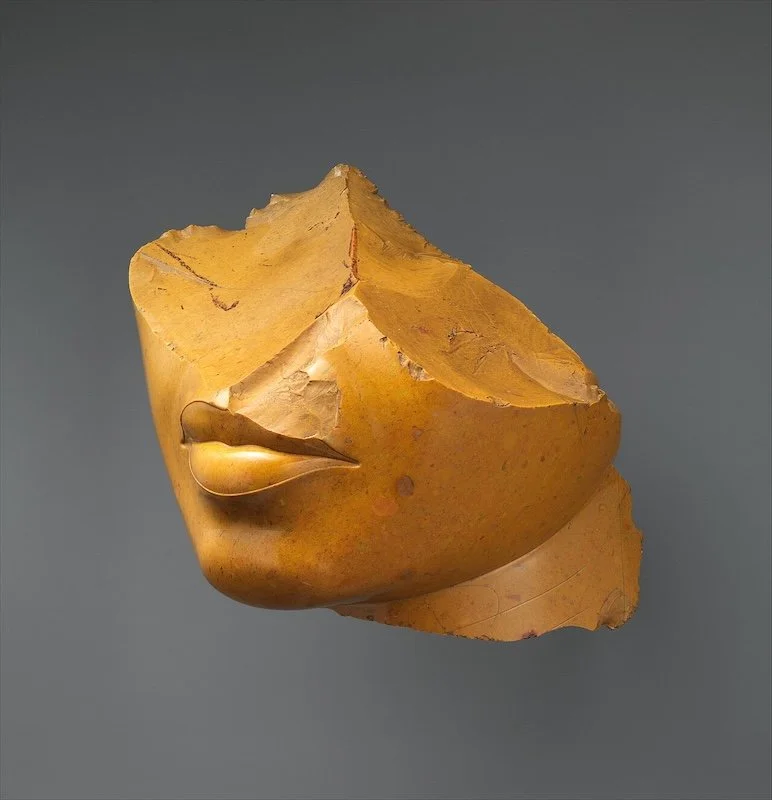
Fragment of a Head of a Queen, Metropolitan Museum of Art. Image courtesy of Wikimedia Commons.
Fragment of a Head of a Queen, Metropolitan Museum of Art. Image courtesy of Wikimedia Commons.
Voice makes moral and relational claims. It anchors awareness in the particular. The textualized voice and voiced text lay claim to the attention of their audiences in ways that defy apathy, demand engagement, and render the past both vivid and urgent.
Read MoreThe Part You Don’t See

Image citation: Roman goblet, Cleveland Museum of Art, Gift of J. H. Wade 1923.953 [Image Source].
Image citation: Roman goblet, Cleveland Museum of Art, Gift of J. H. Wade 1923.953 [Image Source].
As a made thing, a book comprises not one, but two sets of working components. There are the pieces of the book itself as you see it: the chapters, images, bibliography. But then there are the book’s prior versions, earlier iterations that were both necessary for its development at a specific moment and then ripe for the trash.
Read MoreMummy Portraits and the White Gaze

Limewood panel bearing encaustic portrait of woman excavated in Saqqara (100-120 CE), British Museum Collection [Image from Wikimedia Commons].
Limewood panel bearing encaustic portrait of woman excavated in Saqqara (100-120 CE), British Museum Collection [Image from Wikimedia Commons].
In her latest book, Ellen Muehlberger asks us to sit in the tensive space between knowing and seeing.
Read MoreThoughts on Medieval Knowing

The TLibrary of the Institute of Science at the University of Bologna [Image: Doug Davey at Flickr]
The TLibrary of the Institute of Science at the University of Bologna [Image: Doug Davey at Flickr]
It is too early to know what emerita Ellen will be like, so for now, let us enjoy being in the presence of and reading the writings of medieval Ellen.
Read MoreUnseen Metaphysics versus Institutional Bureaucracy: Retelling the Story of the Fifth Ecumenical Council
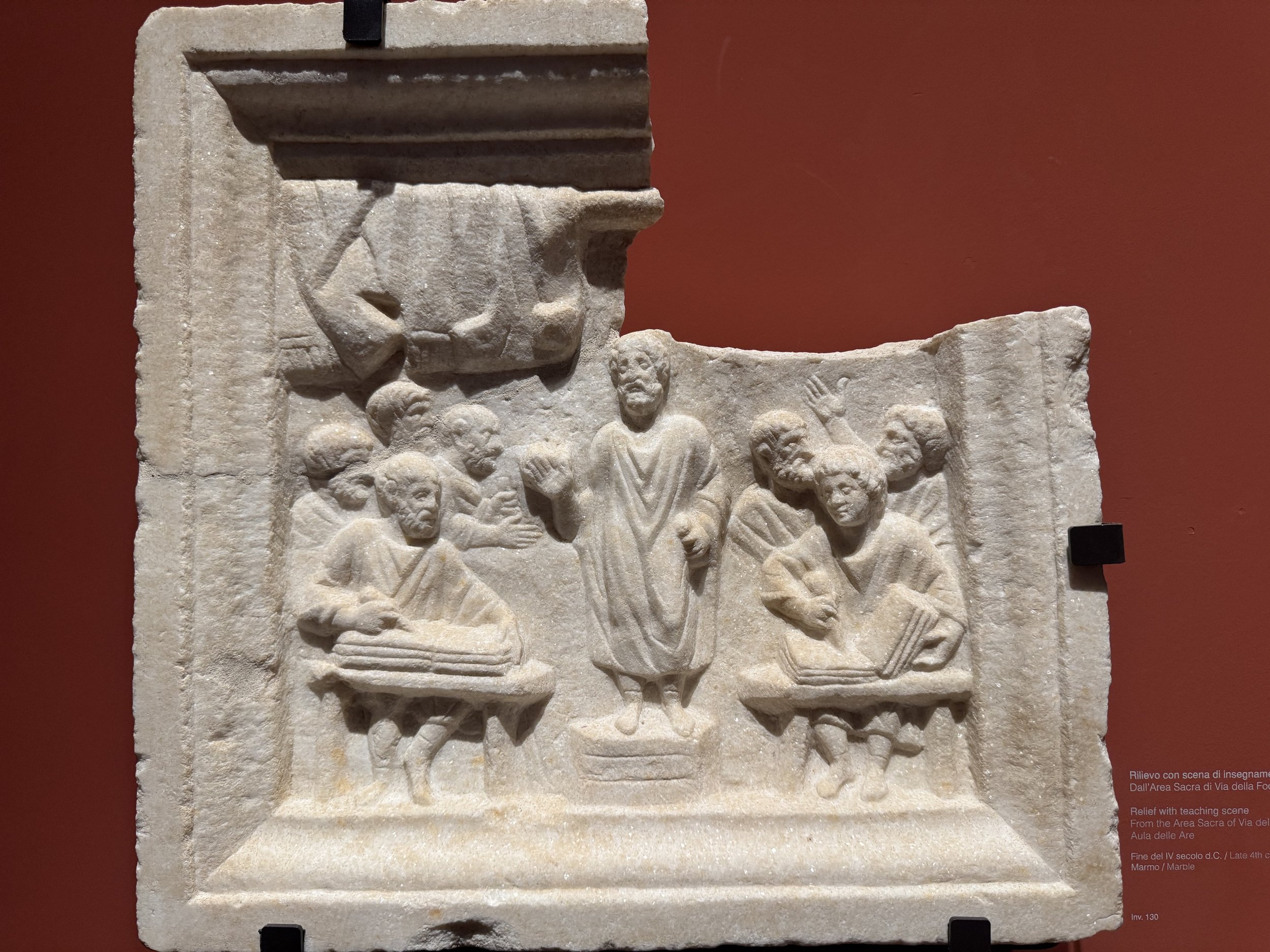
Relief of an orator, scribes, and an audience, late fourth century CE. [Image courtesy of the author].
Paper Dolls of Late Antiquity

This essay was part of a 2026 NAPS Conference Book Review Panel devoted to Things Unseen: Essays on Evidence, Knowledge, and the Late Ancient World by Ellen Muehlberger. Read the full forum here.
Let’s begin where Ellen Muehlberger does. In the very first chapter, she introduces a scene that is deceptively ordinary: a boy, about fourteen, sitting in a classroom somewhere in the late ancient Mediterranean—Antioch, perhaps—who is working through an assignment. He is asked to compose a speech in character, to answer a question that is both precise and conceptually unstable: “What would a prostitute who has come to her senses say?”
This is not simply an exercise in writing. It is an exercise in inhabiting, in rehearsing, in producing a voice that is not his own and yet must come to feel as though it is. As Muehlberger carefully shows, these exercises trained boys not only to represent women but to experience themselves as capable of doing so with authority. What begins as rhetorical play becomes, through repetition, a form of knowledge. Or, perhaps more precisely, a conviction of knowledge that does not require verification.
Muehlberger’s formulation is as elegant as it is unsettling: these imagined speeches, “even though they were deliberately made up—indeed, especially because they were made up—worked to instill a disposition of arrogance and a confident, self-generated knowledge of others.”[1] The force of that claim rests not simply on the presence of imagination, but on its elevation into evidence. The aim of this exercise is to train certainty and not empathy.
What emerges in this chapter, then, is a clever read of both the ancient world and the scholarly exercise: the less real the woman, the more knowable she becomes. The “impossible woman” as the chapter gestures then is not a failure of representation; she is its most efficient form. She is a paper doll of late antiquity and infinitely reproducible. As a repetitive figure she remains internally coherent and rhetorically satisfying. Most of all she is resistant to contradiction because she cannot answer back. She cannot exceed the script. She exists precisely at the point where imagination replaces encounter.
This is where Muehlberger’s intervention becomes so important for how we think about the archive of late antiquity. Muehlberger is not simply describing a pedagogical practice; she is identifying a mechanism by which gendered knowledge is produced and stabilized. These boys, trained in speaking as women, carry that practice into adulthood. They weave their way into the writing of histories, sermons, and, important for my own work, hagiographies. The classroom becomes the quiet foundation for a much larger discursive world—one in which women are already known before they are ever encountered.
At this point, I want to bring Muehlberger’s argument into conversation with Christine Luckritz Marquis, whose work on ascetic bodies exposes a related dynamic. Luckritz Marquis observed in her article “Better off Dead” that female and feminized bodies within monastic literature function not as subjects but as problems to be resolved—problems whose resolution often takes the form of elimination.[2] In the texts Luckritz Marquis examines, “the best female form is the dead one,” a conclusion that raises the pointed question: better for whom?
If we place this alongside Muehlberger’s rhetorical women, our paper doll pattern comes into focus. The imagined woman is already contained. The ascetic woman, when she appears in narrative form, is subjected to a similar containment—her body disciplined then her story ends. In both cases, the instability of the female figure is resolved through forms of control that render her legible. The rhetorical exercise and the ascetic narrative operate on different registers, but they converge on a shared outcome: a woman who can be known without any remainder.
This convergence becomes even more visible, when we turn to the layered Marys of late antiquity, whose overlapping identities resist any attempt at singularity. Mary of Egypt is perhaps the most striking example highlighted in the chapter, not because she is unique, but because she is so clearly assembled from prior forms as Muehlberger notes. She is not, strictly speaking, the prostitute of the rhetorical exercise, and yet she arrives already shaped by that figure. Her story read through a lens that expects sexual excess is quickly followed by repentance and transformation. She carries within her the folds of other Marys: Mary Magdalene, whose retrospective and false association with prostitution is itself a product of interpretive layering. The many Marys of the New Testament all collapse in on one another and take other unnamed women with them. These figures do not remain discrete. They produce a composite Mary that is at once overdetermined and strangely flat.
In this sense, Mary of Egypt is not one woman, and she cannot be. She is, rather, what the tradition makes possible when rhetorical types and the ascetic imagination converge. She becomes, as I have argued elsewhere, a figure constructed through “a web of interconnected themes… where gender violence and sanctity blur,” and where narrative excess produces what can only be described as monstrous coherence—but maybe that’s where the eventual Mary of Egypt escapes the final act where she is named in the sand after she has resolutely died.[3]
In the vita, before she is Mary, she is a sexual predator and a terrifying specter who floats without a name or identity. As I note in my last chapter of Gender Violence in Late Antiquity, she frequently reduces the pursuing monk to tears and prostrate gestures. He is frequently described as shaking with fear. Even in her description of her pre-flight to the desert life, she is more recognizably male than female. The yet to be named Mary is careful to note—a section of the text that Muehlberger draws our attention to—that she was not a typical prostitute. She would not accept payment for her sexual conquests.
The question is not whether this soon to be Mary was a prostitute, but why she must eventually be read as one. The answer lies not in her story, but in the structures and literary folds that precede it. Muehlberger’s chapter helps us see those structures with new clarity. The rhetorical training of boys does not simply prepare them to write; it prepares them to recognize certain kinds of women, to identify them as already understood. The “is she is she not” a prostitute, that blurry figure of sexual excess, must come to her (and his) senses and answer our historical questions. She cannot be an anomaly; she must be a template. And once that template is in place, it becomes remarkably difficult to ignore the writing in the sand. Even figures who resist it are eventually chained back to it.
This is where Muehlberger’s discussion of ventriloquism becomes especially sharp. The act of speaking in another’s voice might appear, at first glance, to offer the possibility of empathy, a way of bridging difference and maybe even give a woman agency. But as she shows, this hope is misplaced. There is no bridge but a link back. Identification does not undo hierarchy (patriarchy?). It can only reinforce it. To speak as another is not necessarily to encounter them—it may instead be to replace them—especially when she’s dead.
We see this dynamic repeatedly in late ancient Christian texts, where male authors inhabit female perspectives only to redirect them toward familiar ends. In my own work, I have described this process as a form of narrative appropriation, in which “the violent reality many wo/men still face” is not condemned but reworked into a theological framework that renders it meaningful.[4] He who casts the first stone or review take note!
The female voice, when it appears, is already aligned with that framework. It confirms what the author, and the audience, expects to hear. What Muehlberger allows us to see is that this is not simply a literary strategy. It is also the product of a long-standing habit of thought and performance. The confidence with which these voices are produced—the ease with which they are accepted—derives from a training that begins in the classroom and extends outward into the broader culture of knowledge-making. The result is a system in which imagined women stand in for real ones, not as approximations, but as authoritative and repetitive representations.
This has significant implications for how we, as late ancient historians, approach these texts. Muehlberger’s work forcefully challenges the assumption that we can recover women’s voices from the sources that survive. It does not foreclose that possibility, but it does complicate it. The voices we encounter are already always mediated, already always shaped by practices of imagination or fantasy that carry their own authority.
At the same time, her work does not leave us without resources. By exposing these mechanisms, she invites us then to read differently. We must attend not only to what is said, but to how it becomes sayable. The impossibility of these women, their instability, their excess, then becomes a point of entry rather than a barrier. It reminds us that what appears coherent is often the result of sustained effort, that what feels natural has been carefully constructed.
What I find most compelling about Things Unseen as a whole, and in this chapter in particular, is its focus on these affective dimensions of knowledge. Muehlberger is interested not just in what late ancient Christians knew, but in how they came to feel certain that they knew it (and how we too become certain in what we know). The rhetorical exercises she examines do more than produce texts. These habits persist, shaping not only ancient writing but modern scholarship.
And so, we find ourselves implicated in the very structures and folds she describes. We, too, work with fragments, with mediated voices, with figures who are always already constructed—most especially when we’re chasing after women. The difference, perhaps, is that we are asked to do so with an awareness of the limits of that process.
Muehlberger’s prose, as always, makes this look effortless. The argument unfolds with clarity and control. Her examples are carefully chosen and the implications allowed to emerge without overstatement. But beneath that surface lies a deeply challenging claim: that knowledge, particularly knowledge about others, is never neutral. It is produced through practices that carry their own histories and their own investments.
To return, then, to the boy in the classroom: he writes, he performs, and he learns. He learns not only how to speak, but how to know. The question is what happens when that knowledge encounters the world beyond the classroom. When that same knowledge meets bodies that do not conform, voices that do not align, or lives that exceed the script so he must once again play the man.
Muehlberger does not resolve that tension, and neither should we. Instead, she leaves us with a more difficult task: that is, to recognize the repetitive patterns that make knowledge possible and to remain attentive to what they render unseen.
Jennifer Barry is Associate Professor of Religious Studies at the University of Mary Washington and is a Women’s Studies and Religion Program Fellow at Harvard University (2026-2027). She is a historian of late antiquity whose research examines early Christianity, gender, violence, ecclesiastical historiography, and the construction of religious identity. She is the author of Bishops in Flight: Exile and Displacement in Late Antiquity (University of California Press, 2019) and Gender Violence in Late Antiquity: Male Fantasies and the Christian Imagination (University of California Press, 2025). Her two forthcoming monographs include Scandalous Christian Histories in Late Antiquity (University of Edinburgh Press) and Terrifying Women in the Ancient World (Basic Books).
[1] Ellen Muehlberger, Things Unseen: Essays on Evidence, Knowledge, and the Late Ancient World (University of California Press, 2025), 20.
[2] Christine Luckritz Marquis, “Better off Dead?: Violence, Women, and Late Ancient Asceticism,” Journal of Early Christian Studies 33.2 (2025): 305-334.
[3] Jennifer Barry, Gender Violence in Late Antiquity: Male Fantasies and the Christian Imagination (University of California Press, 2025), 167.
[4] Barry, Gender Violence in Late Antiquity, 167.
Things Unseen Forum
A forum devoted to Ellen Meuhlberger’s recent book Things Unseen: Essays on Evidence, Knowledge, and the Late Ancient World, featuring Bradley K. Storin, Young Richard Kim, Jennifer Barry, Matthew Crawford, and Christine Luckritz Marquis.
Read MoreKnown Knowns and Known Unknowns: Ellen Muehlberger’s Things Unseen: Essays on Evidence, Knowledge, and the Late Ancient World

Charles Lewis Griffin and Charles Clyde Adams, Machine Drawing (1914), The Library of Congress [Wikimedia].
Reclaiming Female Presence in Bavli Sotah
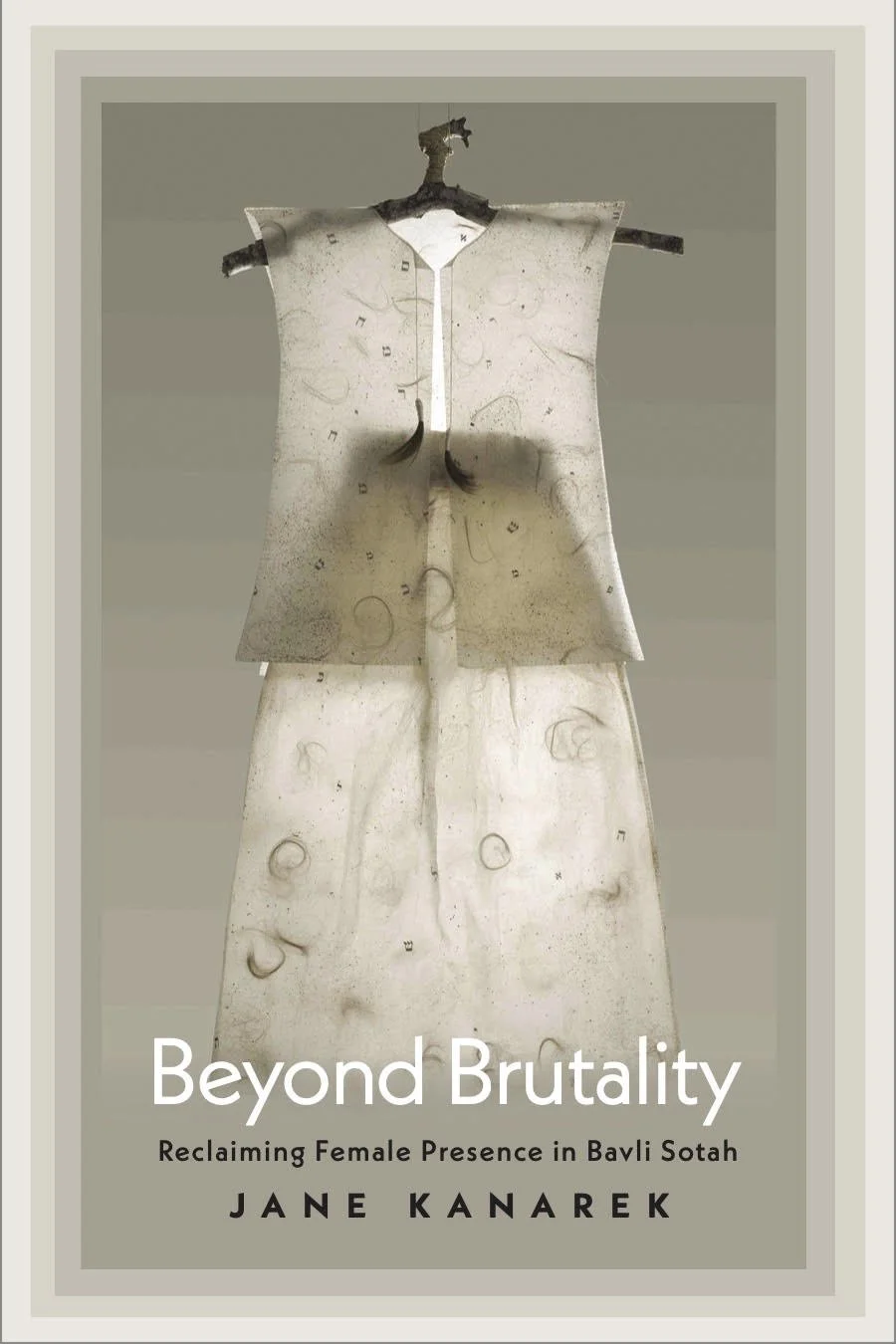
Beyond Brutality: Reclaiming Female Presence in Bavli Sotah reflects my scholarly journey over these many years of returning to a stance of assuming female presence. Rather than emphasizing absence, marginality, or invisibility, I choose to assume women's presence within rabbinic culture of late antiquity.
Read MoreSome Biblical Stories Demand a Poem, Not a Research Paper
Out of my deep desire to leave my students with positive lasting memories for the ancient texts that I love, I have permitted my students to present their research in forms outside of the traditional research paper.
Read MoreDeath of the Desert Forum | The Author's Response

_-_British_museum,_EA29772.jpg)

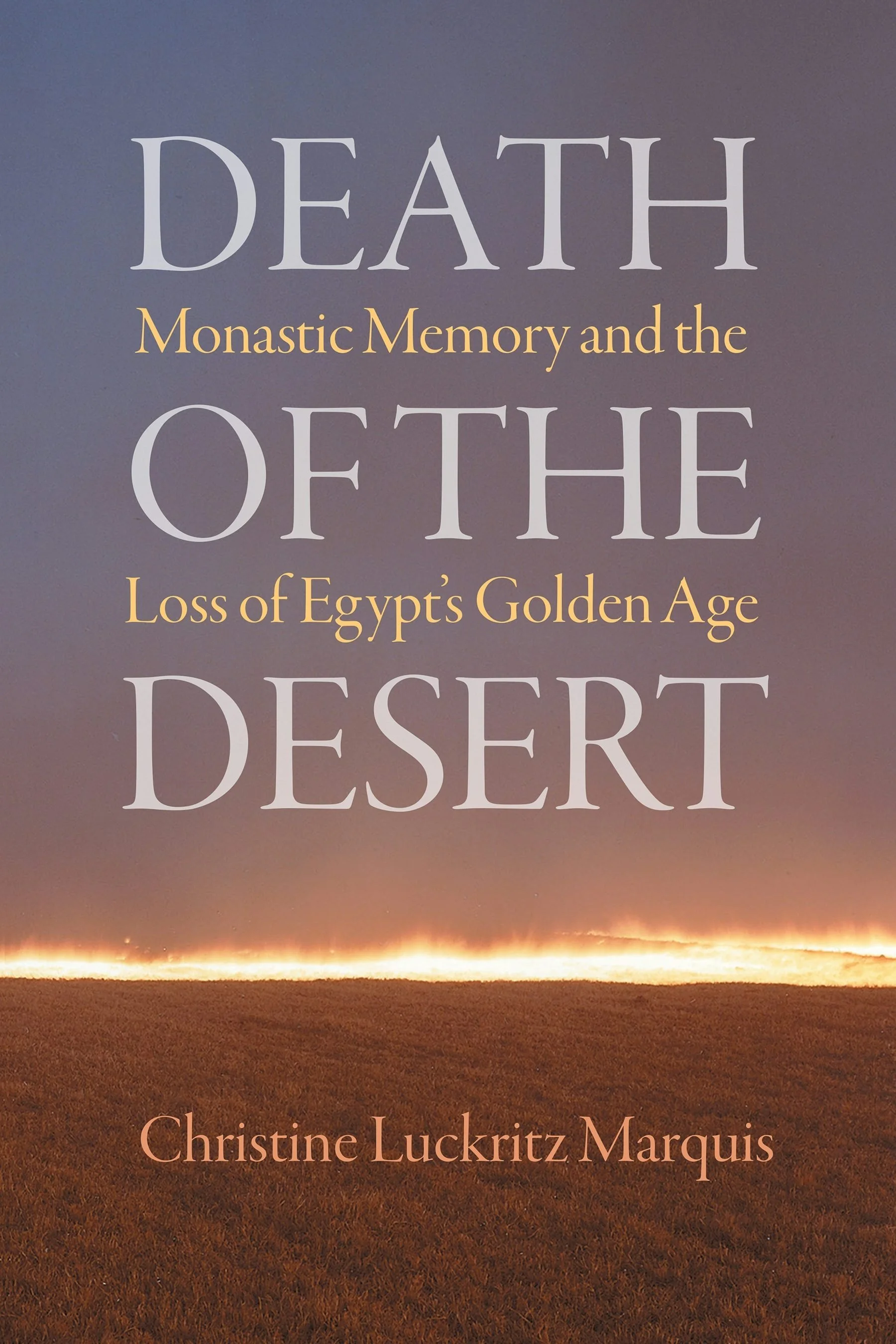
AJR is honored to host this review panel for Christine Luckritz Marquis’s Death of the Desert: Monastic Memory and the Loss of Egypt’s Golden Age (Philadelphia: University of Pennsylvania Press, 2022). You may find all the responses and the author’s response here.
As anyone who has written a book knows, it is truly a gift when others engage with your work. Thank you to Ancient Jew Review for the invitation and for hosting this dialogue. It is an especially gratifying experience to respond to the deep, thoughtful, and generous responses of these three colleagues. Ciara, Ellen, Rebecca, thank you for investing time in reading my book and in thinking alongside its arguments and places we might continue the conversation. To structure my response, I want to highlight a couple of things I hoped the book would do when I wrote it. Then, I express appreciation for particular things you have reflected back to me before replying to the primary question I see each of you posing.
My book sought to place the Origenist Controversy and Egyptian monasticism in more immediate dialogue, rather than as two separate scholarly discourses running parallel but rarely intersecting, as they often are. That was important to me because I was also committed to stressing the desert itself as a character in these narratives. And, as I offered close and complex readings of my sources, I sought to do so with a historiographical awareness of the ethical implications for our own time.
Ellen, thank you for your explicit engagement of my cover art: “where a single bright fireline separates the viewer and the grassland she stands on from the place the fire has already been, its details close but not quite visible on the other side of the destruction.” I negotiated for use and adjustment of Richard Misrach’s gorgeous photograph (during COVID no less) because I did want the image to resonate deeply with my argument about the desert. You saw that the art was also part of my argument about how we can and cannot see the past that has spread across the desert. Ciara, I am grateful to you for recognizing my insistence throughout the book “that the Sayings can only be understood by considering these three lenses [violence, memory, and race].” While different chapters highlighted aspects of the larger narrative I sought to weave, throughout I am gratified that you heard the call for a reframing of monastic history that reckons with these three threads. You saw them in each chapter and drew them together again as a “challenge” I offer to my readers. Rebecca, thank you for highlighting that “narratives are themselves integral to an unfolding event.” As you rightly gathered, I am as interested in our present moment’s narratives as I am in those of the past. We continue to wrestle with “our own demons that come from deciding what and how to remember, erase, and forget in interpreting the events and webs of relation around us.” While I finished writing the book in the midst of reckoning with racist legacies and Civil War statuary, our current moment only continues to press us to think about whose narratives are amplified and what healing or harm such amplification produces.
And now to the questions! Rebecca, you query “how successfully the memory of Theophilus was rehabilitated,” reflecting in your footnote that the negative accounts of Palladius, Ps.-Martyrius, and Socrates of Constantinople “still influence the way we describe (and teach) about Theophilus and his involvement in the Origenist Controversy.” As you note, Banev has been far more thorough than I in addressing this continued legacy of demonizing Theophilus.[1] And your reference to Theophilus’s treatment in the 13th century marginalia of Biblioteca Medicea Laurenziana Plut. 70.7 reflects that vein of treatment. There were two worlds my book was trying to straddle, the one that questions and critiques Theophilus – much of what Western scholarship has inherited from Latin and Greek sources – and the one that continues to deeply honor him – Egyptian Coptic and Syrian Christians revere him as a Saint. His death is included in the Coptic Synaxarion on Paopi 18, 404 CE (modern pronunciation Baba; Gregorian October 28). His entry remembers him as merciful, charitable, a student of his predecessor Athanasius, a discoverer of miraculous treasure, and a builder of many churches.[2]
Several seasons digging in the northwestern desert of Egypt made me keenly sensitive to the role that Theophilus and Egyptian monastic heritage play in contemporary Egyptian Christianity.[3] As a religious minority in a Muslim-majority country, the complexity of maintaining and preserving Christian identity means that any criticism of Theophilus and other heritage figures can be a quite sensitive situation. I thought quite a bit about the many ethical implications my work might have for not only Egyptian/Coptic and Syrian/Syriac studies within academic circles but also for these presently oppressed religious communities. So, when I was writing, I was truly trying to balance which “we” was considering Theophilus. He is totally rehabilitated from an Egyptian and Syrian Christian position. That does not erase your crucial point that he often is not taught or written about from such a perspective by many who consider themselves scholars of late antiquity. Thank you for raising this important question because it allows me an opportunity to reflect with more nuance on this contemporary tensive issue among those who honor and those who study in and outside a tradition.
Ciara, I keep turning over the question you pulled from my third chapter: “how scholars think about societal practices – such as damnatio memoriae – and how this phenomenon can occur on the individual level.” I acknowledge that this is one of the more speculative edges of my book, and intentionally so. Thank you for raising this part of the project because in some ways it’s among the things I am most invested in as a scholar. One of the struggles as I lived with this material first as a dissertation and then later transforming it into a rather different book was the tension between knowing some things did not make sense and trying to offer an alternative model that might be more historically accurate. Thus, I found myself wrestling with the limits of history as a field. How do we ask good questions when our material is scarce? Are responsible, necessarily somewhat speculative, workarounds possible? It was this professional identity questioning that helped me think through how we might begin to engage the Sayings of the Desert Fathers in ways beyond gnomic. I try in the book and elsewhere in my work to note when I shift from more solid evidence to what I like to call responsible historical imagining. I hope even when others disagree with my readings they consider the invitation to stretch the methods and questions we take up.
Ellen, you likewise picked up on the dynamic relationship between individual and communal I was exploring. You pressed me on the “need to grapple with the Christian literary tendency to over indicate violence,” asking whether “an instance of ‘violence’ against the self” might “be compared to the destruction of a public site of another tradition’s practices.” As you note, the field continues to wrestle with where, how, and when we delineate something as “violence.” I come down in the book quite clearly on violence as including language. Part of what I wanted to think through was precisely how commonly violent language appears in many texts and how often modern scholars have tended to overlook such rhetoric. I have continued to try to think through what it means to “over indicate violence.” What work (conscious and unconscious) does that literary habit do? Both to ancient authors/readers/hearers and modern scholars who read it?
I suspect I was and continue to be informed by our own historical context as I think through verbal violence. I wonder whether the erasure of memories/“facts” of one’s own past needs to feel violent to the perpetrator for it to produce violent results? Perhaps an individual monk trying to remove memories of his past life did not see his actions as self-harm, but those he may have left behind – a mother, a wife, children, enslaved individuals – may certainly have experienced his abandonment and denunciation of his past life as harm. And that the Sayings as reflective of a mostly male legacy so willing to erase large swaths of the past might invite us to ask who monks tend to demonize when they do so – here, the corpus clearly points to women, young men, and enslaved persons.
For my continued scholarship beyond the book, taking these experiences of past self-erasure as violence seriously has helped me reimagine how individuals marginalized by these actions might be reimagined back into the late ancient world. If we are looking for often obscured women, queers, and enslaved individuals – those most often subjected to violence then and now – we might well find glimpses of their realities by attending to how pervasive violence was. In “Divining Slaves in Late Ancient Egypt,” I argue against the scholarly tendency to view Egypt as a space not particularly prone to enslavement practices.[4] And, more recently, I have begun to join a growing body of scholars, such as Jennifer Barry, in addressing the role of gender violence in our sources and the scholar habits that continue to be informed by this violent legacy.[5] In “Better Off Dead: Violence, Women, and Late Ancient Asceticism,” I make the case for recognizing how often women and trans monks were accused in monastic sources of violence even as it was male monks who were in fact the main perpetrators.[6]
Christine Luckritz Marquis is Associate Professor of Church History at Union Presbyterian Seminary. Her teaching and research expertise explore early Christian communities and their practices, especially late ancient communities in Egypt, Syria, Ethiopia, and the Arabian Peninsula. Her interests include food, memory, and spatial practices, the role of violence in identity formation, racial and ethnic discourses, material culture, and Christian interactions with neighboring Christians as well as non-Christians, especially Jews and Muslims. Her first book is Death of the Desert: Monastic Memory and the Loss of Egypt’s Golden Age (University of Pennsylvania Press, 2022). The book explores how memory and spatial practices were transformed by acts of violence among Egyptian ascetics. She has also co-edited and translated The History of the Great Deeds of Bishop Paul of Quentos and Priest John of Edessa, Texts from Christian Late Antiquity volume 29 (Piscataway, New Jersey: Gorgias Press, 2010). She has also published book chapters, articles, and translations. She is currently researching the history of sources of sweetness and their relationship to understandings of the divine and afterlife.
[1] Krastu Banev, Theophilus of Alexandria and the First Origenist Controversy: Rhetoric and Power (Oxford: Oxford University Press, 2015).
[2] “السنكسار بابه 18,” السنكسار بابه 18: نياحة البابا ثيؤفيلس 23 - CopticChurch.net, accessed June 16, 2026, https://www.copticchurch.net/synaxarium/2_18.html?lang=ar.
[3] Here I would note the importance of Stephen J. Davis for me, both his mentorship during my time with Yale Monastic Archaeology Project and his scholarship, especially his The Early Coptic Papacy: The Egyptian Church and Its Leadership in Late Antiquity (Cairo and New York: American University in Cairo, 2004).
[4] Christine Luckritz Marquis, “Divining Slavery in Late Ancient Egypt: Doulology in the Monastic Works of Paul of Tamma and Shenoute,” in Slavery in the Late Antique World, 150–700 CE, eds. Christopher L. De Wet, Maijastina Kahlos, and Ville Vuolanto (Cambridge: Cambridge University Press, 2022) 149–69.
[5] Jennifer Barry, Gender Violence in Late Antiquity: Male Fantasies and the Christian Imagination (Oakland, CA: University of California Press, 2025).
[6] Christine Luckritz Marquis, “Better Off Dead: Violence, Women, and Late Ancient Asceticism” JECS 33.2 (Summer 2025): 305–34.