
Reed’s book highlights what might be finally termed a true period of the scribes: a time during which literature was produced not only by scribes but about them and for them, highlighting their special status and privileged lineage.
Read MoreBook Note I Bestiarium Judaicum: Unnatural Histories of the Jews
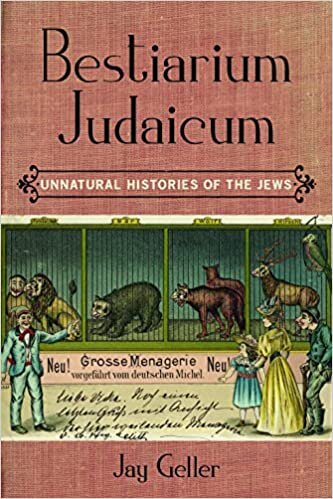
Jay Geller, Bestiarium Judaicum: Unnatural Histories of the Jews (New York: Fordham University Press, 2018)
In recent years, a growing interest with critical animal studies has challenged fields to reflect upon anthropocentric arguments and assumptions based on the Cartesian human-animal hierarchy. Bestiarium Judaicum is Jay Geller’s response to this challenge. Geller splices his academic interest on Jewish identity and embodiment with the question of the animal, or more precisely, “the Jew and the animal” (7). Working with the perspectives of Jacques Derrida and animal studies’ proponents such as Mel Chen, Donna Haraway, Kelly Oliver, and Cary Wolfe, Geller interrogates the presence of more-than-humans (a politically correct umbrella term for animals, plants, and inanimate entities) in texts produced by German-Jewish authors who wrote during what he calls the “the Era of the Jewish Question,” which is roughly from 1750 to the Shoah (5).
The animalization of Jews or, as Geller calls it, “Jew-Animal,” during this period is not just a one-off canard or ethnic banter meant to tease or ridicule. Rather, it responded to a “collapse of the religious and the lineage/corporate (estate, guild, and so on) narratives of value and meaning and of the institutions that sustained them amid the social destabilizations, geographic relocations, colonial expansions, economic destabilizations, and increasing bureacratizations that were also occurring” (5). As some Germans tried to build the walls of their identity markers, they found various Jewish groups’ (and other minoritized groups) concomitant goal to integrate to the national German identity disturbing and even repulsive. In order to invent their identity, the Germans had to have the “other.” They did so with animalizing rhetoric, in accordance with which the Jews are “disgust (worms), threats (beasts of prey), ridicule (apes, pigs, goats, parrots),” and other negative associations (47). The animalization of the Jews manifests a narcissistic lack stemming from Germany’s unstable national identity (47). Moreover, hate-filled bourgeois Germans were even concerned that such integration, based on the negative stereotype that the Jews are highly capable of mimicry, would deter their goal for “some form of pure völkisch identity” (117). Thus, they depicted Jews as animals, including apes, in an attempt to prevent Jews from assimilating into the German fold.
Re-reading German-Jewish authors through the lens of animal studies, Geller finds a counter discourse that disrupts this formula of human hierarchy and exceptionalism. These German-Jewish authors did not defend or justify their humanity by distancing themselves from more-than-humans. Rather, they wrote with more-than-humans, multiplying and destabilizing the taxonomic limitations imposed between Jew-Gentile/animal-human to format a “Jew-as-Animal.” As in Franz Kafka’s work, for example, Geller finds a proliferation of more-than-humans, sometimes even anthropomorphized. He understands this to reveal the constructed nature of Jew-Gentile/animal-human differences, substantiating the argument that identities are not essential (or given) but constructed (58). Such constructions are interpellations by the oppressive dominant force in Germany that tries to subjugate the Jews by animalizing their identity. The “as” of “Jew-as-Animal” both associates and dissociates Jews from/with animals, blurring ontologies by multiplying their relationality. These literatures expand the interpellation indefinitely as a way of exposing the debasing essentialist rhetoric present during that period (137). “Jew-as-Animal” denaturalizes the artificiality of Jew-Gentile, human-animal divide, by demonstrating through literature that “Jewishness does not exhaust one’s identification, nor does one’s identification exhaust the possibilities of Jewishness” (26).
We find examples of this reasoning throughout Geller’s analysis of the various animot, a Derridean neologism that questions the perceived lack of responsivity of more-than-humans. He reads it in the works of Franz Kafka (The Metamorphosis, Josephine the Singer, Two Animal Stories, and Red Peter from A Report to an Academy), Heinrich Heine (Travel Pictures and “Aus der Zopfzeit”), Felix Salten (Bambi), Salomon Maimon (An Autobiography), and Art Spiegelman (Maus: A Survivor’s Tale), to name a few. Geller reads Kafka’s Red Peter, for instance, not just as an ape. Kafka has Red Peter respond to his environs through representation, voice, and agency. Red Peter might be self-deluded, but such complexity of character makes Red Peter “more human.” Kafka’s intent, as perceived by Geller, is to bring the Jewish community out of objectification and animalization by interpellating with more-than-humans. Red Peter is the Jewish animot (137) who is identifiable and yet ungraspable, reproduced and yet different in every iteration.
Geller is realistic in his take on the “end game” of such deconstruction: “For Kafka, such a strategy would neither negate the demeaning identifications nor render them benign; nor would it lead to a reversal of the hierarchical power relations. But it might mitigate the murderous affect aroused by contact with the monstrous animal-object constructed by the dominant society’s own fears, hatreds, and identification practices as well as defer the deadly transformation of analogy into identity – to render the Jew as animal and therefore killable” (187). Here, Geller taps into Derrida’s discourse on “killable” in which the consumption of the other for food/survival is not the issue. Rather, the problem is when one perceives the other as “killable,” or the necro-politics in which the Other is only meant for death or dispensability.
Geller could have worked further on works beyond those of Kafka and Heine. Other authors are crammed in the last chapter and the Afterword. Even the discussion on the Shoah in the Afterword might have been given further space in the book, since that is something general readers of Geller’s work would immediately recognize. Speaking of recognition, Geller’s close reading of his chosen texts are sometimes so specialized that those unfamiliar with the texts might get lost quickly. Geller also focuses on critique of certain scholars rather than background discussion. General readers of this book might need significant assistance in grasping the contours of the argument.
Overall, Geller argues that German-Jewish authors of this period did not hate themselves or internalize anti-Semitism just because they worked with more-than-humans in their literatures. There could be a way to be in solidarity with all of creation while fighting for one’s humanity. There are ways to combat racism without falling into the trap of speciesism, making it even more urgent to find ways to be in solidarity without negation or replacement.
Dong Hyeon Jeong is Assistant Professor of New Testament Interpretation at Garrett-Evangelical Theological Seminary. He is also a board member of the Center and Library for the Bible and Social Justice. His forthcoming book is entitled, With the Wild Beasts, Learning from the Trees: Animality, Vegetality, and (Colonized) Ethnicity in the Gospel of Mark.
Book Note | Augustine and the Dialogue
![Gioacchino Assereto, Saint Augustine and Saint Monica (17th c.) Minneapolis Institute of Art [Wikimedia]](https://images.squarespace-cdn.com/content/v1/5449167fe4b078c86b41f810/1605971002733-9D18XXO9KQN78R69SI5J/Gioacchino_Assereto_-_Saint_Augustine_and_Saint_Monica_-_60.35_-_Minneapolis_Institute_of_Arts.jpg)
Gioacchino Assereto, Saint Augustine and Saint Monica (17th c.) Minneapolis Institute of Art [Wikimedia]
Book Note | Constantinople: Ritual, Violence, and Memory in the Making of a Christian Imperial Capital
![Ivory plaque featuring scenes from the story of Joshua, Byzantine (900-1000 CE) [MET Museum].](https://images.squarespace-cdn.com/content/v1/5449167fe4b078c86b41f810/1605972495995-YBX9K918HSOITB8CR5KZ/LC_17_190_137a-cs_1.jpg)
Ivory plaque featuring scenes from the story of Joshua, Byzantine (900-1000 CE) [MET Museum].
Ivory plaque featuring scenes from the story of Joshua, Byzantine (900-1000 CE) [MET Museum].
Falcasantos’ Constantinople demonstrates how change and continuity stood in tension in late antique Constantinople.
Read MoreBook Note | Egyptian Hieroglyphs in the Late Antique Imagination
![Graffito of Esmet-Akhom from Hadrian's Gate at Philae (394 CE) [Wikimedia].](https://images.squarespace-cdn.com/content/v1/5449167fe4b078c86b41f810/1606334179764-SA0HL27JFAYN3QKWHKPM/1024px-Agilkia_Esmet-Achom_01.jpg)
Graffito of Esmet-Akhom from Hadrian's Gate at Philae (394 CE) [Wikimedia].
Graffito of Esmet-Akhom from Hadrian's Gate at Philae (394 CE) [Wikimedia].
Egyptian Hieroglyphs in the Late Antique Imagination is a broad-ranging and accessible treatment of how late ancient writers engaged with pharaonic history and culture in the midst of the Christianization of Egypt.
Read MoreBook Note | The Jerusalem Temple in Diaspora: Jewish Practice and Thought during the Second Temple Period
In The Jerusalem Temple in Diaspora, Jonathan Trotter offers a new reconstruction of the relationship between diaspora Jews and the Jerusalem temple that is both grounded in lived practices and informed by literary analysis.
Read MoreBook Note | Humor, Resistance, and Jewish Cultural Persistence

How can we account for the seemingly contradictory perspectives of responses to empire and imperial subjugation in the Book of Revelation? Through the lenses of humor studies and trauma theory in postcolonial discourse, Sarah Emanuel’s innovative work addresses this question and demonstrates how comic is used as a mode of survival for the Jewish community of John’s Apocalypse.
Read MoreBook Note | Self-Portrait in Three Colors: Gregory of Nazianzus’s Epistolary Autobiography

Peter Paul Rubens, St. Gregory of Nazianzus (1621). Collection Albright-Knox Art Gallery, Buffalo, New York (Source: Copyright Albright-Knox).
Peter Paul Rubens, St. Gregory of Nazianzus (1621). Collection Albright-Knox Art Gallery, Buffalo, New York (Source: Copyright Albright-Knox).
Storin’s work, both monograph and translation, marks another excellent entry in the UC Press Christianity in Late Antiquity series. Taken together, these volumes will prove valuable not only to scholars of Gregory or ancient epistolography, but all those interested in the interdependent constructions of rhetoric, philosophy, and the self in late antiquity.
Read MoreBook Note | Between Mishna and Midrash
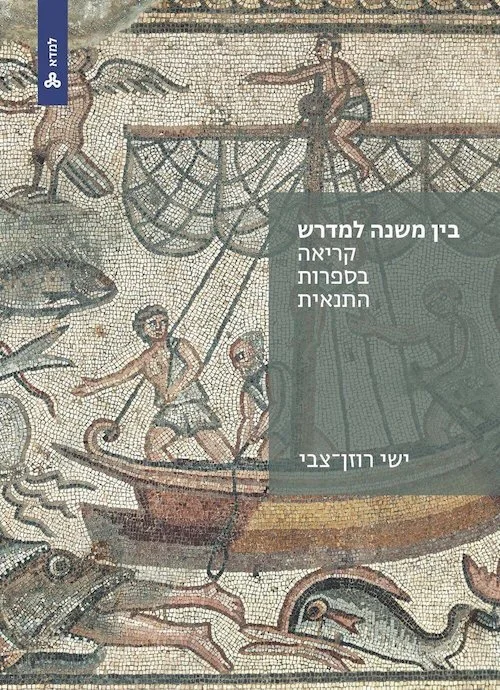
“Close reading, suggests Rosen-Zvi, resembles micro-historical study since in both cases a close look at one detail reveals large social and cultural processes that cannot be seen from a wider perspective.”
Read MoreBook Note | Enoch From Antiquity to the Middle Ages
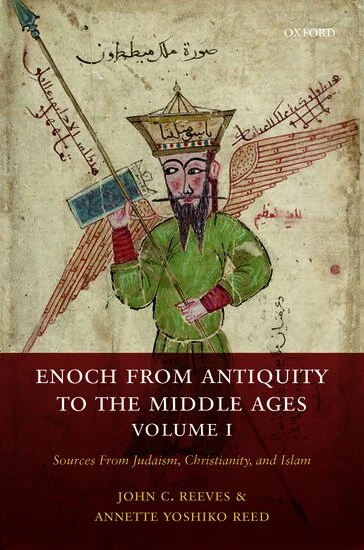
…[O]ne of the most valuable contributions are the plentiful insights throughout this volume that have implications for a wide variety of fields, ranging from antiquity to the medieval period. And, while there are no doubt plentiful insights with regard to Judaism, Christianity, and Islam, a number of observations throughout this work also hold implications for the field of Ancient Mesopotamian religion and its relation to later traditions.
Read MoreBook Note | Time in the Babylonian Talmud

Kaye suggests that time as imagined in the BT is best represented by Wassily Kandinsky’s painting, Several Circles (1926). According to Kaye, the painting’s circles of various sizes and colors represent various moments; these moments, as circles, interact both temporally and spatially and are spread across the canvas non-linearly.
Read MoreBook Note I Growing Up in Ancient Israel: Children in Material Culture and Biblical Texts
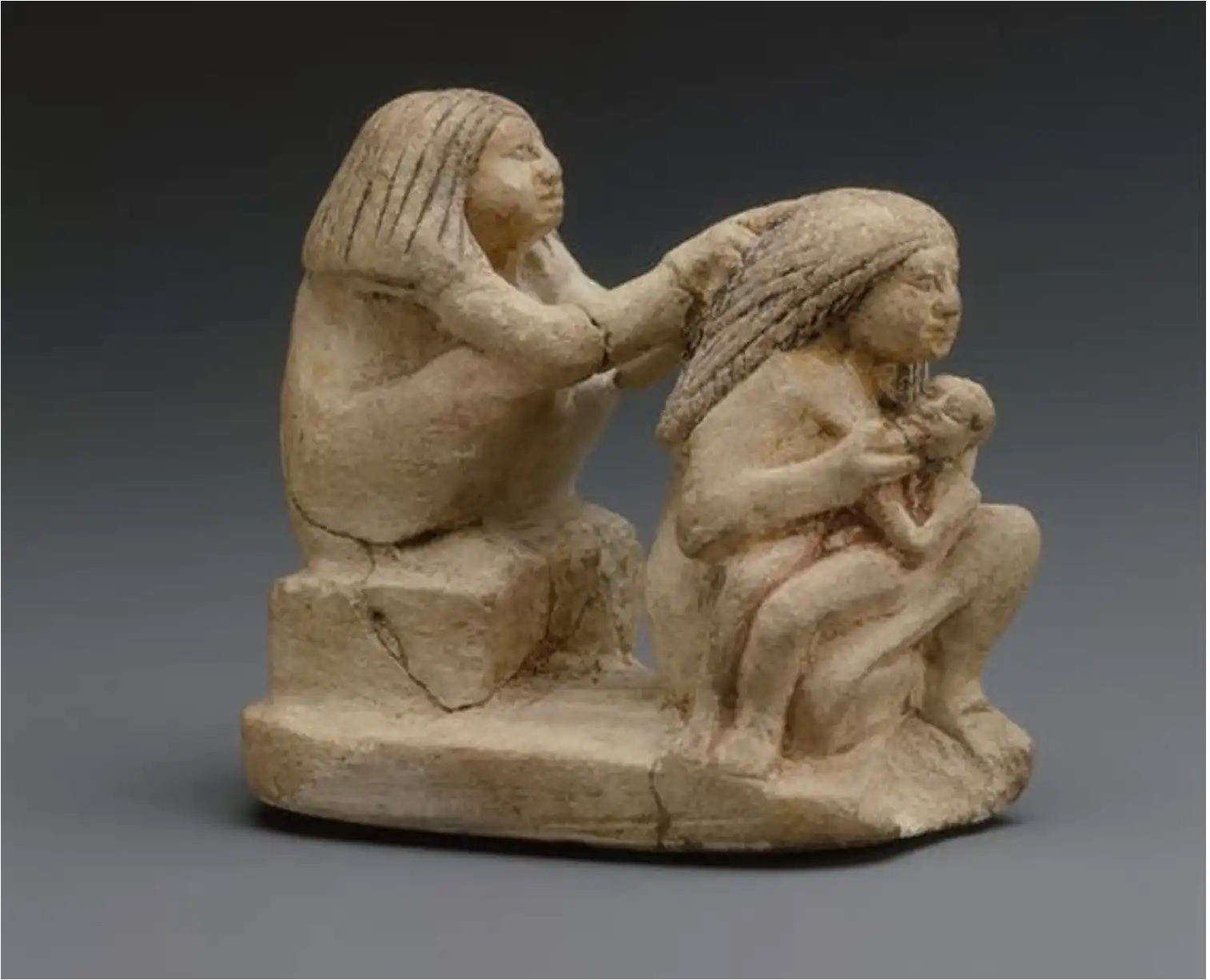
The Metropolitan Museum of Art
Book Note | When Christians Were Jews

Paula Fredriksen’s newest book attempts a difficult feat: to understand the first generation of Jesus followers, despite having to do so with an eclectic smattering of passionately biased evidence that also happens to have been cherished as sacred text by almost two thousand years of interpreters.
Read MoreBook Note | The World Between Empires: Art and Identity in the Ancient Middle East
![Aedicula for Aglibol and Malakbel (236 CE) [Image courtesy of the author].](https://images.squarespace-cdn.com/content/v1/5449167fe4b078c86b41f810/1592830757350-KEIXL26MN5K4SZBJU9ER/aedicula-palmyrene-wbe.jpg)
Aedicula for Aglibol and Malakbel (236 CE) [Image courtesy of the author]
Aedicula for Aglibol and Malakbel (236 CE) [Image courtesy of the author]
The curators of the exhibit and authors of this catalogue resist the urge to classify objects by these two great empires (“Roman” or “Parthian”) and, instead shift the focus to the local vicinity they reflect.
Read MoreReligious Studies and Rabbinics

An exemplary conference volume for scholars of rabbinics, religious studies, and all those curious about these fields of study.
Read MoreBook Note | Votive Body Parts in Greek and Roman Religion
![Roman Votive Offering [Wikimedia Commons]](https://images.squarespace-cdn.com/content/v1/5449167fe4b078c86b41f810/1591881576993-7PMZKLLNAKQZ8CYMIP83/Three_Roman_votive_offering_representing_faces_Wellcome_L0036388.jpg)
Roman Votive Offering [Wikimedia Commons]
Roman Votive Offering [Wikimedia Commons]
As some of the most numerous, widespread, and striking objects associated with the practice of religion in the ancient world, anatomical votives have appeared in many studies of the classical and late antique Mediterranean.
Read MoreBook Note | Jewish Childhood in the Roman World
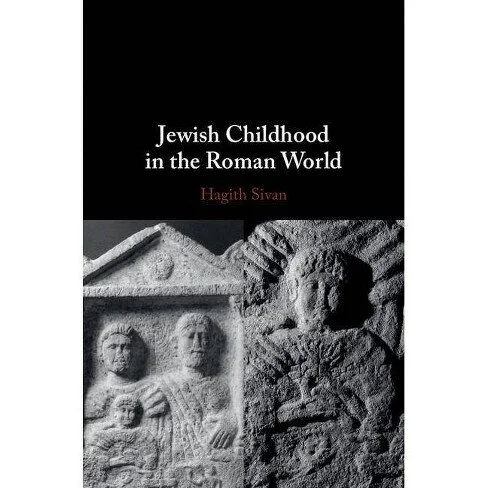
Jewish Childhood in the Roman World provides a comprehensive review of the Palestinian rabbinic literature on the many facets of childhood.
Read MoreBook Note | The Rise of Coptic: Egyptian Versus Greek in Late Antiquity
![St. Menas with two camels, Pilgrim flask found around Alexandria Egypt (ca. 6th-7th c. CE) [Wikimedia]](https://images.squarespace-cdn.com/content/v1/5449167fe4b078c86b41f810/1589226784624-E7CWVU5C4KCDWB3IZHM7/Pilgrim_flask_St._Menas_Louvre_MN1469.jpg)
St. Menas with two camels, Pilgrim flask found around Alexandria Egypt (ca. 6th-7th c. CE) [Wikimedia]
Book Note | Matthew Within Sectarian Judaism

John Kampen has built a meritorious career in the study of the Dead Sea Scrolls and the New Testament. In this book he makes an argument in which he deftly weaves together his expertise in each so as to study the gospel of Matthew as the work of a Jewish sect.
Read MoreBook Note | The Birth of Christian History
![Joseph Mallord William Turner, Rome from the Vatican (1820) Tate Modern [WikiArt]](https://images.squarespace-cdn.com/content/v1/5449167fe4b078c86b41f810/1586094608247-LSTOEXDA5P9B02S5JC8F/rome-from-the-vatican.jpg%21Large.jpg)


Joseph Mallord William Turner, Rome from the Vatican (1820) Tate Modern [WikiArt]