"Griffith opens a window onto an earlier scholarly world, showing how the production of the earliest Arabic Bibles—and indeed the production of Arabic Christianity, Judaism, and Islam as a whole—has been from the beginning a thoroughly interreligious endeavor."
Read MoreBook Note | Mary in Early Christian Faith and Devotion
"In a useful introduction, Shoemaker lays out the problem and the gap he wishes to solve and fill: scholars have tended to look at doctrinal texts on Mary and have all but ignored the presence of Marian piety in the first centuries. By charting a devotional rather than theological survey about the Virgin Mary, he aims to create a new narrative about her import in the early Church."
Read MoreBook Note | A State of Mixture: Christians, Zoroastrians, and Iranian Political Culture in Late Antiquity

"With careful attention to detail and broad usage of a wealth of sources, Payne systematically deconstructs this idealistic bifurcation between Christianity and Sasanian culture. However, Payne dismantles this historiographical narrative, while simultaneously offering a completely new perspective on Persian Christianity by examining the various ways that Christians participated in, transformed, and even claimed Iranian culture as part of Christian identity."
Read MoreBook Note | The Life of Saint Helia

"While we cannot say that the text reflects actual debates that proponents of a virginal life were having, we can certainly point to it as an example of debates that they imagined they could or would have had similar confrontations. A close engagement with The Life of Saint Helia might therefore provide some insight into how the community—whether it be Priscillianist, Jeromian, or otherwise—attempted to locate themselves within the tradition of Scripture and its interpretation."
Read MoreBook Note | The Sentences of Sextus

Zachary Domach with an overview of Wilson's translation and commentary of The Sentences of Sextus: "his commentary exemplifies how a study of Sextus—and wisdom literature in general—reveals the intertwining of Greek, Jewish, and Christian thought as “actual ‘life’” in Late Antiquity."
Read MoreBook Note | Classifying Christians: Ethnography, Heresiology, and the Limits of Knowledge
"One of Berzon’s constant reminders is that powerful ideologies and strategies of representation often strive to hide their own seams and points of tension, but that it is in the process of highlighting these very points of tension that they find themselves at their most reproducible but also at their most frail. The late ancient heresiologists cultivated strong rhetorics of exceptionality and mastery—the heresy hunter excelled at making discoveries and at flaunting erudition—but also rehearsed a discourse of fear of contagion, vulnerability, and epistemic overload."
Read MoreBook Note | Bundvad, Time in the Book of Ecclesiastes

"With one eye on Barr’s critiques and another on Guy Deutscher’s more recent linguistic work, she avoids a lexical-based approach and posits that a better method for identifying reflective thought on time is to appeal to an author’s syntax and “habital use” of language—ways by which the author directs the reader to concentrate on certain aspects of the world—and an author’s ability to do this transcends the sum of her lexical stock.
Read MoreBook Note | Spiritual Taxonomies and Ritual Authority: Platonists, Priests, and Gnostics in the Third Century CE
"Marx-Wolf demonstrates that these Platonist thinkers were closely connected despite the fact that one is a Christian and the other three are non-Christian. To this end, she reads these Platonists not in terms of different social or religious affiliations, but in terms of a shared paideia (2-3). She contends that this common formation explains elements of their thought that might otherwise be “surprising” such as Porphyry’s rejection of animal sacrifice."
Read MoreBook Note | The Scriptural Universe of Ancient Christianity

"Stroumsa makes a subtle move here, however: rather than suggesting, as many before him have, that there was a transition from cult-centered religion to book-centered religion, he argues that book becomes cult."
Read MoreBook Note | In God's Path: The Arab Conquests and the Creation of An Islamic Empire

"Of course, explaining the rise of an Islamic empire as a response to decline in the Roman and Sasanian empires is not a novel approach. Hoyland departs in analyzing the Arabs as a “peripheral people” that had specific political ties to both the Roman and Sasanian empire and thus gained a broader perspective for their own political ambitions."
Read MoreBook Note | Jewish Messiahs in a Christian Empire: A History of the Book of Zerubbabel
"Himmelfarb’s incisive reading of Sefer Zerubbabel greatly enriches our understanding of Jewish messianism between the Second Temple period and the rise of Islam. By exploring common themes and figures in a wide range of sources, Himmelfarb works “backward” to uncover a vibrant “Judaism” that actively appropriates key elements of the Christian messianic narrative, much to the consternation of the rabbis."
Read MoreBook Note | Roman Faith and Christian Faith: Pistis and Fides in the Early Roman Empire and Early Churches
"This is the theoretical point Morgan is interested in proving with this volume – that in the endless growth of language into new meanings, there are very few grand leaps and very many infinitesimal steps. The earliest Christians did not (yet) redefine faith, Morgan insists, but changed its focus – toward God and Christ alone, rather than that “shared circle of reasoning” that pistis/fides spun among gods and humans (p. 123)."
Read MoreBook Note | The People Beside Paul: The Philippian Assembly and History from Below
"How does an orientation towards “a people’s history,” following Howard Zinn, help scholars ask new questions about the context and content of Paul’s Letter to the Philippians, a brief but important text in the Pauline corpus?"
Read MoreLearning to Read Talmud: Bridging Scholarship and Pedagogy
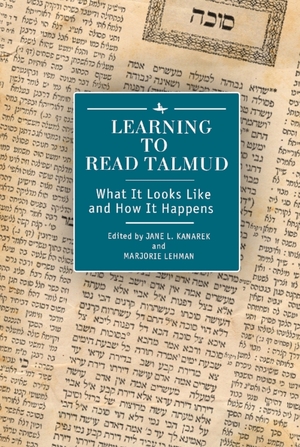
"Much as we write about the Talmud itself, we pay far less attention to the significance and contribution of writing about our teaching. With our book, Learning to Read Talmud, we aim to expand the research agendas of Talmudists to include scholarship on the teaching of rabbinic literature."
Read MoreBook Note | Late Ancient Knowing

"What these essays offer instead are provocative and stimulating inroads into the task of recognizing just how different the late ancient world may have actually been."
Read MoreBook Note | The Literary Imagination in Jewish Antiquity

Jillian Stinchcomb booknotes Eva Mroczek's The Literary Imagination in Jewish Antiquity, developing how Mroczek "presents a convincing native theory of text production."
Read MoreBook Note | Power, Ethics, and Ecology in Jewish Late Antiquity

California drought, 4th year via Bluesbby via Flickr CC 2.0.
Hylen - A Modest Apostle: Thecla and the History of Women in the Early Church

Saint Thecla and the Wild Beasts (ca. 5th century, Egypt)
Saint Thecla and the Wild Beasts (ca. 5th century, Egypt)
Since the 1980s, the story and figure of Thecla have featured in vibrant currents in scholarship. This new publication brings a fresh perspective to Thecla’s depiction in light of social expectations for women in the Greco-Roman world.
Read MoreAnthony, Crucifixion and Death as Spectacle
Crucifixion and Death as Spectacle argues that "the crucifixion that happened in the Umayyad era was undergirded by meaningful Islamic ideas that nevertheless had important precedents in late antiquity."
Read MoreKalleres, City of Demons

City of Demons "explores how demonically embattled cityscapes in the late Roman world were creatively structured and restructured by Christian ecclesiastical leaders."
Read More